Boodhugan
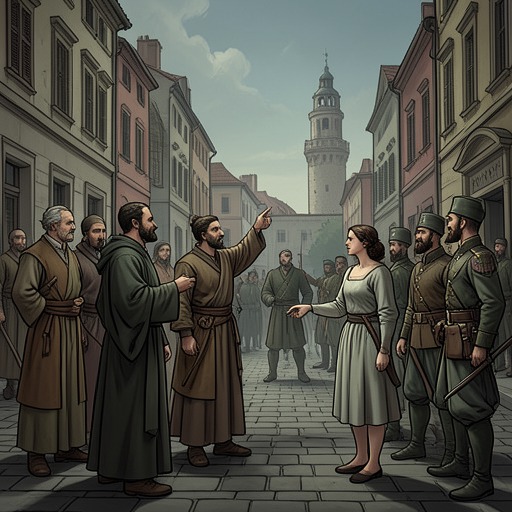
Ponniyin SelvanBoodhugan is the Ganga king whose feigned surrender becomes the decisive treachery of the Battle of Thakkolam. An ally of Kannara Thevan in the invasion of Chozha Nadu, he approaches Rajadithyar under the sign of submission, then kills him with a concealed poisoned arrow. His act does more than remove a commander: it turns the Chozha army’s trust in its leader into the opening for a sudden reversal on the battlefield.
Identity and Campaign
Boodhugan enters the account as a political and military ally of Kannara Thevan, the Chakravarthy of Rettai Mandalam. Their forces march south into Chozha Nadu while Rajadithyar’s own campaign has been delayed. The Chozha armies had first been held back because of hostilities in Ilankai; Sundara Chozhar had judged it preferable to meet the advancing enemy on Chozha territory rather than lead a long march north while danger remained in the south. By the time the enemy reached Vada Venkatam, Rajadithyar was authorized to advance.
The account gives the scale of the forces to clarify what was at stake. Rajadithyar leads three lakh infantry, fifty thousand cavalry, ten thousand war elephants, two thousand chariots, three hundred and twenty commanders, and thirty-two kings. The enemy is estimated at about five lakhs of soldiers and thirty thousand elephants. The figures establish a formidable invasion, but the narrative stresses that numbers alone do not determine the battle: Rajadithyar’s command and the confidence he gives his troops are central to the Chozha resistance. Boodhugan’s alliance therefore places him against not merely an opposing army but the source of its battlefield cohesion.
The Feigned Surrender
The battle lasts ten days. During the fighting, Rajadithyar’s presence on his elephant repeatedly heartens units in difficulty; when a regiment falters, he appears to steady it, and the Chozha soldiers renew their effort. The account says the enemy recognizes this effect and forms a plot whose author and executor is Boodhugan. His scheme targets the personal authority that makes Rajadithyar such a powerful presence among his troops.
Boodhugan rides his elephant into Rajadithyar’s path with a white flag raised and both hands lifted in apparent surrender, crying for mercy. The gesture is staged to look like a break with Kannara Thevan: Boodhugan presents himself as a subordinate who has judged the battle lost and advised his overlord to yield, only to be refused. He claims that he has therefore left that ruler and placed himself under Chozha protection. The account makes clear that this explanation is part of his deception, not a genuine change of allegiance.
Rajadithyar pauses rather than treating the approach as an immediate attack. Wanting to establish whether Kannara Thevan himself is seeking terms or whether Boodhugan has separated from him, he signals his personal bodyguards to withdraw and summons Boodhugan closer. Seeing the Ganga king’s apparent tears, Rajadithyar’s suspicion gives way to sympathy. The reversal depends on that response: Boodhugan’s show of helplessness persuades the commander to create the close access his attacker needs.
Assassination and Immediate Reversal
Once beside Rajadithyar, Boodhugan listens as the commander rejects his explanation and orders him to return. He then draws a concealed bow, releases a poisoned arrow, and kills Rajadithyar. The attack is so sudden that those nearby do not immediately understand what has happened. Boodhugan withdraws at once, sending his elephant away at a scamper before the full consequences of the assassination can be met with a response.
The killing exposes the difference between a battlefield surrender and Boodhugan’s performance of one. The raised flag, lifted hands, and plea for mercy invite Rajadithyar to read the encounter as a question of clemency and allegiance. Boodhugan uses precisely that pause to conceal an attack. The account later invokes the warning that apparent humility may hide hostile intent; Rajadithyar’s compassion, ordinarily a mark of his command, becomes the point through which the deception succeeds.
Consequences and Narrative Significance
News of Rajadithyar’s death spreads through the Chozha ranks and overwhelms their attention to the battle. Commanders, chieftains, and ordinary soldiers grieve, and the army loses the steadying presence that had repeatedly restored its fighting spirit. The enemy gains the upper hand; the Chozha forces fall back and are driven into retreat before making a final stand. Boodhugan’s attack thus changes the battle not by defeating the entire army in a single stroke, but by exploiting the shock created when its central leader disappears.
The episode is recounted retrospectively, after the campaign’s cost is known, and its delay in revealing Boodhugan’s role underscores how effectively the surrender concealed the plot. He is represented through a concentrated sequence of political allegiance, calculated performance, and assassination rather than through a broader personal history. His narrative importance lies in the consequences of that sequence: the death of Rajadithyar, the collapse of Chozha morale, and a battlefield reversal remembered as the outcome of mercy met by betrayal.