Music as balm for the heart
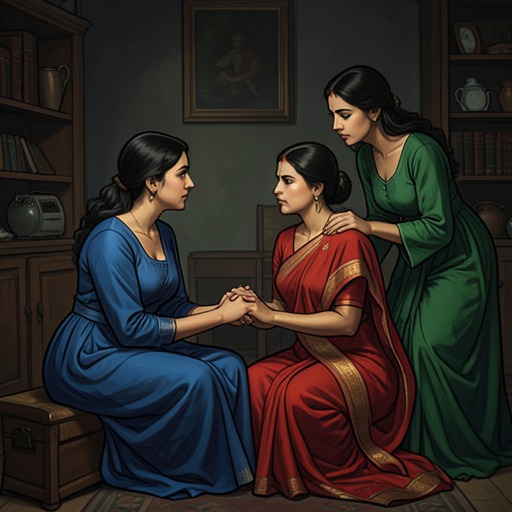
Ponniyin SelvanMusic as balm for the heart is the idea that melody can reach and ease suffering that ordinary remedies cannot. The concept emerges in a conversation about wounds that may outlast time and tears, then takes visible form when Manimekalai plays the yazh and sings. Her performance draws Nandhini, Aditha Karikalan, and Vandhiyathevan into different but equally powerful responses: tears, ecstasy, and a troubled return to awareness of Manimekalai herself. Music offers relief in the moment, yet the scene does not claim that it erases the pain or longing it awakens.
A remedy beyond time and tears
The conversation begins by testing familiar explanations for emotional pain. Nandhini rejects the suggestion that time necessarily brings merciful forgetfulness: some wounds of the heart, she argues, do not heal simply because years pass. Vandhiyathevan offers tears as a woman’s comfort, but Nandhini answers that grief can leave a person too debilitated even to weep. These exchanges establish the limits of both forgetting and emotional release. The heart may remain wounded when neither time nor tears can provide solace.
Against that impasse, music is described as a balm that reaches the soul through the ear. The proposed remedy is specific: the sweet melodies of the yazh, the flute, and a charming voice. The language makes listening an alternative form of comfort, not a denial that pain exists. Music may ease agony and soothe a deep ache even where a wound remains. Nandhini teasingly presents her insight as evidence of a supposed power to divine other people’s thoughts; the playful framing turns a discussion of private suffering into an occasion for persuasion and performance.
Manimekalai’s performance
Nandhini connects the idea to Manimekalai’s musical ability, recalling Kandamaaran’s praise of his sister’s skill with the yazh. Manimekalai has brought the instrument with her, and Nandhini uses the gathering as an opportunity to have her play. She frames the invitation as repayment to Vandhiyathevan for defending women in the conversation, and as a feast that will include both food and music. Vandhiyathevan’s subtle attempt to discourage the invitation goes unnoticed by Aditha Karikalan, who accepts on behalf of the company.
When the performance begins, Manimekalai sits on the marbled steps of the mandapam with the yazh in her hands. The instrument has seven strings, each capable of holding one note for half a length before moving to the next. After tuning it, she plays a medley of melodies. The music so completely occupies Aditha Karikalan and Vandhiyathevan that the lingering traces of their trials fall away from their attention. This is the first concrete demonstration of the proposed balm: it does not alter what they have endured, but it suspends their preoccupation with it as they give themselves over to listening.
Manimekalai then combines voice and instrument, singing devotional verses associated with Appar, Sambandhar, and Sundarar. Aditha Karikalan admires the performance but asks for romantic material, since her repertoire so far has been devoted to religious subjects. The shift changes the emotional register of the gathering without abandoning music’s consoling function. The song turns attention toward love, memory, and the uncertainty of whether an intimate experience was real or dreamlike.
Different listeners, different wounds
In the romantic song, the remembered lover describes golden evenings in a Punnai orchard and words of love, then recalls a lover who evaded stern guards, approached stealthily, and embraced her with a searing kiss. The repeated uncertainty—whether such moments were real or only a passing fancy—makes the song itself a vessel for unresolved feeling. Manimekalai sings further verses, blending new ones with increasingly alluring melodies. The performance grows into an immersive experience in which the audience is carried by its sound rather than simply hearing a succession of songs.
The listeners do not receive the music in the same way. Nandhini, who has hardened her heart for reasons left unspecified in this moment, finds tears filling her eyes. The scene gives tears a more complicated place than Vandhiyathevan’s earlier suggestion that they offer straightforward relief: here they arise within a musical experience, but the text does not say that Nandhini’s pain is healed. Aditha Karikalan, by contrast, seems to leave the ordinary world behind in speechless ecstasy. The contrast makes the balm individual in its effect. A shared performance can touch different inward states without reducing them to a single response.
Vandhiyathevan’s reaction contains both absorption and resistance. Drawn into the surreal experience, he repeatedly shakes himself as though trying to tether himself to reality. When he raises his eyes toward Manimekalai, he realizes that her gaze has been fixed on him throughout. The recognition interrupts his surrender to the music: he becomes conscious not only of the song but of the young woman performing it and of what his attention may mean to her. His inward alarm at having done her a bad turn gives the scene a consequence beyond temporary distraction.
The balm and its limits
The episode gives the metaphor of music as balm a dramatic test. The conversation proposes that sound can soothe where forgetfulness and tears may fail; Manimekalai’s playing then visibly changes the listeners’ attention and feeling. The concrete signs are not identical: Nandhini’s eyes brim, Aditha Karikalan sinks into silent ecstasy, and Vandhiyathevan must pull himself back toward reality. Music acts through listening, but its effect is neither uniform nor emotionally simple.
The scene also distinguishes relief from resolution. The listeners’ trials recede while the melodies hold them, but the narrative identifies no lasting cure. Nandhini’s tears disclose an inward vulnerability without naming or settling its cause; the romantic lyrics raise questions of love and remembered intimacy; and Vandhiyathevan’s discovery of Manimekalai’s gaze makes the performance newly consequential. Music soothes by opening an interval in which feeling can surface, not by ensuring that what surfaces disappears. Its balm may ease the heart and, at the same time, make its concealed ache harder to ignore.