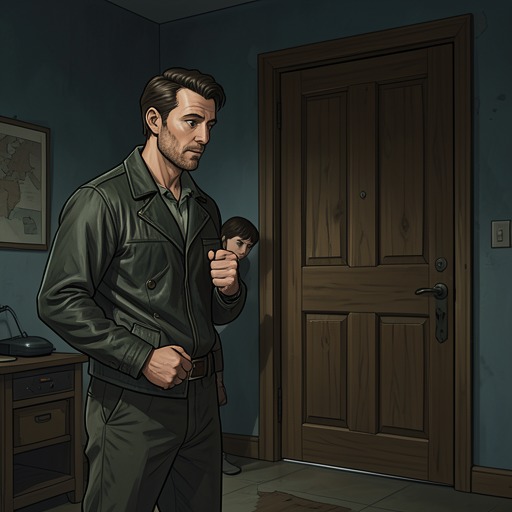
Veera Pandiyan's Death at Aditha Karikalan's Hand
Ponniyin SelvanVeera Pandiyan's Death at Aditha Karikalan's Hand is the killing that binds Aditha Karikalan’s public reputation as a victorious warrior to a private, unresolved burden of remorse. Three years after pursuing Veera Pandiyan to a secret lair and beheading him, Karikalan recounts how he rejected Nandhini’s desperate plea for mercy—and explains why the memory still drives him to seek her pardon.
The pursuit and the plea
Karikalan’s account to Malayaman traces the episode through a sequence of pursuit and refusal. He describes hunting Veera Pandiyan, tracking him to a concealed lair, and confronting him there. Nandhini intervened, pleading that Veera Pandiyan’s life be spared. The request placed a human appeal against the momentum of the hunt, but Karikalan responded in anger and refused to listen. He then beheaded Veera Pandiyan. The account gives no further details of the encounter’s setting or the reasons behind Nandhini’s intervention; its decisive turn is the moment Karikalan rejects her plea and carries out the killing.
That refusal matters as much to the remembered event as the blow itself. Karikalan does not tell Malayaman of the death as a simple feat of arms. He identifies Nandhini’s appeal, his furious rejection of it, and the beheading as parts of one sequence whose moral consequence has endured. The memory is not merely that Veera Pandiyan died by his hand, but that the killing followed a plea he could have answered differently.
A victory remembered as torment
When Karikalan confides in Malayaman, he recounts the events of three years earlier in detail. He says that he has never been able to erase the incident from his memory and that remorse, despair, and intense sorrow have troubled him ever since. The passage establishes no release from that burden: his recollection instead gives it renewed force, showing that the celebrated warrior remains caught in the consequences of his own decision.
Karikalan’s immediate aim is to make reparations to Nandhini and beg her pardon. He believes she may be willing to let the past go, and he connects her invitation to his hope that she genuinely wants to dispel the kingdom’s confusion and disorder. He intends to meet his obligations and return to Kanchi as soon as possible; after that, he says, nothing will stop him from boarding a ship to search for his brother. The intended apology is therefore both a personal attempt to answer an old wrong and one part of a larger effort to move forward amid the kingdom’s troubles.
Malayaman’s response broadens the meaning of the confession without resolving it. He says that much he had not understood now makes sense, including events whose motives he had failed to discern, and concludes that no earthly power can defeat destiny. His words register the account as an explanation of more than a single death, but they do not establish that Karikalan’s choices were unavoidable. The tension remains between the language of fate and the clear human decision at the episode’s center: Karikalan heard Nandhini’s plea and rejected it.
Public fame and Nandhini’s counter-reading
The killing has a sharply different life in public memory. During Aippasi, as crowds gather beside the flooded Kedilam, a royal procession approaches. Its ushers announce Karikalan through titles that celebrate his martial identity, including the warrior who entered the Sevur battlefield and beheaded Veera Pandiyan. The announcement turns the death into a credential proclaimed before an expectant multitude. The crowd scrambles up the banks to catch sight of its hero. Where Karikalan privately remembers sorrow, the procession presents the same act as a source of fame and excitement.
Nandhini’s reaction in a later conversation with Manimekalai exposes another interpretation. When Manimekalai praises Karikalan’s prowess and asks whether he cut off Veera Pandiyan’s head in one blow, Nandhini’s expression changes with visible turmoil. She then questions whether such an act should be considered valor, suggesting instead that it could be demonic. To explain, she asks Manimekalai to imagine a beloved man, severely wounded and unable to leave his bed, being attacked and beheaded by an enemy. This is a hypothetical analogy, not an additional account of Veera Pandiyan’s physical condition; it shifts attention from the victor’s skill to the vulnerability of the person killed and the grief of someone who pleads for him.
Manimekalai answers that, in such circumstances, she would seize the attacker’s sword and plunge it into his heart rather than stand by helplessly. Nandhini embraces her warmly and praises her answer. Her response does not undo the past, but it makes plain how far the public language of martial glory stands from her personal framing of the death. The episode consequently persists in incompatible registers: a deed acclaimed in Karikalan’s titles, a killing Nandhini resists treating as valor, and a remembered choice for which Karikalan still seeks forgiveness.