
The Alexandria Encounter
Poor ThingsThis flow follows Bella Baxter’s confrontation with visible poverty and the competing arguments used to justify it.
increasing Bearing strength in each event
 decreasing
Bearing strength in each eventdecreasingAn Innocent Worldview

An Innocent Worldview
Trust in ordinary goodness
Bella Baxter initially assumes that people she meets belong to a broadly friendly human family. She reads hardship as unfortunate but does not yet understand its political causes.
A readiness to ask
Her openness makes her question statements that others treat as self-evident. That habit prepares her to recognize the distance between comforting explanations and lived suffering.
The Veranda and the Beggars
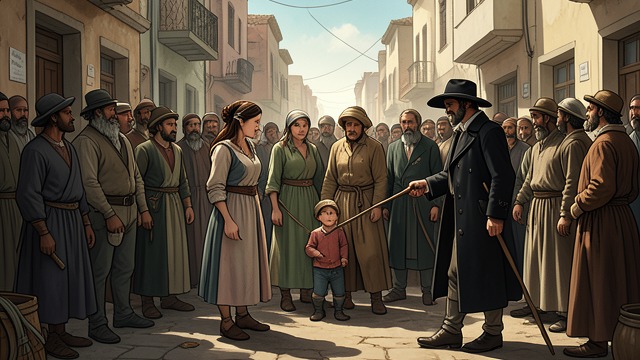
The Veranda and the Beggars
Suffering as spectacle
Bella sees starving and disabled people forced to scramble for coins while well-dressed observers watch. The scene turns poverty from an abstract idea into an immediate moral shock.
A failed attempt to help
She tries to reach a blind girl and a baby, but the crowd and the men with whips prevent her from taking them away. Her compassion collides with the structures that control their lives.
The Civilizing Explanation
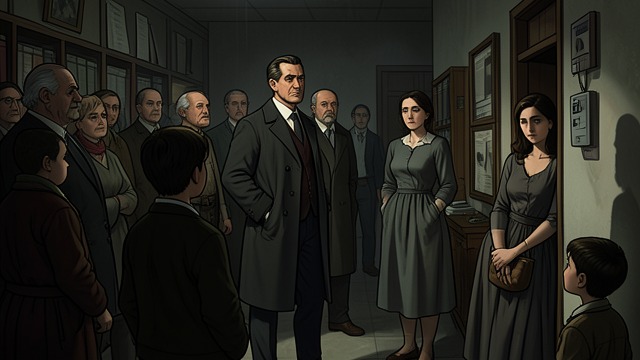
The Civilizing Explanation
Power presented as benevolence
Dr. Hooker describes imperial domination as a duty to educate supposedly inferior peoples. Harry Astley offers a colder account in which the powerful benefit from the suffering they claim to manage.
Bella refuses reassurance
Neither explanation answers her central question: why should cruelty be allowed to continue? The debate makes imperial certainty look like an excuse for maintaining unequal power.
A Mind That Cannot Return
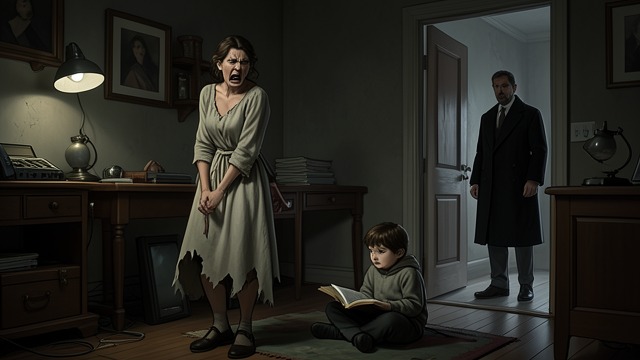
A Mind That Cannot Return
Innocence lost
Bella’s earlier confidence in a harmless world gives way to anger, grief, and confusion. She recognizes that children, workers, and colonized people are not protected simply because society calls itself civilized.
The danger of cynicism
Astley argues that exploitation is unavoidable, while Bella refuses to accept his conclusion. Her response identifies a moral position between naïve optimism and comfortable despair.
A Search for Useful Work
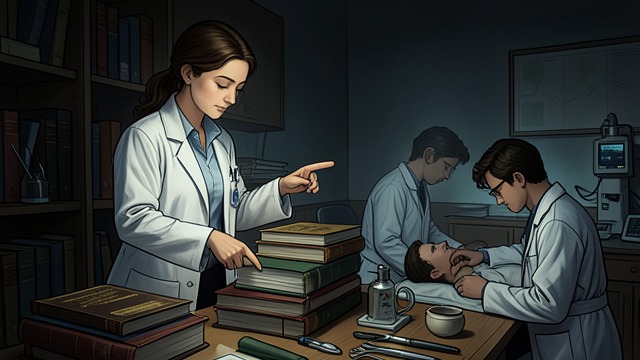
A Search for Useful Work
From reaction to practice
Bella asks Baxter how she can act against suffering rather than merely feel it. He points toward medical study and work with people whose lives are damaged by poverty and restricted choices.
A continuing question
Her decision to become a doctor does not solve the political problems she has seen. It gives her a practical way to resist resignation while continuing to ask what good action can accomplish.
Before the stop in Alexandria, aboard ship
During the Alexandria visit in 1883
After leaving the veranda in Alexandria
During the weeks after Alexandria
After Bella’s return to Glasgow
