1945 United Kingdom general election
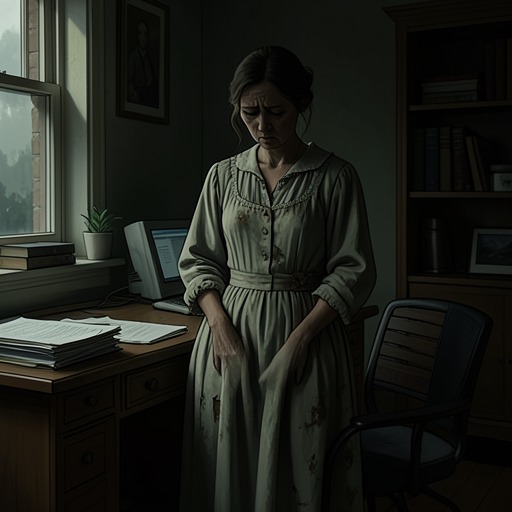
Poor ThingsThe 1945 United Kingdom general election becomes, for Victoria McCandless (Bella Baxter), a sudden opening onto a better political future. In a letter written soon after the result and shortly before her death, Labour’s overall working majority makes Britain feel newly alive with possibility; her hope is so complete that she says she is going to die happy.
The result as a turning point
The letter is undated, but its editor places it soon after the election. Victoria welcomes the arrival of a Labour government with an overall working majority as a historic change, and says she will begin reading the newspapers again. The result shifts her attention from political disappointment toward the prospect of reform: Britain, she writes, has suddenly become exciting.
Her response is not merely approval of an electoral victory. She reads the result as evidence that the country may resume a path of social progress interrupted by the upheavals since 1914. The election therefore marks a personal reversal as well as a change in government: political hope, apparently dormant, returns with force.
The programme she anticipates
Victoria expects the new government to repeal the anti-trade-union laws of 1927 and establish social welfare and national health care for all. She also foresees Fuel and Power, Transport, Iron and Steel becoming public property, placing essential services and major industries under collective ownership. Her vision extends beyond domestic policy: she expects Britain to abandon the British Empire, which she regards as a burden.
She measures this anticipated settlement against the Soviet Union, believing that Britain is setting the world a finer example. The letter presents the election not as proof that the promised changes have already occurred, but as the political opening through which she expects them to become possible. Its repeated confidence in what the country will achieve gives her hope the character of a forecast, not a report of completed reforms.
A revised history and a final hope
Victoria identifies the Lloyd George budget as the last fixed point on the sound path of social progress. In her account, the old-age pension had abolished poor-houses, while death duties had begun to break up the enormous estates. She regards the period from 1914 to the present as a hideous detour away from that reforming course, and the election as a chance to return to it.
The result also unsettles her earlier political expectation. She acknowledges that John Maclean was wrong: a workers’ co-operative nation may be created from London, without an independent Scotland first showing the way. This is a substantial adjustment to her view of national change, even as she remains certain that her correspondent will reject her optimism and point to the forces undermining Britain. The letter ends not with an answer to those doubts, but with Victoria’s insistence that she will die happy. The election’s lasting significance in this episode lies in that final conviction: for a short time, the prospect of collective reform outweighs her awareness of political danger.