Dolly Perkins
Poor ThingsDolly Perkins is a sixteen-year-old parlour-maid whose pregnancy and expulsion bring the consequences of General Sir Aubrey de la Pole Blessington’s private conduct into his household. She has little opportunity to tell her story directly: it reaches the reader through Godwin Baxter’s report and the accounts of others. Yet her arrival at the Blessington home, asking Bella Baxter for help, becomes a turning point. Bella later recognizes Dolly as the person whose predicament helped break her attachment to a life without freedom.
Identity and Background
Dolly is identified as a young woman who worked as a parlour-maid in the General’s household until the day before his wedding. According to the report Baxter reads aloud, the General then arranged an apartment for her in a boarding-house near Seven Dials. He did not give the landlady, Mrs. Gladys Moon, his name, but she recognized him from his pictures in the Illustrated London News. The arrangement placed Dolly outside his home while allowing him to continue visiting her.
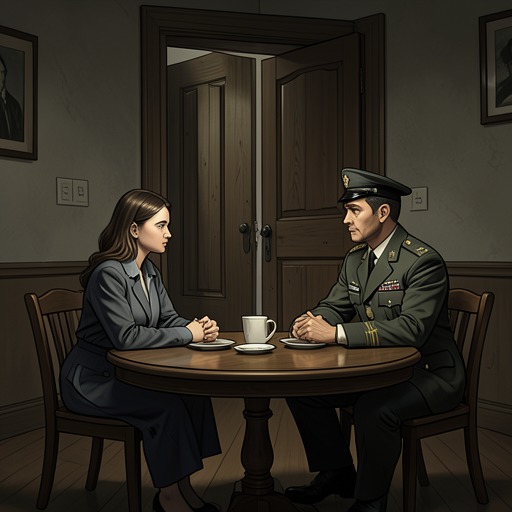
Mrs. Moon’s account gives the visits a regular pattern: the General came for two hours on Tuesday afternoons and returned on Fridays when he paid the rent. This continued for four months. The account makes Dolly’s situation legible through details of time, money, and housing, while leaving her own words largely unheard. The report says that, after the General announced he would not return, Mrs. Moon spoke with Dolly, who admitted she was penniless and pregnant. Mrs. Moon then told her to leave.
The General’s Account and Dolly’s Expulsion
The General does not dispute that he visited Dolly, but emphatically denies that he made her pregnant. He claims their encounters could not have resulted in pregnancy and accuses her of threatening to tell his wife he had fathered the child unless he paid her. In his version, he refused and left her without money. These claims are his defense, not independently established facts; the account presented alongside them instead records Dolly as penniless and pregnant when she was forced out of the boarding-house.
The contrast between his repeated visits and his refusal to support her gives the episode its force. The General had controlled the terms of the arrangement, including its secrecy and its end. When Dolly’s pregnancy threatened to expose the connection, he told Mrs. Moon that Dolly was no use to anyone and might damage the reputation of his house. His language reduces her to a risk to his standing, while the practical result is that she loses both her lodging and her means of support.
Appeal at the Blessington Home
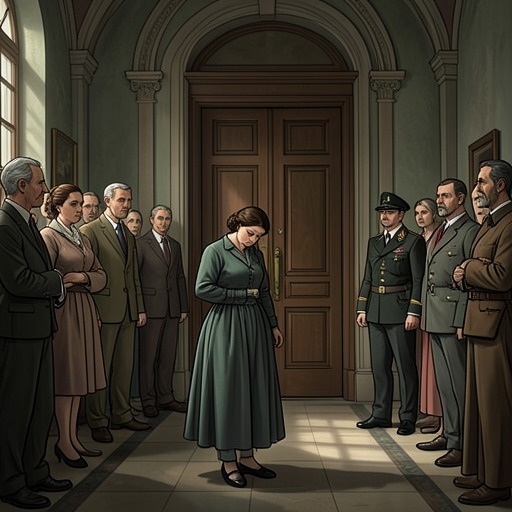
On 16 February 1880, Dolly entered 19 Porchester Terrace through the servants’ entrance. Baxter’s report describes her as exhausted, ragged, penniless, and hungry. Mrs. Blount, the cook, gave her tea, food, and a chair; when she returned to find the chair empty, Dolly had gone upstairs to confront Bella and tell her what had happened. Dolly begged Bella for help, and Bella was about to give her money when the General came in.
The General summoned his footmen, who pushed Dolly out into the street. He and his manservant then took Bella upstairs; the General later says that Bella had fainted. After she recovered, he locked her in her bedroom. Bella responded by throwing valuables out of the window to Dolly below: first a purse and jewellery, then small objects within reach. A crowd of poorer onlookers had gathered despite the snowy weather as Bella continued, sending out clothes and household possessions, among them shoes, hats, bedding, fire-irons, clocks, mirrors, crystal, and Chinese vases. The solicitor reading the report objects when Baxter speculates about Bella’s feelings, so the narrative distinguishes the recorded actions from Baxter’s interpretation of them.
Consequences and Narrative Significance
Dolly’s appeal does not end with a recorded reunion or account of what becomes of her. Its immediate consequences unfold inside the house. The servants, hearing Bella’s cries from the coal-cellar where the General has confined her, ask former footman Tim Blatchford to break the lock with a poker. Mrs. Blount says they feared Bella might be in labour and that her confinement could cause two deaths. After Bella escapes, the former housekeeper, Mrs. Munnery, gives her cleaner clothes recovered from the street and train fare to visit her father in Manchester. These actions show the household’s servants responding to the confinement with practical aid, while Dolly’s own earlier need for aid remains the occasion that sets Bella’s resistance in motion.
When Bella later recounts what she has understood about her past, she thanks Dolly for helping drive her away from the General’s house. She allows that, without Dolly’s appearance, she might have continued clinging to the General. The recognition gives Dolly a consequential place in Bella’s life without making her a simple instrument: Dolly arrives with her own urgent need, shaped by poverty, pregnancy, and the loss of shelter. The episode also exposes the distance between the General’s self-justifying account and the material facts of Dolly’s treatment. Her story is mediated and disputed, but the sequence of visits, dismissal, and desperate appeal makes the cost of his power visible—and gives Bella a reason to choose freedom over dependence.