Dr. Prickett
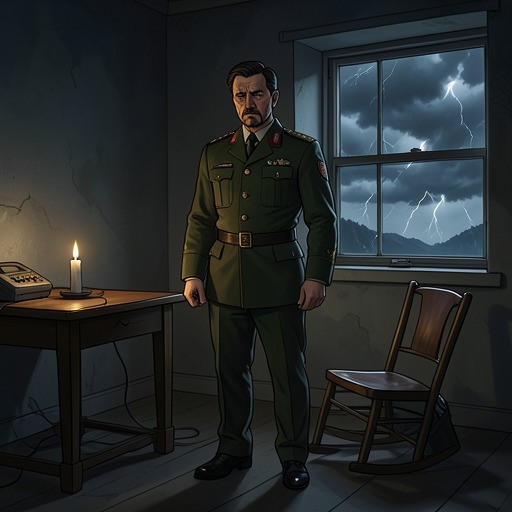
Poor ThingsDr. Prickett is General Sir Aubrey de la Pole Blessington’s medical adviser and the physician who treated the General’s wife before her disappearance. His testimony helps interrupt Bella Baxter’s planned marriage to Archibald McCandless, but his later account of the missing woman’s illness does not resolve Bella’s identity. Instead, it reveals how a doctor’s clinical authority can describe a woman’s distress in terms that both medicalize her desire and obscure what she needed.
Identity and Introduction
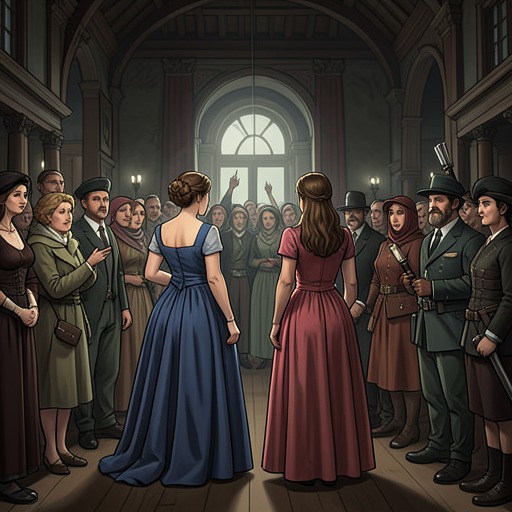
Dr. Prickett enters the story as a professional witness in the dispute over who Bella Baxter is. He says he treated the General’s wife for a serious illness for at least eight months before she disappeared. When he sees Bella, he is struck by how closely her voice and appearance resemble the missing woman’s, and he concludes that the two are identical. His statement is consequential: the minister stops the wedding, turning a private ceremony into a contest over identity, evidence, and authority.
Prickett’s position gives his words weight, but the evidence initially offered for his conclusion is resemblance. The scene thus makes his professional standing part of the conflict without making it decisive proof. Bella herself looks from Prickett to the General and says she cannot remember either man. Her absence of recognition sets her immediate experience against the certainty of the men who claim to know her past.
Testimony and the Identity Dispute
When the group gathers at Godwin Baxter’s home, Prickett is invited to give his opinion about the case. His account of the missing wife becomes one strand in a larger argument about whether Bella is that woman. The General’s medical adviser is therefore more than a background authority: he supplies the claim of continuity that threatens Bella’s chosen future with McCandless.
Later, Baxter draws a distinction between the woman Prickett treated and the person who came to consciousness in his home. He says that the drowned woman was someone else, and presents signed, witnessed reports from specialists who examined Bella during a world tour. As Baxter recounts their conclusions, they agree that Bella is sane, strong, and cheerful, despite amnesia caused by a skull injury and the loss of an unborn child. Prickett’s earlier resemblance judgment is set against this account of Bella’s present condition and against the claim that her memories do not extend to the life attributed to her. The dispute does not simply ask whether Bella looks like the General’s wife; it asks whether likeness and medical testimony can overrule the person’s own lack of memory and independent identity.
Diagnosis and Treatment
Prickett names the missing wife’s condition as erotomania. Asked to explain, he describes a woman who wanted to share her husband’s bed every night, including during pregnancy. He also recounts the General’s concern about marital intercourse and his own advice: sexual relations should be limited during a honeymoon and reduced further if pregnancy occurred. In Prickett’s account, the General followed that medical guidance, while his wife’s repeated desire for intimacy became evidence of disorder.
The doctor says that she disliked her rages and her longing for contact, and that she eagerly took the sedatives he prescribed. When he judged the drugs ineffective, he proposed a clitoridectomy as the cure. According to Prickett, the patient begged for the operation and regretted being told to wait until after the child was born. He insists that she did not flee because she feared his treatment, adding that his visits had been the most pleasant part of her week. These details are presented as his testimony, not as an independent account from the woman herself: the reader hears her wishes and distress through the physician who diagnosed and treated her.
Prickett also frames his description as a matter of respectable female experience, separating the women he regards as refined from the vulgar mass. Baxter challenges that distinction by tracing the notion of female sexuality as dangerous or merely reproductive to older religious and social assumptions. The exchange makes the diagnosis more than a label: it places Prickett’s medical explanation inside a culture that polices women’s desire and treats conformity as evidence of health.
Relationships and Conflict
Prickett’s clearest personal connection is with the General’s missing wife, whom he says he treated over many months and regarded as a friend. His account emphasizes her compliance with sedatives, her request for surgery, and her welcome of his visits. Yet the same account depicts her need for physical affection as a symptom, while presenting the General’s restrictions as medically rational. The difference between those descriptions becomes especially visible when Bella responds to the story with tears and says that the poor woman needed cuddling. Bella’s response supplies a form of care absent from the proposed surgical cure: it recognizes a need for closeness rather than treating that need as the illness itself.
Prickett is also placed between the General and Baxter. The General summons him to state the diagnosis publicly, while Baxter presses him to explain the treatment and the reason for the wife’s flight. Prickett denies that she ran away from fear of him; the General, in turn, treats his wife’s alleged madness as sufficient explanation for her disappearance and claims the right to institutionalize her if she refuses to return. The doctor’s testimony thus becomes part of a struggle over who may define the woman’s condition and decide where she belongs.
Narrative Role and Significance
Prickett functions as a credible but limited medical witness. His expertise makes his testimony influential enough to halt a wedding, yet his account cannot settle Bella’s identity or explain the missing woman from her own point of view. The contrast between his diagnosis and Bella’s compassionate interpretation also exposes the distance between naming a condition and understanding a person’s needs.
His scenes connect the novel’s identity plot to its scrutiny of medical authority and women’s autonomy. Prickett speaks in the language of diagnosis, treatment, and professional advice; Baxter disputes the assumptions behind that language, and Bella’s reaction shifts attention back to the human need concealed within it. The result is not a simple rejection of medicine, but a dramatic test of what medical authority can establish—and what it may fail to hear.