First World War
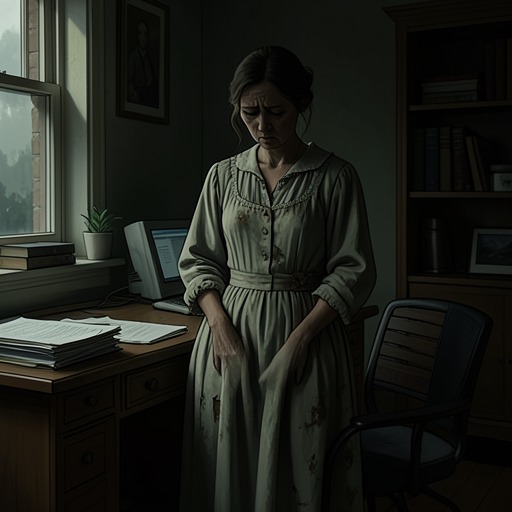
Poor ThingsThe First World War stands in Victoria McCandless’s life as both a public catastrophe and a private indictment. She had hoped that workers in Britain and Germany could stop a declaration of war by striking together; instead, her two youngest sons joined the army and died at the Battle of the Somme, while her eldest supported the war effort from a government office. The contrast between the humane lives she believed her family had prepared for and the choices her sons made turned the war into a question she could not set aside: how had people come to regard their own lives as expendable?
Before the War
By the years before the conflict, Glasgow offered Victoria grounds for political hope. The city had developed public resources during its Liberal phase, its skilled workers were described as the best educated in Britain, and the co-operative movement was growing. The municipal telephone system was also being adopted for expansion across the United Kingdom. These changes suggested to her that social improvement could be made through collective action and public provision.
That confidence existed alongside the material competition she feared. Government contracts for warships built along Clydeside answered the construction of German destroyers. The industry brought money and achievement, but its growth depended on preparations for conflict. Victoria took H. G. Wells’s imagined air war, in which a German fleet attacks New York and a worldwide conflict destroys major centres of civilization, as a warning rather than a prediction. Her hope was not that disaster was inevitable, but that people could act to prevent it.
She placed particular faith in organized labour. British and German labour and trade-union leaders had agreed that, if their governments declared war, they would call a general strike. Victoria could even imagine welcoming a declaration if workers then stopped the fighting by peaceful means: such action, she believed, might shift practical and moral power from owners to the people who made society’s necessities. The war would expose how fragile that hope was. The workers did not prevent the conflict, and her own sons did not follow the anti-war course she had expected.
The War and Its Family Cost
From 1900 onward, Victoria had been active in the suffragette movement. The war of 1914 shocked her profoundly. Her two youngest sons enlisted almost at once and were killed soon afterward at the Battle of the Somme. Their deaths made opposition to the war more than a political position: the appeal to national duty had taken the lives of the children she had expected to become peaceful professional public servants.
The eldest son, Baxter McCandless, took a different role but also entered the machinery of war. Working at the Department of Imperial Statistics, he produced calculations that presented the numbers killed and maimed in France as less alarming by comparing them with casualties that might have occurred in peacetime accidents. Victoria believed that this reasoning comforted shareholders and profiteers while making the dead easier to forget. In her view, her eldest had contributed his mind where his brothers had contributed their bodies.
Baxter died in 1919, aged twenty-seven, after being struck by a taxi in Paris while attending Lloyd George at the Versailles peace conference. His death came after the loss of his brothers and extended the family’s wartime aftermath into the peace negotiations. For Victoria, the distinction between the sons who had served in the trenches and the one who had worked with statistics did not amount to a distinction between victims and non-victims: she came to see all three as caught in a culture that had taught them to disregard themselves.
The Causes of Obedience
Victoria did not explain the war solely as the product of foolish or murderous individuals. She considered the national and commercial rivalries behind it part of a longer history of conflict, but asked why millions of men, individually neither bloodthirsty nor stupid, had obeyed commands to kill and be killed on such a scale. She drew on Tolstoy’s idea that human beings could become subject to epidemics of insanity, and, as a doctor, treated an epidemic as something whose causes might be found and prevented.
One possible cause was overcrowded living and working conditions, which she thought could make people as susceptible to belligerence as other overcrowded creatures. But the war did not fit that explanation alone: she noted that at least a quarter of those who fought and died were prosperous people with spacious homes, a class that included nearly all those who ordered and officered the slaughter. She therefore came to describe the underlying condition as an epidemic of suicidal obedience, rooted in the belief that one’s life had no value.
The military examination of recruits sharpened this diagnosis. Men queued naked for inspection by a clothed examiner, submitting their bodies to a system that, in Victoria’s account, treated them as insensitive machines controlled by remote authorities. Her image made enlistment and medical inspection more than administrative steps: they were an initiation into a way of thinking in which a person’s body, and ultimately his life, could be handed over to the machinery of killing.
This explanation turned the question back on her own family. She rejected the idea that men were naturally depraved and could not blame their schooling, since the military history taught at school had been countered by what the boys read and learned at home. For their first six or seven years, she reflected, she had had considerable power over them, with money and a loving husband. The boys had grown up in a clean, spacious home with loving, educated, adventurous parents, and had been preparing for humane public work. Yet when war came, all three acted against the values she believed they had been given. She concluded that she had failed to instil the self-respect that might have helped them resist self-abasement.
Aftermath and Continuing Opposition
The war’s effect persisted in Victoria’s political life. She split with the Fabian Society over what she regarded as its insufficient opposition to the killing, and appeared alongside Keir Hardie, Jimmy Maxton, John Maclean, and other Clydeside socialists who opposed the war and advocated Scottish home rule. Her break with the Fabians reflected a widening gulf between cautious tolerance of the conflict and her demand to oppose it directly.
In 1920 she published A Loving Economy at her own expense, presenting her search for the roots of national and class warfare. It received no serious attention, despite her sending copies to trade-union branches and people listed in Who’s Who; two thousand copies sent to equivalent recipients in North America were seized and burned by United States customs. The limited reception did not resolve the questions the war had left her with. In a later interview, asked what she regretted, she named the war; when the interviewer clarified that he meant something for which she personally felt responsible, she gave the same answer. The repetition joins public grief to private self-accusation.
After the 1945 general election, Victoria briefly read the newspapers again and welcomed the Labour government’s majority, expected repeal of anti-trade-union laws, social welfare and national health care, public ownership, and the prospect of abandoning the British Empire. She interpreted the period from 1914 onward as a disastrous departure from social progress. Her response did not erase the losses or her account of her own failure. Instead, the war remained the central rupture against which she measured the possibility of a more humane society: a society in which public provision and collective power might help make lives worth protecting.