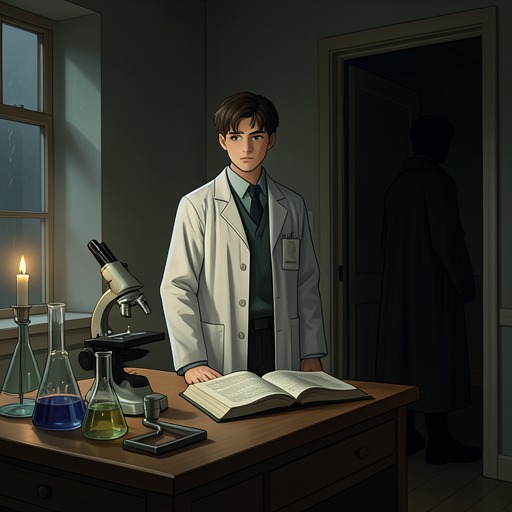
Glasgow University Medical College
Poor ThingsGlasgow University Medical College is significant in the investigation of Bella Baxter’s disappearance because its records overturn the presumed route of her body and expose a contradiction in the account of her recovery. The College also appears amid allegations about Glasgow surgeons’ earlier experiments on dead bodies, connecting its institutional record to the novel’s uneasy boundary between medicine, life, and death.
The ledgers and the missing body
After tracing a report that a woman resembling Bella had been pulled from the River Clyde, the detective says that her unclaimed body was taken by a police surgeon to Glasgow University Medical College on 15 February 1880. The College’s ledgers contradict that report: Godwin Baxter delivered no corpses there on that date or at any time afterward. The documentary record therefore rules out the apparent institutional destination of the unidentified woman’s body without explaining, by itself, what happened to her. The discrepancy becomes more pointed when set beside Baxter’s letter of 16 February, in which he resigned from police work to concentrate on his private practice. Within days, people delivering to his home knew him as a resident lady patient; by April, she could walk but remained childlike. The College’s negative record is thus more than a missing entry: it breaks the expected chain between the woman’s recovery from the river and the official handling of her body, while the subsequent account locates her instead in Baxter’s care.
Medical history and narrative significance
In a later confrontation, Dr. Prickett invokes a history of Glasgow surgeons putting electric currents through the nervous systems of dead bodies. He recalls a demonstration in the 1820s in which an animated corpse sat up and spoke; a participant severed the subject’s jugular to prevent public scandal. Sir Colin Baxter, Godwin Baxter’s father, was present. The passage does not establish that this demonstration took place inside Glasgow University Medical College, but its medical history frames the College’s records within a broader account of Glasgow experimentation and the contested limits of surgical knowledge. The College consequently serves two related narrative functions: its ledgers test a practical claim about where a body was taken, while the surrounding discussion makes medical authority itself part of the mystery. The discrepancy helps reveal that the story offered to Bella about her origins cannot be trusted; Baxter admits that he invented the account of her parents dying in an Argentine train crash to conceal a more troubling truth.