Horizontalism
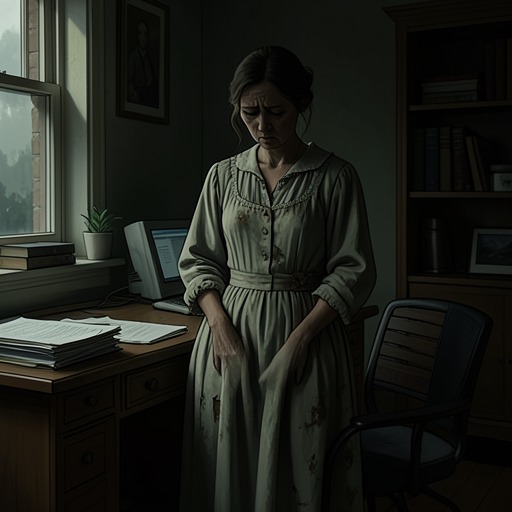
Poor ThingsHorizontalism is Victoria McCandless’s term for a medical and social order that kept patients lying down in body and mind: doctors prescribed passivity, while patients were expected to accept medical authority without understanding or questioning it. Her 1899 pamphlet Against Horizontalism made this posture the target of a broader argument about childbirth, medical power, and public access to health knowledge.
The Pamphlet and Its Central Claim
Published by the Fabian Society in 1899, Against Horizontalism distinguished necessary medical rest from the assumption that a patient’s stillness was always desirable. Victoria accepted that bed rest could be essential in many illnesses, but insisted that childbirth, though painful, was not itself a disease. She argued that birth could proceed more easily in a squatting posture and advocated the use of birthing stools of a kind employed in the eighteenth century.
The term also named an attitude, not merely a position. In Victoria’s account, horizontalism treated the body’s internal processes as mysteries that only doctors could understand and made unquestioning faith seem like the proper conduct of a patient. Her objection was therefore not to medical knowledge as such, but to its use as a reason to exclude patients from understanding their own care.
Patients, Doctors, and Shared Knowledge
Victoria framed the relationship between doctor and patient as reciprocal rather than hierarchical. She challenged trained practitioners who demanded submission from the people they served: “When priests and politicians ask for unquestioning faith we know they are thinking first of themselves. Why should we with scientific training ALSO want the people we serve to remove their thinking apparatus and bow down before us? But patients will only stand up properly for doctors—doctors will only stand up properly for patients—when all know the common-sense daily foundations of the healing art.” The contrast between lying down and standing up gave her title a civic as well as bodily force: patients would be better able to participate in care when medical knowledge was no longer guarded as an exclusive professional possession.
This position accords with the account of medical practice given by Godwin Baxter, who condemns hospitals that treat poor people as material for doctors’ advancement and describes bedside manner as a way of making patients passive. He argues that nursing, rather than doctors’ authority, is central to healing, claiming that four out of five hospital patients would recover if the doctors and surgeons died but nursing continued. His related proposal that doctors begin their training in nursing, and that manual work form the basis of professional education, likewise challenges a hierarchy that separates expertise from practical care. These claims place horizontalism within the book’s sustained criticism of medical authority when it silences patients or discounts the work of carers.
Public Health as Education
Victoria extended her argument beyond the consulting room by proposing that children learn basic nursing in primary school, where it could be taught as a game, and basic medical training in secondary school. Such instruction, she maintained, would help people recognize when a doctor could assist them, live more healthily, and care for one another. It would also enable communities to understand why damaging housing and working conditions should not be tolerated. Horizontalism thus connects individual submission to the wider conditions that shape health: informed patients and communities could question not only treatment but also the circumstances that made them ill.
Her approach also reflects the book’s account of the limited opportunities then available to women in medicine. Godwin reports that only four women doctors were practising in Britain at the time, all with degrees from foreign universities, and describes Victoria’s planned route from nursing work in an east Glasgow infirmary toward medical study. In that context, the pamphlet’s demand that patients understand the healing arts sits alongside a challenge to the professional arrangements that restricted who could practise them.
Reception and Significance
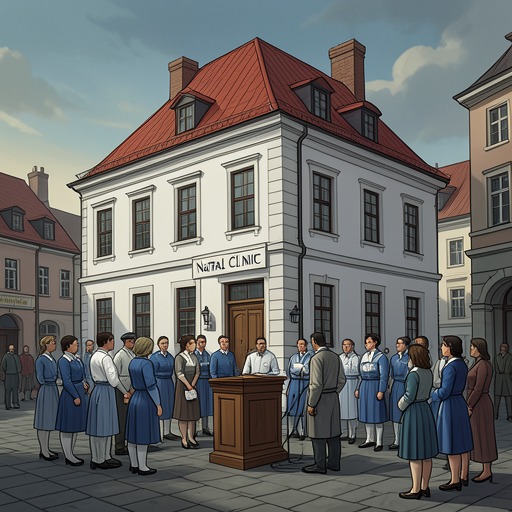
The pamphlet’s proposals drew hostile and patronizing responses. The Times presented Victoria’s plan to teach nursing and medicine in schools as a scheme to turn even infant schools into training grounds for revolutionary socialists. The Daily Telegraph treated her marriage and three sons as surprising evidence against its stereotype of the woman who wrote the pamphlet, while offering her husband its supposed sympathy. The Lancet acknowledged her training and kindness, and conceded that her clinic in a very poor part of Glasgow probably did more good than harm, but dismissed her programme as a hobby and a Utopian scheme.
These reactions expose the argument’s stakes: Victoria’s proposals unsettled not only clinical custom but also professional authority and expectations about women. Horizontalism names the posture that keeps patients passive, yet the pamphlet’s alternative is active and collective: people should learn how care works, participate in it, and recognize the social conditions on which health depends.