Paris
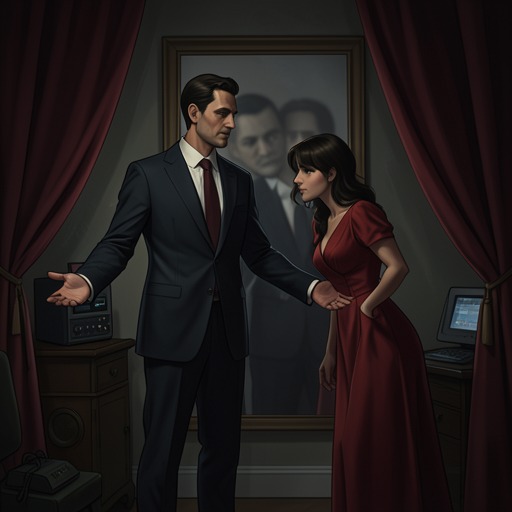
Poor ThingsParis is the decisive final setting of Bella Baxter and Duncan Wedderburn’s European elopement: the city where Wedderburn chooses to leave, and where Bella demonstrates that his departure does not leave her without resources or a future of her own. The episode reaches the reader through Wedderburn’s letter and Godwin Baxter’s account of reading it, so Paris emerges at once as a place on the map and as the setting of a self-serving confession.
Messages and Distance
During Bella’s travels, telegrams periodically reached Godwin Baxter with brief reports from cities across Europe and the Mediterranean. One foggy November afternoon, a telegram from Paris told him not to worry. Baxter became frantic and threatened to go there and find Bella; Archibald McCandless urged him instead to trust her and not thwart her independence. When the same message arrived from Paris a week later, Baxter’s resolve weakened, but he did not immediately leave.
The distance between Paris and Glasgow then became the setting for two sharply different accounts. In a letter dated November 14, Wedderburn admitted that he had eloped with Bella, toured Europe and the Mediterranean with her as her supposed husband, and left her in Paris a week earlier before returning alone to his mother’s home in Glasgow. Baxter received the letter alongside another from Bella’s Paris residence, making the city a point of contact as well as separation.
Streets, Hotel, and Consultation
Wedderburn’s account places the pair in Paris after an overnight train journey. Short of money, they walk rather than hire a cab through streets where night-soil collectors’ wagons are the only vehicles. Bella carries their two heavy cases, one on each shoulder, while Wedderburn carries nothing. The contrast belongs to his own retrospective account, which depicts her eagerness to look at the city alongside his growing wish to be apart from her.
Near the river, in the narrow Rue Huchette, Bella finds them a noisy hotel. Its manageress, a Frenchman’s widow born in London, speaks fluent Cockney and invites Bella into her small office while the room is prepared. Wedderburn accepts the opportunity to wait outside without Bella, describing his relief at being alone in the open air. The hotel’s ordinary practical arrangements thus expose the strain in the travelling couple more clearly than any grand confrontation would.
In Paris, Wedderburn also consults a priest about a telegram associated with the Sacred Heart shrine and recounts his sins. The priest refuses absolution because Wedderburn is not Catholic, but offers advice: Wedderburn can marry Bella and go home, leave her and go home, or face damnation; he is also urged to consider instruction in the Catholic faith on returning to Glasgow. Wedderburn presents the sunlight outside as a blessing and the encounter as the moment a burden lifts. In Baxter’s interpretation, the practical change is simpler: Wedderburn has finally recognized that he is tired of Bella.
The Separation
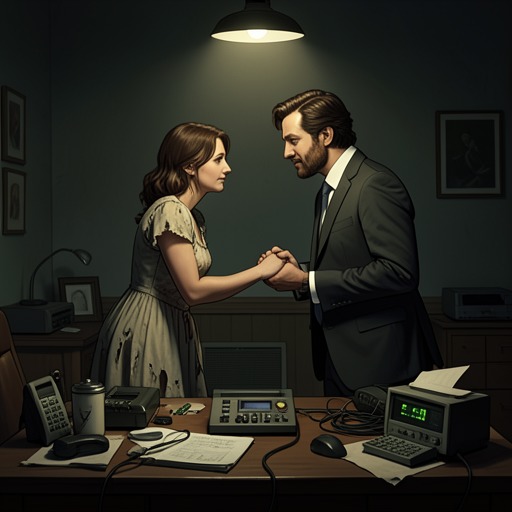
Back at the hotel, Wedderburn tells Bella that he must return to Glasgow to work and cannot take her with him unless she returns as his wife. Bella accepts the separation cheerfully and says she wants to see more of Paris. She packs Wedderburn’s belongings into one case and gives him money for his fare, turning the departure he announces into a journey she helps make possible.
When Wedderburn asks whether that is all, Bella explains that the money is what remains of his funds, but offers more if he needs it. She then unstitches the lining of her travelling coat, removes £500 in Bank of England notes, and gives them to him as payment for the enjoyment he gave her. The concealed reserve makes the end of the elopement more than Wedderburn’s withdrawal: in Paris, Bella is the one with money to spare and the freedom to decide what comes next. He returns to Glasgow alone; she stays behind in the city.