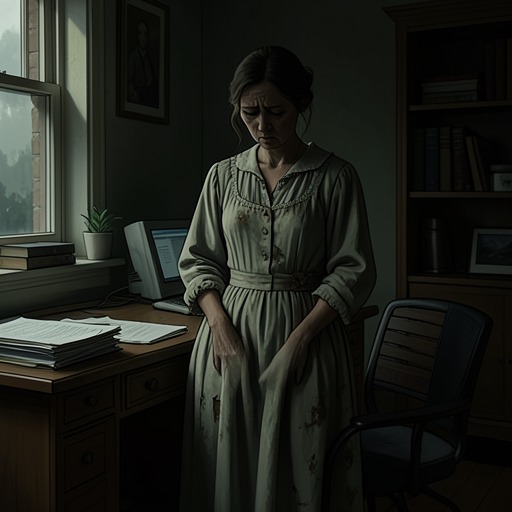
The founding of the Godwin Baxter Natal Clinic
Poor ThingsThe founding of the Godwin Baxter Natal Clinic in Glasgow in 1890 turned Victoria McCandless’s medical training into a charitable service led by women and oriented toward patients whom conventional institutions often neglected. Funded with Godwin Baxter’s money, the clinic combined care with the training of local women, while Victoria’s later advocacy for reproductive health and more active patient participation extended its challenge to established medical authority.
Background and Purpose
The clinic grew from a medical culture Victoria and Baxter regarded as unequal and paternalistic. Baxter argued that public hospitals taught doctors to practise on poor patients while wealthier people obtained private treatment. In his view, the customary bedside manner could make patients passive rather than treat them as people whose minds and lives mattered. He also maintained that nursing, rather than doctors’ authority alone, was central to healing.
Women’s access to medical education was itself limited. Baxter described a Britain with only four women doctors, all graduates of foreign universities, and pointed to the Enabling Bill of 1876 and the work of Sophia Jex-Blake as forces opening further opportunities. Before Victoria’s eventual professional qualification, he proposed that she train as a nurse in an east Glasgow infirmary, learn through practical work, and later assist in surgery. He argued more broadly that professional education should begin with manual work. The clinic’s later combination of treatment and training gave practical form to this emphasis, though the account does not establish that Victoria followed the specific nursing route he proposed.
Victoria had a defined sense of whom she wanted to serve: girls, mothers, and prostitutes. She also intended to teach women modern contraceptive methods. Baxter and Archibald McCandless advised her to keep that intention private until she was established, on the grounds that clinical advice given in a consulting room would be less likely to provoke public scandal than an early public campaign. The clinic thus began within a tension between urgent commitments and the strategic discretion imposed by a hostile climate.
Founding and Organization
Victoria enrolled under the name Victoria at the Sophia Jex-Blake School of Medicine for Women in Edinburgh in 1886 and received a Doctor of Medicine degree from Glasgow University in 1890. That year she opened the Godwin Baxter Natal Clinic in Dobbie’s Loan, near the Cowcaddens. It was established as a purely charitable foundation, and Victoria and Archibald placed all of Baxter’s money in the fund that supported it.
The managing committee initially included Sir Patrick Geddes and Principal John Caird of Glasgow University. Victoria ran the clinic with a small staff of local women whom she trained herself. Her practice was not to retain a helper indefinitely: after a year following training, she expected each woman to leave and carry her skills elsewhere or work with a doctor able to teach her more. Several former helpers entered city hospitals as nurses, although one ward sister complained that they asked too many questions. Their questioning suggests a difference between the clinic’s practical, participatory instruction and the deference expected in more conventional settings.
Medical Practice and Principles
The clinic’s charitable purpose was linked to Victoria’s concern with the conditions under which women could obtain care and control their reproductive lives. Her earlier proposal that women examine clients for venereal disease at a Paris brothel reflected her view that medical inspection should not be imposed only on the female workers exposed to infection; clients, too, should be examined. That proposal was made outside the clinic, but it accords with the clinic’s wider orientation toward women’s health and a redistribution of medical responsibility.
Victoria’s experience of combining work and pregnancy also informed her criticism of medical convention. Between 1892 and 1898 she bore three sons at two-year intervals, continuing clinical work until the final days of each pregnancy and returning soon afterward. She contrasted her position with that of poor women who could not afford to stop working. In 1899 the Fabian Society published her pamphlet Against Horizontalism, which challenged doctors’ tendency to keep patients lying down when that posture served the practitioner’s authority more than the patient’s needs. Victoria accepted that bed rest was necessary for some illnesses, but argued that childbirth was not a disease and could proceed more easily in a squatting position. She also treated horizontalism as an attitude of unquestioning submission to medical expertise, not merely a bodily posture. These arguments made the clinic’s charitable work part of a broader effort to let patients understand and participate in their care.
Opposition and Aftermath
Victoria’s advocacy brought the clinic into conflict with powerful religious and political interests. Clergymen of every Christian church denounced A Loving Economy for its birth-control proposals, while some birth-control advocates objected to its criticism of commercial contraceptives as unhealthy. A campaign in the Daily Express helped enlarge the paper’s circulation while seeking to deprive Victoria of her clinic. The ensuing Scottish trial ended in a verdict of not proven: she was neither struck off the medical register nor declared guiltless.
By 1920, the clinic’s original committee had been replaced by members less willing to withstand the hostile publicity. They dismissed Victoria and transferred the clinic to Oakbank Hospital as an out-patients department. Having spent her savings printing and promoting A Loving Economy, Victoria’s only remaining property was 18 Park Circus. She let its upper rooms to university students and withdrew to the basement, where she continued the work on a much smaller scale under the clinic’s name. The transfer ended her control of the charitable institution, but not the practice she had built around it: even after losing the public clinic, she continued to offer care from her home.