Victorian Divorce Law Rules
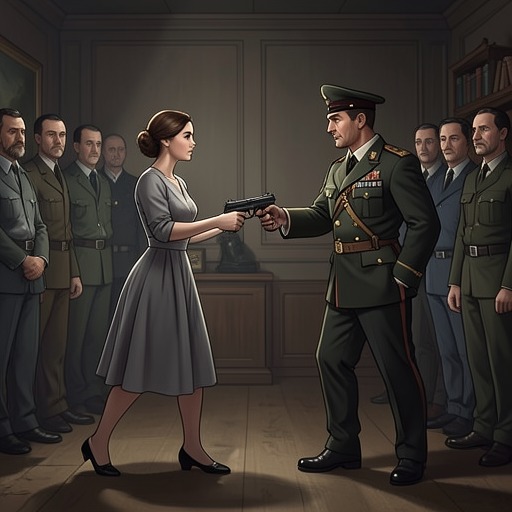
Poor ThingsThe Victorian Divorce Law Rules become a practical struggle over who may define Bella Baxter’s identity, marriage, and future. In the confrontation between Godwin Baxter, General Sir Aubrey de la Pole Blessington, and their solicitors, marriage law offers no simple escape: the death that ended one marriage, the grounds that might support divorce, and the risk of a court’s intervention all pull in different directions. The dispute exposes how a woman’s expressed choice can be subordinated to legal status and medical authority, even as those same rules provide Baxter with arguments against returning her to her former husband.
Grounds for Divorce and Marital Conduct
The solicitor Harker describes a narrow legal route to divorce based on extreme cruelty, while arguing that a husband’s adultery does not suffice unless it falls into specific categories he calls unnatural: anal, incestuous, homosexual, or with an animal. On this account, General Sir Aubrey de la Pole Blessington’s alleged sexual relationship with Dolly Perkins would not establish grounds for divorce. The law’s asymmetry is central to the scene: the General’s conduct is treated differently from conduct attributed to a wife, and a husband’s marital wrongdoing does not automatically release his spouse.
The cruelty argument also carries a trap. To prove it, Bella’s side would have to rely on witnesses who could testify that the General locked her in a cellar while she was considered raving mad, claiming he did so to keep her safe until medical help arrived. Harker warns that such an action would not necessarily secure Bella’s freedom. Instead, the court might place her in protective custody as its ward. A claim intended to establish the husband’s cruelty could thus reinforce the institutions’ power to classify and confine the wife.
Identity, Death, and Legal Continuity
Godwin Baxter challenges the premise that the General remains Bella’s husband. He argues that the marriage contract ended with death, and that Bella’s drowning therefore ended her marriage to the General. The only independent witness he identifies is an official of the Glasgow Humane Society, who witnessed the suicide and retrieved the body. Baxter further invokes Dr. Prickett’s suggestion that he gave Bella a new life: if that account is accepted, he argues, he is her father and protector in the same way Blaydon Hattersley had been, and may present her to the husband she chooses.
Harker rejects the attempt to make Bella’s new life cancel her former obligations. His analogy is a thief who becomes healthier and more pleasant, and forgets the theft: those changes would not erase responsibility for the original act. In the same way, he argues, a changed condition or identity cannot make a prior marriage disappear or permit Bella to contract a second marriage while the first is legally intact. The analogy turns a dispute about a woman’s life and personhood into a question of continuing liability. Baxter’s account makes death a boundary; Harker’s treats legal identity as continuous across bodily and mental change.
Mental Illness, Choice, and Legal Power
The General claims that Bella was mad when she fled and that, if she is now sane, she must return with him. If she refuses, he says, that refusal proves she remains mad and should be committed to an institution. His reasoning makes her choice self-invalidating: agreement confirms the husband’s authority, while refusal becomes evidence for confinement. The competing solicitors likewise treat her mental condition as a matter with legal consequences, not merely as a private judgment about her wellbeing.
Harker argues that a divorce case would expose the cellar confinement and bring Bella under the court’s protective custody. He also dismisses the testimony of foreign doctors who attest to her happiness as unable to legalize a Scottish household in which she, the General, and another man might live together. His objection is not that Bella’s present happiness is unreal, but that it cannot override the existing marriage in law. Baxter, by contrast, maintains that the men should allow her freely to choose whether to return to England or remain in Scotland. The dispute therefore sets personal consent against a legal framework that can recognize her as a wife, a supposedly disordered patient, or a ward of court, while giving her limited control over which status prevails.
Separation, Divorce, and the Outcome
Baxter proposes divorce if the General insists on taking a purely legal view of the marriage. Harker’s response makes clear why that remedy is dangerous: the action could end with Bella in protective custody and would create public scandal. Baxter consequently proposes a discreet legal separation instead. He says that separation would prevent Bella and Archibald McCandless from marrying, but would allow Bella to begin work as a doctor in Scotland without the public injury that a divorce might cause her career. Their private arrangement, as Baxter presents it, is to last until the General dies of natural causes.
The solution is a compromise rather than a legal vindication of Bella’s freedom. It avoids an immediate return to the General and avoids the more disruptive divorce proceedings, yet it leaves her unable to marry McCandless while the General lives. Two days later, the newspapers report that the General has been found dead on the gun-room floor of his country house at Loamshire Downs. A revolver in his hand and the bullet’s path rule out accident; the coroner finds that he died while the balance of his mind was disturbed. His death abruptly overtakes the proposed arrangement, but the episode does not describe a divorce judgment. The law’s significance lies instead in the choices it constrains: separation can provide a narrow interval of practical independence, while the formal routes to freedom threaten renewed control over Bella’s body and status.