Victorian Gender Double Standard
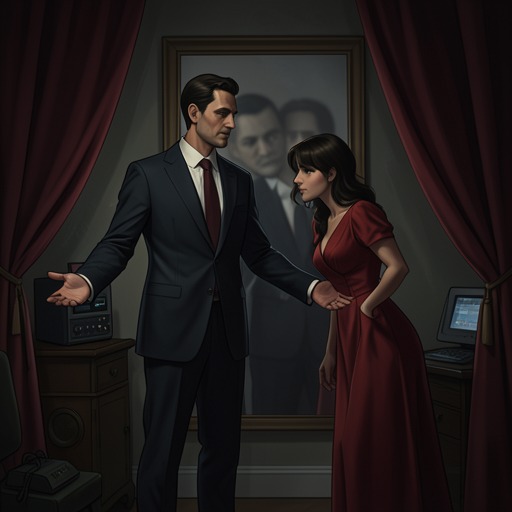
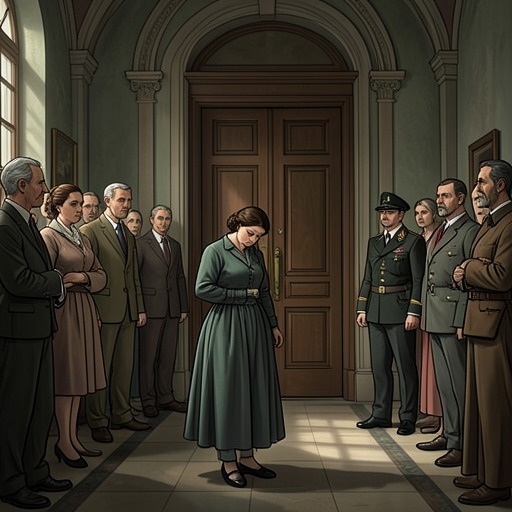
Poor ThingsVictorian Gender Double Standard in Poor Things is a system of unequal sexual rules: respectable women are expected to submit to marriage and motherhood, while men preserve opportunities for sex outside the home and treat women’s desire as a threat to male authority. The novel makes that imbalance tangible in Bella Baxter’s account of marriage, the medical explanation of her distress, and the General’s treatment of Dolly Perkins. What is called feminine madness is set against behavior by men that the same social order excuses as ordinary or necessary.
The respectable wife and the sexual double standard
The social ideal described in the novel reduces wealthy wives to public ornaments and private sources of pleasure for their husbands. Motherhood, supposedly a central purpose of marriage, is also distanced from women of leisure: after childbirth, servants caress and care for their children. The arrangement denies women both a substantial maternal role and recognition of their own sexual lives. It makes the wife’s body available within marriage while expecting her to appear above bodily appetite.
The novel places this ideal beside the harsh labor of women who work in Lancashire weaving sheds. Their lives differ sharply from those of wealthy wives, but neither position guarantees independence: one woman may be confined by domestic respectability, another by exhausting work. The comparison widens the criticism beyond one unhappy marriage. Gendered control crosses class boundaries, even as class determines the particular form it takes.
Millie Cronquebil’s account of her Paris hotel supplies a contrasting view of sexual commerce. She explains that men pay to marry a stranger for an hour or less, and that most of her customers are already married; some also keep mistresses. She describes licensed work in France as an available livelihood for a clean, intelligent woman, while saying that the practice is illegal in Britain. Her explanation makes visible a culture in which men’s marital status does not prevent them from seeking sexual variety, while women’s economic position can leave them dependent on the very trade that respectable society condemns.
Medical authority and the policing of desire
The double standard becomes especially clear when Dr. Prickett recounts the rules he gave the General before the wedding. He prescribed sex during the honeymoon and then only once or twice a week, with amorous contact to cease once pregnancy was detected. In his account, this regimen represents rational medical guidance. Bella Baxter’s former wish to share the General’s bed every night, by contrast, is presented as evidence of derangement—even though Prickett says she was in the eighth month of pregnancy and sobbed when denied the contact she sought.
Bella’s response cuts through the diagnostic language: she says that the poor woman needed cuddling. The General instead describes female touch as a source of dangerous lust in men, framing male desire as difficult to restrain and women’s desire for affection as unreasonable. His complaint makes the asymmetry plain. Men’s sexual appetites are treated as powerful facts to be managed; a woman’s wish for sustained tenderness becomes a sign that something is wrong with her.
Prickett further claims that no normal, healthy, respectable woman wants sexual contact for pleasure, only as a duty. Godwin Baxter rejects that premise and challenges the tradition used to make it sound authoritative, tracing it to ancient male thought and celibate Christian priests. In the confrontation, respectable femininity is not simply a social expectation but a doctrine presented as medicine, philosophy, and common sense. Bella is asked to accept a description of women that contradicts both her experience and the evidence of her own former distress.
The proposed clitoridectomy exposes the violence that follows when women’s desire is defined as disease. Prickett says that Bella’s former self begged him to perform the operation because she loathed her rages and her desire for contact with her husband. He says he postponed it until after the birth. His account complicates any easy division between an oppressive doctor and a woman who freely chooses treatment: Bella’s consent is described, but it takes place within a medical framework that has already defined her desire as an illness to be cut out. Prickett insists that she regarded him as a friend and that his visits were pleasant; the novel places that reassurance beside the extreme intervention he says he recommended.
The protected husband and the abandoned Dolly Perkins
The General’s treatment of Dolly Perkins reveals how sexual license is distributed by class as well as gender. Baxter reports that Dolly was sixteen and employed as the General’s parlour-maid until the day before his wedding. The General then arranged an apartment for her near Seven Dials and visited regularly for two hours on Tuesday afternoons, as well as on Fridays when he paid the rent. After four months he told the landlady that Dolly was no use to anyone and would damage his household’s reputation. The landlady then learned that Dolly was penniless and pregnant; Dolly was made to leave.
The General denies that he fathered the child. He says their encounters could not have caused a pregnancy and accuses Dolly of trying to blackmail him for money. Whatever the truth of that denial, his account confirms that he left her without a shilling. He describes her as greedy and sexually disreputable while his own repeated visits remain, in his telling, no source of shame. The practical consequence of his authority is stark: he can withdraw from the relationship, while the young woman he employed is left pregnant, without money, and expelled from her lodging.
Bella compares Dolly’s treatment with the General’s condemnation of his wife: he judged a woman mad for wanting more than an hour a week with him while spending hours with Dolly. The General denies hugging Dolly and calls for Dr. Prickett to explain men. Prickett’s halting response supplies the rule behind the contradiction: powerful men are said to need sexual indulgence with disreputable women while preserving the purity of marriage and the home. The speech falters, but its logic is unmistakable. The wife must embody sexual restraint; the working-class woman is assigned the cost of the husband’s appetite; and the man is permitted to claim respectability in both roles.
Exposure and narrative significance
The novel’s critique emerges through competing explanations rather than a neutral statement of rules. Prickett treats prescribed intercourse and the proposed operation as medical matters; the General invokes male nature and domestic honor; Baxter contests the inherited account of female sexuality; and Bella tests each explanation against what she has learned about women’s lives. The confrontation turns official language—respectability, health, and masculine duty—against the consequences it conceals.
The contrast between wife and servant is central. The General’s wife is condemned for seeking affection, while Dolly is used and then discarded; neither is allowed to set the terms of her relationship with him. Their circumstances differ, but male authority controls both the respectable home and the sexual arrangement outside it. By putting the General’s repeated visits beside his moral condemnation of Bella, Poor Things shows that the double standard is not an accidental inconsistency. It is the mechanism that protects male freedom while recasting women’s needs as duty, shame, or illness.