
The Trial as a Contest of Credibility
Presumed InnocentThis flow traces the courtroom struggle over whose character and interpretation jurors will trust when direct proof is absent.
increasing Bearing strength in each event
 decreasing
Bearing strength in each eventdecreasingThe Jury's First Impressions
The Jury's First Impressions
A high-profile case
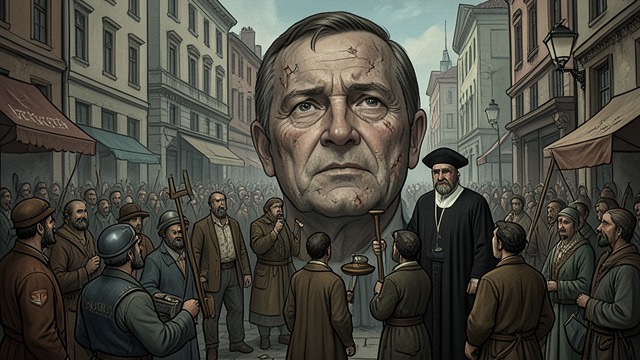
The jury arrives amid intense publicity about a prosecutor accused of murdering a colleague. Judge Lyttle emphasizes the presumption of innocence and warns jurors not to treat newspaper accounts as evidence.
Competing portraits
Nico presents Rusty as an obsessed lover who concealed his presence and manipulated a crime scene. Stern presents him as an accomplished public servant targeted by a weak circumstantial case.
The argument beneath the facts
Nico's opening alleges jealousy over Raymond and Carolyn's relationship, but he has limited proof. Stern tells jurors to watch what the evidence does and does not show, establishing credibility itself as the trial's central contest.
The Prosecution's Witnesses
The Prosecution's Witnesses
Evidence with gaps
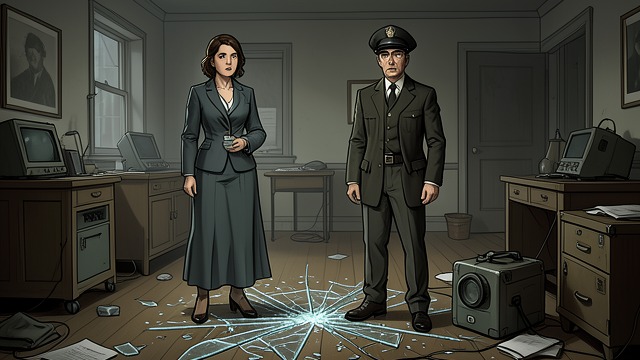
Detective Greer describes the crime scene and an apparent sexual assault, but the glass he collected is missing. The absent object makes the state's handling of its own evidence a matter the jury can see directly.
Character challenged
Eugenia claims she heard Rusty call Carolyn an endearment, then retreats from the claim under Stern's questioning. Mrs. Krapotnik cannot reliably identify Rusty, and the bus witness admits her memory is uncertain.
Sympathy and suspicion
Raymond's testimony carries the authority of a public figure but also reveals his own affair and concealed conduct. Stern uses that parallel to weaken the idea that Rusty's failure to disclose an affair necessarily proves murder.
Expertise Put on Trial
Expertise Put on Trial
Science as narrative
The prosecution's biological and fingerprint evidence appears to support its account, but the experts cannot establish when Rusty touched the glass or whether the tested specimen came from Carolyn.
The witness becomes the issue
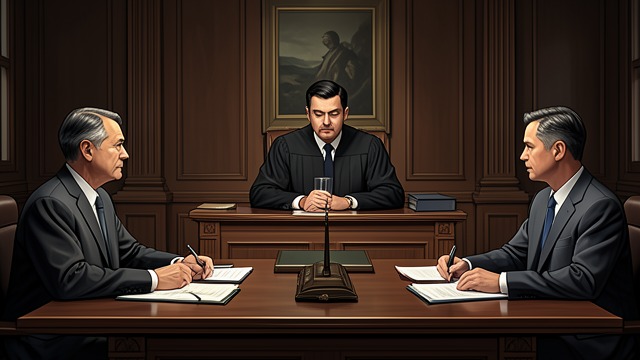
Stern's cross-examination exposes Kumagai's forgotten autopsy finding and inconsistent interpretation. Lyttle's warnings about the missing glass and Molto's behavior further shift attention from Rusty's alleged guilt to the prosecution's reliability.
Credibility reaches its limit
By the time Robinson denies that Rusty confessed, the state's case has lost much of its force. The trial ends before jurors decide, demonstrating that courtroom justice depends not only on evidence but on the credibility and handling of those who present it.
Jury selection and opening statements in August
The first days of testimony
The final prosecution week
