
The Law's Two Kinds of Innocence
Presumed InnocentThis flow explores how courtroom acquittal can coexist with private guilt, uncertain knowledge, and the preservation of secrets.
increasing Bearing strength in each event
 decreasing
Bearing strength in each eventdecreasingThe Accuser's Confidence
The Accuser's Confidence
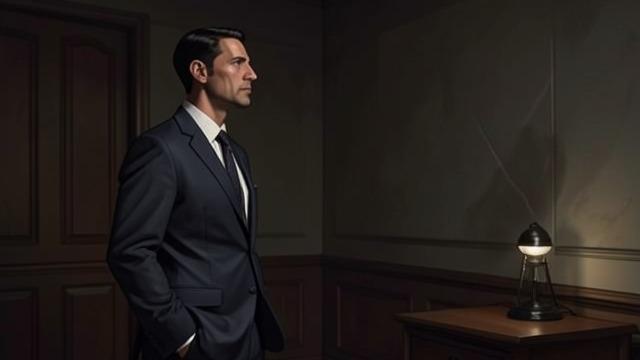
A prosecutor points
Rusty begins the novel describing the ritual of pointing to a defendant and asking jurors to find the truth. He once imagined how frightening it would feel to be accused, but duty has hardened into a professional habit.
Truth as civic labor
He tells jurors that memories fail and evidence may point in different directions, yet citizens must still decide. Justice depends on a system willing to make judgments even when no account is complete.
Irony in retrospect
Rusty later becomes the accused person whose guilt cannot be reliably established in court. His opening philosophy returns as a question about whether a legal process can discover truth when its participants conceal essential facts.
A Legally Innocent Defendant
A Legally Innocent Defendant
The burden of proof
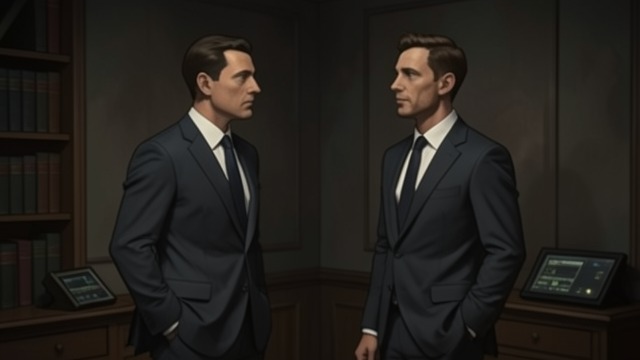
The state must prove Rusty's guilt beyond a reasonable doubt. The missing glass, unreliable testimony, and failed forensic theory weaken the case, and Lyttle concludes that the jury should not be asked to decide on such evidence.
Acquittal as a legal act
Rusty is discharged without a jury verdict after Nico dismisses the case. The outcome establishes that the prosecution has not met its burden; it does not establish a complete alternative account of Carolyn's death.
The vocabulary of innocence
The public treats the acquittal as vindication, while Rusty knows that his own conduct and secrets resist a simple claim of moral innocence. The difference between being legally cleared and knowing what happened becomes central to his life afterward.
The Unspoken Confession
The Unspoken Confession
A story told to Lipranzer
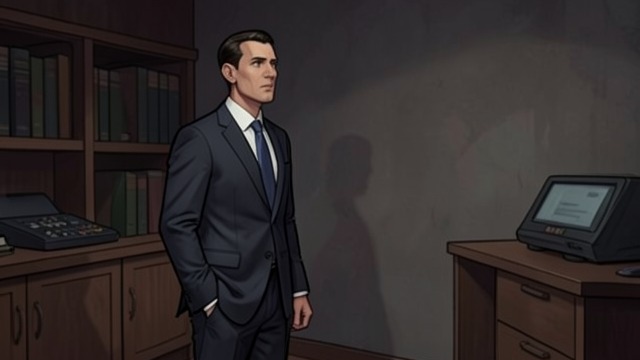
Rusty gives Dan Lipranzer his reconstruction of Barbara's crime and describes how the pieces may have been arranged to implicate him. He does not present a courtroom confession; he offers an account that remains partly speculative.
Responsibility shared and divided
Rusty believes Barbara killed Carolyn, yet Lipranzer suspects she may also have intended Rusty to be convicted. Rusty chooses not to expose her, deciding that the cost to Nathaniel would be too high and that no one may believe him.
Acquittal without closure
The legal case is over, but no official record captures the explanation Rusty now holds. The final uncertainty is not whether the law has freed him, but whether anyone can know or safely tell the whole truth.
At the opening statement
The trial's final day
The final kitchen scene before Christmas
