
The Public Story and the Private Truth
Presumed InnocentThis flow follows the widening gap between what the court can establish and what Rusty eventually believes happened.
increasing Bearing strength in each event
 decreasing
Bearing strength in each eventdecreasingThe Limits of Evidence
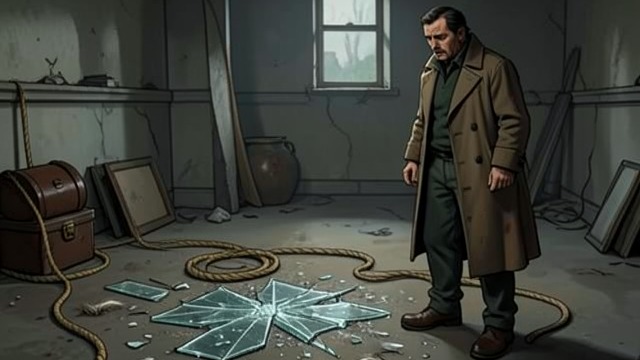
The Limits of Evidence
A scene interpreted
The crime scene yields traces but no eyewitness account of the killing. Investigators infer sequence and motive from the unlocked windows, rope, glass, fibers, and biological evidence.
Competing explanations
Some details support a staged rape; others suggest a familiar visitor or a misleading forensic interpretation. The same physical evidence can be made to fit different stories, especially when investigators begin with assumptions about who the killer must be.
A system built on uncertainty
Rusty once urged jurors to find truth from imperfect evidence. Now he experiences how much a case can depend on interpretation, missing objects, and decisions about which witnesses to trust.
A Verdict Without the Truth
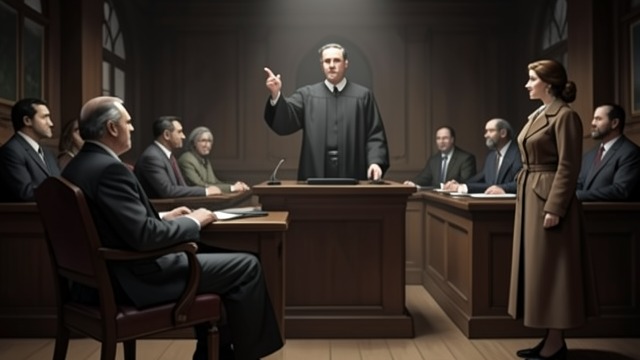
A Verdict Without the Truth
Legal sufficiency questioned
Lyttle ends the trial because the state's proof is too weak to justify asking the jury to convict. His decision follows specific failures in testimony and forensic evidence, not a conclusive account of the murder.
Public conclusions outrun facts
News reports portray the case as a possible frame-up, while others treat Rusty's acquittal as vindication. Nico's dismissal adds another interpretation, but none of these public readings establishes who killed Carolyn.
The private burden remains
Rusty leaves court legally free and privately uncertain. His decision not to reveal the full story protects family members and preserves his own life, but it also prevents the public record from matching what he believes he knows.
An Unsolved Ending
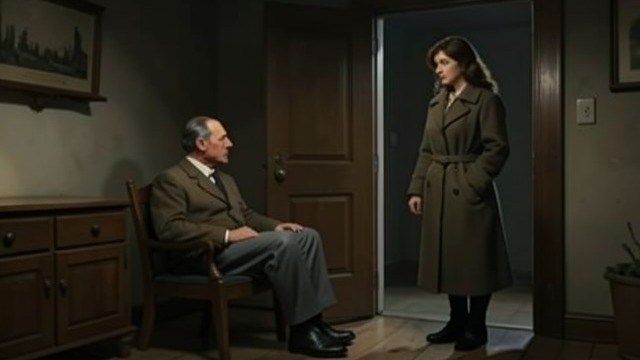
An Unsolved Ending
The hidden account
Rusty privately reconstructs Barbara's actions and the reasons she may have wanted Carolyn dead. He cannot establish every detail, and Dan Lipranzer proposes that Barbara may have intended Rusty to be blamed as well.
Silence as a decision
Rusty does not report Barbara, in part because of Nathaniel and in part because he doubts that an accusation would be believed. He also declines to correct the public suspicions that fall on Molto and the police laboratory.
The case remains open
The homicide has no official culprit, even as Rusty returns to the prosecutor's office. The novel's resolution preserves a distinction between legal innocence, factual guilt, and the privately held version that cannot safely be spoken into evidence.
From the first crime-scene reports through the indictment
The final day of the August trial
The closing months of the novel
