Augustine Bolcarro
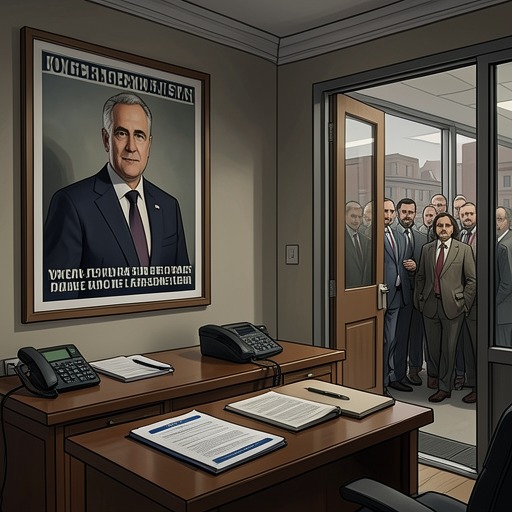
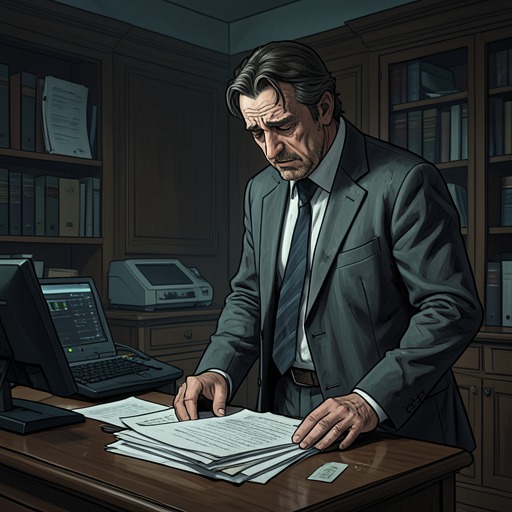
Presumed InnocentAugustine Bolcarro is the mayor and a consequential figure in the county’s party politics. His relationships with Raymond Horgan and Larren Lyttle reveal a political order in which old grievances, campaign loyalty, and control over public recognition continue to matter long after elections are over.
Political Position and Past Conflict
A decade before the events at the chapel, Horgan was a rising political force and nearly drove Bolcarro from office. Horgan lost the primary, then made the gestures of loyalty expected of him, but Bolcarro continued to bear the wound of that challenge. When Horgan later faced a contested primary of his own, Bolcarro invoked his party role as a reason for neutrality and withheld the party endorsement. The account presents this neutrality as politically convenient: Bolcarro could watch Horgan struggle without openly taking sides.
Influence over Larren Lyttle
Bolcarro’s authority had also shaped Lyttle’s career. After Lyttle visibly managed Horgan’s campaign and helped mobilize Black voters, he joined Horgan’s ticket as a judicial candidate. Lyttle won while Horgan lost. Bolcarro then kept Lyttle assigned to North Branch, where he handled traffic matters and minor misdemeanors, rather than serving as a downtown felony judge. Four years later, Horgan gave Bolcarro an early and enthusiastic endorsement for reelection; Lyttle was subsequently able to move downtown and became a felony judge. The sequence makes political allegiance, rather than judicial merit alone, central to Bolcarro’s influence over Lyttle’s professional prospects.
Conduct at the Chapel
At Carolyn Polhemus’s funeral, Bolcarro summoned Horgan for a private conversation before the service. Horgan made a visible face when he learned who wanted to see him, then went into the church with Paul Dry from the mayor’s staff. Afterward, Horgan told Rusty Sabich that Bolcarro had advised him, in confidence, that arresting Carolyn’s murderer before Election Day would improve his chances. Horgan regarded the advice as disingenuous, especially because Bolcarro was presenting himself as neutral, and pointed him out as the chief mourner. The exchange places electoral calculation beside public mourning without establishing that Bolcarro had any role in the murder investigation.
Political Performance and Significance
Bolcarro’s dealings with Horgan move between distance and apparent support. He withholds an endorsement while Horgan is struggling, yet Horgan expects that, if he eventually succeeds, Bolcarro will be the first to welcome him and claim he had always known Horgan would win. That anticipated reversal captures Bolcarro’s political adaptability: he can stand apart from a candidate when doing so is useful, then present himself as an ally once the candidate reaches safety. His influence over Lyttle and his carefully framed advice to Horgan likewise show how formal roles and personal calculations intersect in local politics.