Eugenia Martinez
Presumed InnocentEugenia Martinez is a veteran employee of the prosecuting attorney’s office whose brief testimony becomes a revealing test of how a small piece of remembered conversation can acquire weight in a murder trial. Formerly Rusty Sabich’s secretary, she recounts overhearing him arrange to meet Carolyn Polhemus at her home; under cross-examination, the omission of a detail from her earlier account puts the reliability and handling of her testimony in question.
Identity and Office Background
Eugenia testifies that she has worked in the prosecuting attorney’s office for fifteen years. For the two years ending the previous April, she worked for Rusty, serving as his secretary. This employment history connects her both to the office presenting the case and to the defendant whose relationship with Carolyn the prosecution is trying to establish.
By the time of the trial, the investigation is important to Tommy Molto, whom the questioning identifies as Eugenia’s boss. Her position in the office therefore gives her testimony institutional context: she is not an outside observer, but an employee familiar with the people and workplace at the center of the case.
The Telephone Call and Her Testimony
The prosecution calls Eugenia after a difficult afternoon in which it is trying to establish what happened between Rusty and Carolyn. She says that, one day in September or October, she answered the wrong telephone line and heard a few words of conversation. She recognized the voices as Rusty’s and Carolyn’s, and understood Rusty to be talking about meeting Carolyn at her home.
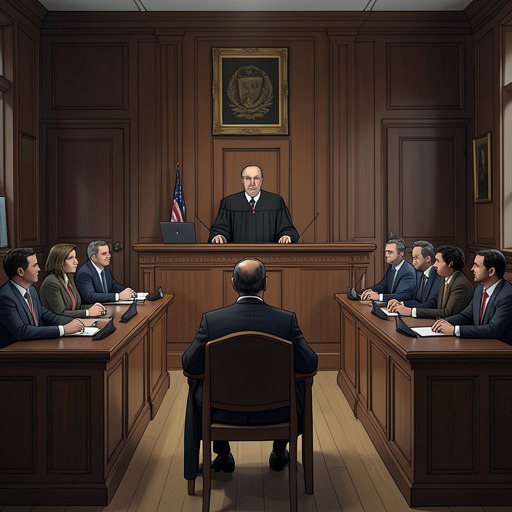
Nico Delia Guardia’s questioning is initially concise. When he asks how the speakers sounded, Sandy Stern objects to the question as calling for a characterization. Eugenia then volunteers that Rusty used an affectionate form of address for Carolyn and said he would come at eight o’clock. Her intervention surprises Nico, who had not elicited that detail in his question. The testimony thus shifts from the bare fact of a proposed meeting to a more intimate suggestion about the relationship between the two voices.
Cross-Examination and the Missing Detail
Sandy’s cross-examination turns to Eugenia’s work in the office and the circumstances of the investigation. He asks whose typing she does and whose phones she answers, establishing her current workplace connection before confronting her with the account she gave an officer. He points out that when asked about Rusty’s relationship with Carolyn, she had not mentioned hearing him use the affectionate address. The officer’s report is in Sandy’s hand as he asks.
Eugenia acknowledges that she did not include the detail. Her response does not erase what she has just told the jury, but it gives the defense a concrete basis to question why this particular part of the call appeared in her testimony only at trial. The episode makes the distinction between recognizing voices, recalling a proposed meeting, and later supplying an additional detail central to the assessment of her evidence.
Role in the Trial
Eugenia’s appearance is brief, but its placement gives it significance. The prosecution needs evidence of Rusty’s connection to Carolyn, and Eugenia can place the two in a conversation about meeting at Carolyn’s home. Yet the detail that might make the call seem more revealing also exposes a gap between her testimony and what she previously told investigators.
Her evidence therefore works in two directions: it supports the prosecution’s account of contact between Rusty and Carolyn, while the delayed disclosure gives the defense grounds to challenge its completeness and credibility. The exchange illustrates how courtroom meaning can turn not only on what a witness remembers, but also on when that detail first enters the record.