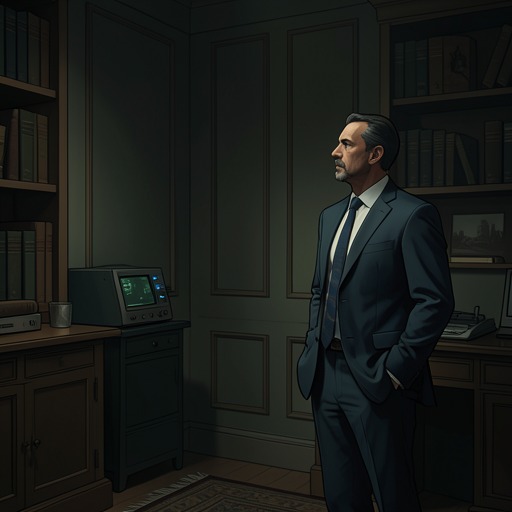
If you don't have the courage to point, you can't expect them to have the courage to convict
Presumed InnocentThe maxim “If you don't have the courage to point, you can't expect them to have the courage to convict” is John White’s first lesson to Rusty Sabich about the visible confidence a prosecutor must bring to a jury trial. Its force rests on a simple parallel: the prosecutor must openly identify the defendant before asking jurors to find guilt.
Origin in the Courtroom
Rusty recalls hearing the maxim on his first day in the prosecutor’s office, after the sheriff took his fingerprints and the chief judge swore him in. John White, then the chief deputy prosecutor, brought him to watch his first jury trial. As Ned Halsey made the state’s opening statement and gestured across the courtroom, White whispered the lesson to the new employee. Rusty remembers White as a hale Irishman with wild white hair and the humid scent of alcohol on his breath at ten in the morning; the recollection places the crisp instruction within a particular, unceremonious moment of initiation.
Meaning and Use
The expression treats pointing not as incidental courtroom movement but as an act of professional resolve. A prosecutor who asks jurors to convict must first be willing to indicate the person whose guilt the state is trying to prove. The sentence makes that sequence memorable through its balanced clauses: courage is required both to point and to expect a verdict.
The maxim recurs in Rusty’s later courtroom conduct. He extends his hand across the courtroom, holds one finger straight, seeks the defendant’s eye, and begins speaking for the state. That gesture turns White’s whispered advice into practice: before the evidence is weighed and the jury deliberates, the prosecutor publicly names the person at the center of the case. Rusty’s recollection also gives the act a personal history, recalling that his ambition to hold White’s job had not yet formed when he first heard the lesson.