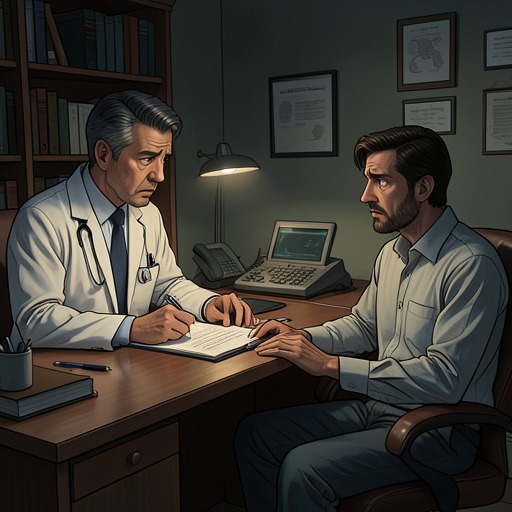
Molto Tries to Elicit a Confession from Rusty's Psychiatrist
Presumed InnocentMolto’s attempt to obtain a confession from Rusty Sabich’s psychiatrist becomes a last, sharply exposed prosecution gamble at Rusty’s murder trial. By calling Dr. Miles Robinson, the prosecution tries to turn the privacy of treatment into a route to the case’s most damaging possible admission. Instead, Robinson denies that Rusty confessed, and the judge ends the examination before Molto can pursue other private conversations.
Background and Decision to Call Robinson
The plan arrives in a courtroom already strained by disputes over the prosecution’s conduct and evidence. The judge has criticized Nico Delia Guardia for allowing an improper statement before the jury and says the state’s chief piece of evidence disappeared after it was last seen with Tommy Molto. He also regards the possibility that Molto and the chief pathologist manufactured evidence or testimony as a reasonable interpretation of events. The judge has not yet decided what to do about Molto, but makes clear that Molto will not take the witness stand and worsen matters. Against this background, a new prosecution witness carries unusual risk as well as promise.
Nico announces that the prosecution will call Robinson, who had appeared on its witness list but was omitted from the original order of proof. He says Sandy Stern was informed of the change the previous night. The judge asks for the witness’s identity; Molto’s plan is not initially set out in the announcement. When the judge warns Nico that the jury may already be skeptical, Nico asks to confer with Molto. Their private exchange is visibly tense: Molto gestures emphatically, while Nico ultimately announces that the prosecution will proceed. The decision to put Robinson on the stand is therefore not simply a routine continuation of the case. It is a choice to risk a direct question about Rusty’s treatment in a trial where the judge has already voiced grave concerns about the prosecution.
Robinson as Witness
Robinson is presented as a distinguished psychiatrist with particular authority on memory loss. In his mid-sixties, trim and soft-spoken, he is a full professor at the medical school and co-chair of its Psychiatry Department. Rusty had met him years earlier when Robinson testified in an insanity case, and later regarded him as the best psychiatrist to consult when Rusty himself was in trouble. Those details establish both Robinson’s professional standing and his personal connection to Rusty before Molto begins to test what that connection might yield.
Molto first establishes Robinson’s identity and profession, then asks whether he knows Rusty. He also directs attention to Rusty’s session on April 3, two days after Carolyn Polhemus’s murder. The date matters to the prosecution’s effort to make the treatment sessions relevant to the case, but Robinson’s presence does not erase the distinction between a patient’s acts and confidential communications. The trial has already encountered that boundary: the physician-patient privilege protects conversations, not acts. When Molto asks whether Rusty ever discussed Carolyn, Stern rises to object, signaling that the examination has moved from establishing the witness’s credentials toward probing the substance of treatment.
The Decisive Question and Answer
The examination reaches its intended point when Molto asks whether Rusty ever told Robinson that he had killed Carolyn. The question provokes audible surprise in the courtroom. Rusty understands it as the answer the prosecution brought Robinson to provide, rather than a peripheral inquiry into Rusty’s past relationship with Carolyn. The judge, already angered by Molto’s course of conduct, challenges the inconsistency between treating earlier questions as privileged and allowing this one to be asked. He declares Molto in contempt and demands that he proceed.
At this instant, the defense response reverses the expected alignment. Rusty urges Stern to permit an answer; Stern initially resists, but Rusty presses him to stand. Stern then tells the court that the defense will not object to the question as phrased being answered. Molto, who had just asked it, tries to withdraw it. The judge refuses to let the withdrawal erase the question and orders the court reporter to read it back, ensuring that Robinson can respond to the precise proposition Molto had put before the jury.
Robinson answers no: Rusty never told him anything like that. The answer gives the jury a direct denial of the alleged confession, not a general opinion about Rusty’s character or guilt. The courtroom’s reaction changes; the jurors nod, and a schoolteacher on the jury smiles at Rusty. The prosecution’s attempt to elicit its strongest possible admission has instead placed a clear denial before the jury.
Ruling and Significance
Molto continues by asking whether Robinson and Rusty ever spoke in any way about the subject of Carolyn’s murder. Stern objects to that question and to further inquiry into communications between patient and doctor. The judge sustains the objection, treats it as a limit on the examination, prohibits further inquiry, and excuses Robinson. Molto protests, but Nico immediately takes him by the arm and leads him away from the podium. Their response marks a contrast: Molto remains outraged, while Nico displays a firmer resolve to move on.
The episode turns on the gap between what the prosecution hopes a witness can reveal and what the rules of the trial permit him to disclose. Robinson’s professional stature makes his denial consequential, while the privilege ruling prevents the prosecution from widening the inquiry into confidential treatment. Stern’s unexpected willingness to let the central question be answered is equally important: rather than block the question, the defense accepts the possibility of an answer and allows Robinson’s denial to stand in open court. The examination does not resolve the murder, but it closes off the prosecution’s attempt to obtain a confession through this witness and leaves the jury with a specific, unambiguous answer.