People v. Sabich Trial
Presumed InnocentThe People v. Sabich Trial begins on August 18, turning Rusty Sabich’s murder indictment into a public courtroom contest. The opening is marked by ceremony, intense press attention, and the assembly of a jury: before evidence is heard, the trial places Sabich and the opposing legal teams under the scrutiny of a crowded courtroom.
Opening in a Crowded Courtroom
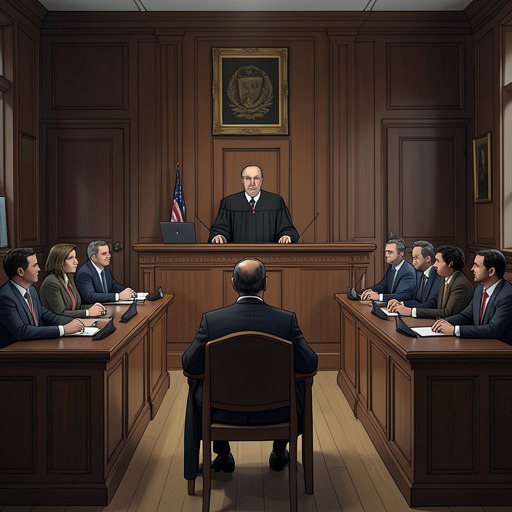
The case is called for trial by Ernestine, the docket clerk for Judge Larren Lyttle. The courtroom is full: spectators occupy the public benches, four rows of press reporters are present, and five sketch artists sit at the front. The judge’s secretary and law clerks, ordinarily absent from the courtroom, watch from folding chairs near the chambers door. Bailiffs take positions at the forward corners of the bench beside the marble pillars. The scene has the charged, watchful quality of a major public contest rather than a routine court session.
Judge Lyttle enters to the courtroom’s formal announcement and gavel. Sabich stands behind his lawyers, Sandy Stern and Jamie Kemp; Tommy Molto and Nico Delia Guardia appear for the prosecution, with Tom Glendenning serving as its case investigator. Judge Lyttle’s newly cut, carefully groomed hair is a small, visible detail amid the formality. The date fixes the trial’s pace: August 18 is only a few days short of two months after Sabich was indicted.
Jury Selection and the Defense Team
The trial’s opening days are occupied in part by choosing the jury. Sabich regards the panel ultimately selected more favorably than the juries he had often encountered when he was a prosecutor. It is weighted toward younger people, including a drugstore manager, a brokerage-house accountant, an assembly-line foreman, a hotel restaurant-services manager who works part-time with computers, and an insurance-company auditor. The panel also includes a schoolteacher, a rail-line secretary, a retired high-school music-program director, an auto mechanic, a Burger King management trainee, a retired nurse’s aide, and a cosmetics saleswoman.
The twelve regular jurors are nine white and three Black; seven are women and five are men. Judge Lyttle also seats four alternates, who hear the evidence but join deliberations only if a regular juror becomes ill or is otherwise excused. Once the jury is chosen, the trial is ready to proceed early on the second afternoon.
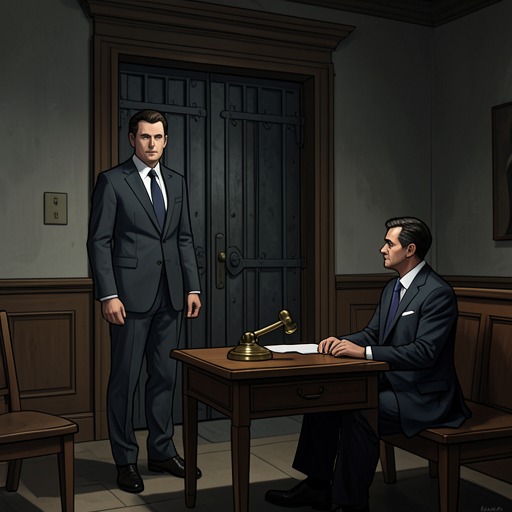
The defense divides its work between courtroom advocacy and legal research. Stern has Kemp handle research and address Judge Lyttle on legal questions outside the jury’s presence. Kemp will not speak when the jurors are in the box. On the afternoon opening statements are to begin, he takes Sabich into a hallway away from the courtroom’s disappointed, uns seated onlookers, wary that someone nearby could be listening or passing information to the prosecutors. Kemp’s preparation is presented as sustained work: he reads cases, writes memoranda, and confers with Stern and Sabich late into the night.
The Trial Gets Under Way
At ten minutes to two, the lawyers and Sabich return to the courthouse for opening statements. The pause of jury selection gives way to renewed intensity, and the courtroom’s public audience remains part of the trial’s pressure. With Judge Lyttle presiding, the twelve jurors selected and four alternates available, and both sides’ legal teams in place, the case moves from preparation into its evidentiary phase. The account establishes the trial’s participants, setting, and opening procedure, but this initial stage does not yet disclose the evidence or the verdict.