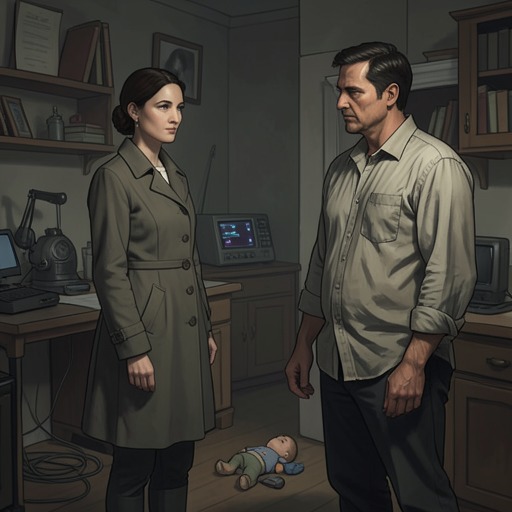
Rusty Sabich and Barbara Sabich’s marriage
Presumed InnocentRusty Sabich and Barbara Sabich’s marriage is tested by the murder trial that brings them back into close proximity without restoring trust. Barbara follows the case intensely, but Rusty experiences her attention as difficult to read; even after the charges are dismissed, their relief cannot erase the guilt, fear, and grief bound up in what happened. The marriage ends not with a simple reconciliation after his release, but with Barbara preparing to leave and both of them recognizing that the truth has made ordinary life together impossible.
Trial, Attention, and Distance
During the trial, a dinner at Rechtner’s gives Barbara and Rusty time together after what he describes as a day of pleasant developments. Barbara proposes wine and asks in detail about the proceedings: the Hair and Fiber stipulation, what the lab report showed, and what Kumagai’s testimony might establish. Her questions make clear how closely she has been following the case. Rusty, however, answers tersely and tries to turn the conversation elsewhere by asking about Nathaniel. He is uncomfortable not only because the trial dominates their meal, but because he cannot tell whether Barbara’s interest is detached curiosity about evidence and procedure or concern for what the prosecution is doing to him.
Barbara recognizes his evasions and tells him that he is becoming distant again. Her remark connects the immediate strain of the trial to a pattern she has known before: Rusty withdrawing rather than letting her share what is happening. The exchange leaves their intimacy suspended between proximity and exclusion. Barbara is physically at his side and wants him to speak; Rusty keeps his answers brief and tries to redirect her. Their difficulty is not a lack of conversation so much as the fact that the most consequential subject in their lives is also the one he cannot comfortably discuss with her.
Release Without Repair
When Judge Lyttle dismisses the murder charges and ends the trial, the public account is one of victory for Rusty and condemnation of the prosecution. Barbara finds him amid the visitors celebrating with Sandy Stern and says she hopes Nathaniel’s return can be advanced by a day, perhaps through a seat on the DC-3 that flies between Skageon and the mainland. She embraces Rusty and expresses relief that the case has ended in his favor. Yet he senses that their shared happiness is overshadowed by something still unresolved. In his understanding, the marriage cannot simply resume its former course; moving beyond their old troubles would require a difficult passage toward forgiveness.
The contrast between public celebration and private sadness sharpens as the evening continues. Rusty leaves the gathering without announcing his departure, while newspapers announce that the judge has freed him and criticized the prosecution’s case. The legal result changes his immediate circumstances, but it does not settle what he and Barbara owe one another or what they can bear to know. Her embrace and relief are real, yet neither amounts to a promise that their marriage can be repaired.
Confession and the Limits of Forgiveness
Barbara later takes a job for the January term at Wayne State, in Detroit, where Barbara lives, placing a substantial distance between herself and Rusty. Their final conversation turns toward Carolyn Polhemus and the truth behind her death. Rusty tells Barbara that Carolyn was never more important to him than she was, while admitting that his obsession had a power he could not readily escape. He refuses to make that obsession an excuse: he describes how dwelling on a carefully elaborated plan can become thrilling, how the first step can feel as charged as the fantasy, and how a person can continue while telling himself that no real harm has yet been done.
The conversation also confronts Barbara’s responsibility. Rusty says that disclosing that Barbara had killed Carolyn would not have saved him at trial: no one would have believed such a claim, and it would have sounded like a desperate attempt to rescue him. Barbara, in turn, explains that sitting through the trial made her feel the reality of what was happening to him and how much she did not want him to suffer it. Her realization does not free her from guilt. She describes feeling unsafe within herself and unable to imagine becoming a normal person again while living with Rusty. The case has made the marriage a place where remorse and fear are continually present, rather than a refuge from them.
Separation and the Marriage’s Ending
Rusty offers to share the blame, but Barbara rejects that as the right response. She says the trial ended as it should have, then pauses long enough to let him hold her before going upstairs. He understands that she will weep and begin packing. The moment contains affection, but it does not reverse her decision: the embrace is a leave-taking, not a renewed commitment.
Barbara’s job at Wayne State gives that separation a concrete direction. Earlier, she had hoped to bring Nathaniel back sooner; now her own departure becomes the next change in the family’s life. The marriage’s ending is therefore not presented as a single sudden rupture after the verdict. It emerges through successive recognitions: Rusty’s withdrawal during the trial, Barbara’s inability to live with the guilt and fear that follow, and their shared acknowledgment that neither the favorable judgment nor tenderness between them can restore what existed before. Their relationship retains compassion, but compassion proves different from reconciliation.