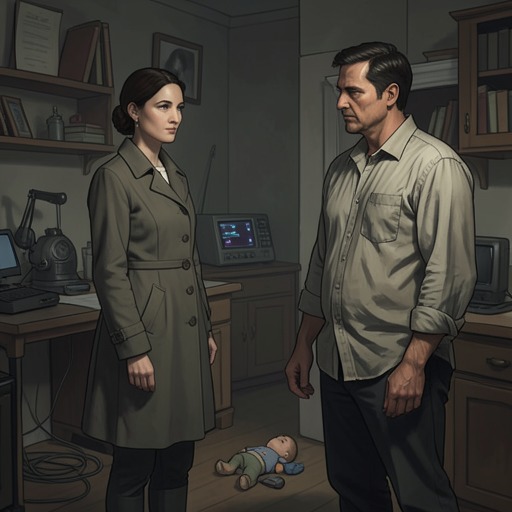
Rusty Sabich and Barbara’s marriage breaking down
Presumed InnocentRusty Sabich and Barbara Sabich’s marriage breaks down in the aftermath of the trial, when Barbara tells Rusty that she is leaving for a job at Wayne State in Detroit. The decision separates them geographically and makes their shared home impossible for her to inhabit, while the guilt bound up with the case makes reconciliation equally uncertain. Their conversation turns on more than where Barbara will live: it reveals that, although each understands the other’s pain, neither can restore the life they had before the trial.
The decision to leave
Barbara explains that she has taken a job for the January term at Wayne State. The distance makes the change concrete: Detroit is far outside Kindle County, and Rusty recognizes it as a city he has visited only once. He asks whether she is leaving him. Barbara resists describing the job as a personal rejection, instead presenting it as a decision she believes she must make. That distinction does not make the separation less real, but it shows her trying to explain the move without reducing it to a single declaration about their marriage.
The appointment had originally been for the September term. Barbara had expected to tell Rusty in April, but the turmoil that followed prevented her from doing so; the university extended the opportunity, and she changed her mind repeatedly before deciding to go. The job is therefore neither a sudden impulse nor a plan she has carried out without hesitation. Her account traces an extended period of uncertainty, with the events surrounding the trial interrupting the ordinary timetable on which she expected to make the choice.
The question of Nathaniel Sabich makes the change immediate and practical. Rusty asks where their son will live. Barbara answers firmly that he will be with her, while Rusty privately considers whether he could seek a court order to prevent that. He has had enough of litigation, however, and the thought produces only a brief, rueful smile. Barbara responds with a faintly hopeful look. For the moment, the family arrangement remains unsettled rather than litigated: Nathaniel stays with Rusty until Barbara is established in Detroit, after which she expects him to join her.
The trial’s aftermath
Barbara’s decision is inseparable from what she witnessed at Rusty’s trial. She tells him that she did not understand the reality of what was happening until she sat in the courtroom and saw him facing the prosecution. Only then did she feel how strongly she did not want that to happen to him. Her reaction does not erase the fact that she had killed Carolyn Polhemus; instead, it places her concern for Rusty beside the guilt of knowing that he was suffering under an accusation connected to her act.
When Barbara’s distress turns to the question of whether her account could have saved Rusty, he says that it would not have helped. He believes it would have sounded like a desperate and bizarre attempt to rescue him, and that nobody would have believed her responsible for Carolyn’s death. His reply is not a simple dismissal of Barbara’s feelings: it distinguishes the emotional wish to protect him from what he thinks a courtroom would have made of her claim. The trial thus remains present in their private conversation, even after its immediate proceedings have ended.
Barbara describes her state as a loss of any secure grasp on who she is. She feels that safety is unavailable and that the ground beneath her might give way. She cannot imagine becoming a normal person again while living with Rusty. The qualification matters: she does not frame her departure as proof that she feels nothing for him. She recognizes how painful the decision is for him, but says that remaining in the same life is also unbearable for her.
Guilt and separation
Barbara says that her life where they are has narrowed to being sorry, afraid, and guilty. She cannot find a word that adequately names what she feels. Her uncertainty over language is part of the impasse: she can acknowledge responsibility and emotional injury, but neither admission offers a way back to their former life. She also says that nobody returns to how things were after an event of this kind. The trial has changed what she can endure in the marriage, even as it made her feel more clearly that she did not want Rusty to suffer.
Rusty suggests that they might share the blame. The offer gives their exchange a brief, almost whimsical turn, but it does not dissolve Barbara’s guilt. She cries and shakes her head. His willingness to share the burden and her inability to accept that sharing as an answer mark different responses to the same damage: Rusty reaches for a mutual account, while Barbara remains conscious of a responsibility she cannot make mutual merely by naming it together.
The separation’s immediate terms
After the decision, Rusty tells Nico Delia Guardia that he and Barbara have split up. Nico expresses sympathy and raises the possibility that they might still work things out, but Rusty doubts it. His account clarifies the immediate custody arrangement: Nathaniel is with him for the time being, only until Barbara has settled in Detroit. The temporary qualification keeps open the practical future Barbara had asserted in their conversation, while Rusty’s doubt conveys how little confidence he has in repairing the marriage.
The separation is therefore both a departure and an unfinished transition. Barbara has accepted a distant job and intends to take Nathaniel with her; Rusty has not pursued a legal fight over their son, despite briefly considering it. Their exchange does not settle their guilt, restore their trust, or turn the move into a clean break from the past. Instead, it shows the marriage giving way under the combined weight of the trial, Barbara’s fear and responsibility, and the recognition that neither spouse can simply resume the life they once shared.