Rusty Sabich–Ivan Sabich relationship
Presumed InnocentThe relationship between Rusty Sabich and his father, Ivan Sabich, is marked by emotional distance and a history that Ivan rarely explained himself. Its defining turn comes when Rusty sees fear in his usually harsh father, recognizes the force of a past he had known only indirectly, and later concludes that he has finally given Ivan up. During Rusty’s murder trial, that private history is also brought into the courtroom as part of the defense’s account of the man on trial.
Background and Inherited History
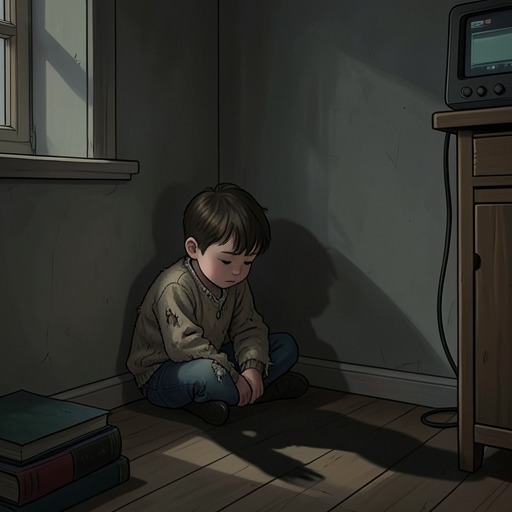
Ivan was a Yugoslavian freedom fighter persecuted by the Nazis. He came to America in 1946, but the history he carried remained largely unspoken between father and son. Rusty says that virtually everything he knew of Ivan’s past came from relatives: Ivan’s parents had been shot, Ivan had fled, and he had spent the last years of his youth in camps. When Rusty was nine or ten, his cousin Ilya told him that the inmates had eaten a dead horse. The animal had frozen in the snow; after a guard allowed it to be dragged outside the barbed-wire fence, people tore at it with their bare hands. Some took flesh to cook, while others, caught in panic, ate there. The story gave Rusty nightmares for most of a week.
That account becomes more than a grim family story when Rusty sees his father frightened in a lawyer’s office. Ivan had survived war and confinement, but Rusty understands that his father could still foresee a repetition of his worst experience. In that moment, Rusty recognizes what he calls an odd inheritance of material effects: Ivan’s deprivations had become part of his son’s life too. The recognition does not erase their distance, but it changes Rusty’s understanding of what lies beneath his father’s manner.
Anger, Fear, and Recognition
Before that recognition, Rusty is angry with Ivan. He resents his father’s apparent effort to seek attention after neglecting Rusty’s mother when her illness was in its initial stages, and feels that Ivan has no right to demand attention. Rusty is also reacting to his own discomfiture. Yet the sight of Ivan in Mulcahy’s outer office unsettles that judgment. Usually rigid about his appearance, Ivan has not shaved; stubble whitens his cheeks, his shirt is soiled at the collar, and the tie he seldom wears is pulled into a crumpled knot. He turns the felt brim of his hat in his hands and looks down at his feet. He seems diminished by his clothes and chair, older than he is, and terribly afraid.
Rusty does not wonder what has caused the change. He says he had never before seen his father visibly frightened; Ivan’s usual manner was one of rough-tempered, sullen indifference. The contrast makes the fear unmistakable. Rusty is twenty-five, and in that brief encounter he understands more of his father’s life than he had in all the time before. His response is grief, arriving through observation rather than a conversation in which Ivan explains himself.
The Jail Sentence and the Final Visit
Mulcahy pleads Ivan guilty. The assistant U.S. attorney promises not to recommend more than a year in jail, and Judge Hartley sentences him to ninety days. Rusty sees his father only once while Ivan is incarcerated. He has no stomach for visiting, and Rusty’s mother is by then nearing the end of her life. The brief visit offers no reconciliation or disclosure. When Rusty asks how he is, Ivan looks around as if only then seeing the place for the first time and chews on a toothpick.
Ivan says, “I been in worse.” His old harshness has returned, and Rusty finds it more upsetting than the fear he had seen in the lawyer’s office. Ivan treats his misfortunes as badges of achievement: he has endured confinement before and can survive a local jail. Rusty sees no gratitude toward himself, no apology for the shame or for Ivan’s actions, and no acknowledgment of the deeper prison represented by his father’s past. Ivan dies not quite three years later. Rusty’s account identifies the visit as the moment he finally gave his father up—not because the old injuries are resolved, but because he stops expecting a different recognition from Ivan.
Family History in the Courtroom
During the trial, Sandy Stern makes Ivan’s history part of the defense’s opening portrayal of Rusty. He presents Ivan as an immigrant freedom fighter persecuted by the Nazis, arriving in America in 1946 in search of a land without further atrocities, then asks what Ivan would think of the present case against his son. The appeal connects Rusty’s public service to a family history of persecution and escape.
Rusty, however, has not been prepared for this portion of the speech. Under strict orders to show no reaction, he sits with his hands folded and looks ahead. He says he would squirm if he were not required to remain resolute, and notes that Stern had not previewed the passage. The scene places two uses of Ivan’s past beside each other: Stern invokes it publicly to frame Rusty’s character, while Rusty’s own memories remain bound to the father he saw frightened, the father who returned to defiance, and the history neither of them could turn into intimacy. Their relationship therefore informs both Rusty’s private grief and the trial’s competing accounts of who he is.