Rusty Sabich–Rosie Sabich relationship
Presumed InnocentRusty Sabich’s relationship with Rosie Sabich is a bond of deep love complicated by emotional reserve, family fear, and Rusty’s habit of keeping grief private. He adores his mother, but for much of his life experiences that affection as something inward and difficult to explain to others. Her final illness brings the distance into sharp focus: Barbara Bernstein sits beside Rosie and offers close companionship, while Rusty watches from the doorway, mourning yet unable to make the same approach. Years later, memories of Rosie’s death return in a dream during a period of sleeplessness, showing how loss remains present even when the relationship itself was rarely expressed openly.
Family Background and Rosie’s Changing Life
Rosie’s adult life with Ivan Sabich had been governed by fear. When they stopped living together, they nevertheless continued working side by side in the bakery. The separation gave Rosie a measure of freedom: she became more interested in the world beyond home and developed a public voice through listener-participation radio programs. She prepared for broadcasts with newspapers, magazines, notepads, and index cards, making notes on topics ranging from interracial dating to the Kennedy assassination. The change was striking because she had previously been afraid to venture beyond the apartment building or shop, and even an afternoon trip required careful preparation.
Rusty’s account also places that transformation within a difficult marriage. Rosie was twenty-eight when she married Ivan, four years older than him, and her savings helped him open the bakery. Rusty suspects that Ivan married for the money rather than for love, while seeing little evidence that Rosie had married for love either. Her behavior could be intense and unpredictable, shifting between high spirits and brooding, and her sisters made regular efforts to look after her. These circumstances do not erase Rusty’s affection; they help explain why he understood Rosie as living within a world that others, including himself, could not readily enter.
Childhood Protection and Private Affection
Rosie’s sisters, especially Flo and Sarah, formed a steady protective presence in Rusty’s childhood. They visited despite Ivan’s hostility toward them, and he sometimes threatened violence when drunk. The sisters were not deterred. They brought Rusty candy, took him for haircuts, bought his clothes, and supervised his upbringing so consistently that he did not recognize the purpose of their care until he was in his twenties. Their practical attention gave him a connection to a wider family world beyond the household’s fear and isolation.
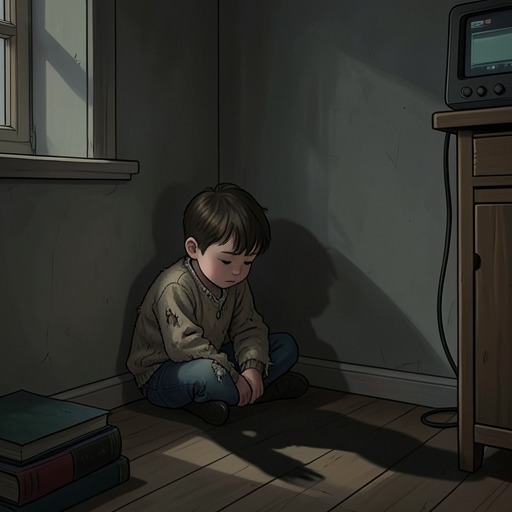
Against that outward support, Rusty’s attachment to Rosie remained intensely private. He grew up thinking that his mother was not regular, and that his adoration of her was a personal matter others could neither understand nor explain. The distinction is not a lack of love but a separation between love and ease: he feels devotion, yet does not know how to make it a shared, ordinary intimacy. The sisters’ care could be seen and named through what they did; Rusty’s feeling for Rosie stayed largely inside him.
Rosie’s Final Illness and Barbara’s Closeness
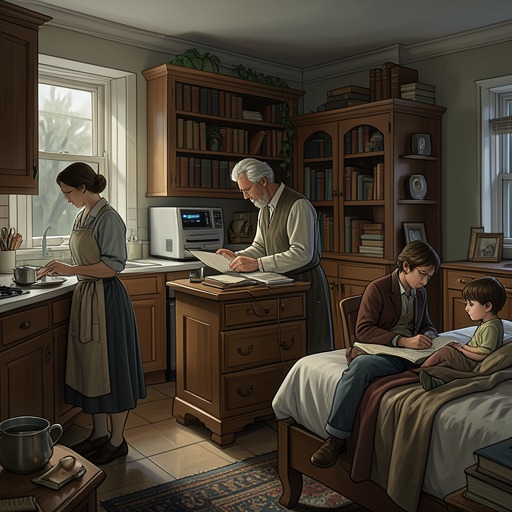
By the time Rosie became ill and died quickly, she was living through what Rusty describes as the most peaceful period of her adult life. In her final months she stayed with Rusty and Barbara in their one-bedroom city apartment. Barbara refused to have Rosie placed elsewhere. Rosie spent much of the time on a daybed in the living room, while Barbara sat beside her on a hard wooden chair. As Rosie’s strength declined, she spoke frequently with Barbara, who held her hand and remained close to her.
Rusty watched their companionship from the doorway. Barbara, the daughter of a suburban matron, and Rosie, whose mind ranged widely and whose disposition Rusty remembers as sweet, formed a connection across their different backgrounds. Rusty understood that Barbara could be present for Rosie in a way he could not. He describes himself as too immersed in private grief to approach, although he did take Barbara’s place at times and held his mother’s hand. He told Rosie that he loved her; she answered with a weak smile and seldom spoke. The relationship’s final expression is therefore both direct and limited: love is spoken, but the fuller exchange Rusty longs for remains beyond him.
Keepsakes, Memory, and the Relationship’s Afterlife
Barbara also cared for Rosie at the end of her life, administering Demerol injections. Some of the syringes remained in a box of family keepsakes that Barbara maintained. The box also held antique bobbins, Rosie’s index cards, and the gold-tipped Parker pen she had used to prepare for her radio appearances. Together, the objects preserve different sides of Rosie: the illness that confined her, and the preparation and public engagement through which she had reached beyond her former limits. Their continued presence makes memory concrete within the household rather than leaving it only in Rusty’s recollections.
Rosie’s death returns to Rusty in a dream at three in the morning, in which he sees her near the end of her life. He wakes in distress and cannot immediately settle himself. The episode places his memory of his mother within a present marked by sleeplessness and anxiety, without resolving the old difficulty of approach. The relationship’s lasting significance lies in that tension: Rusty’s love is certain, but his closeness to Rosie was incomplete, and grief repeatedly brings that incompleteness back into view.