Tommy Molto
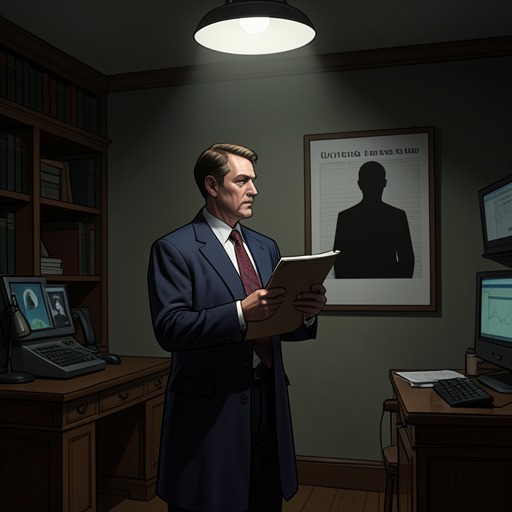
Presumed InnocentTommy Molto, a senior figure in the Homicide Section and Nico Delia Guardia’s closest political and professional ally, becomes a troubling presence in the investigation and prosecution of Carolyn Polhemus’s murder. His unexplained absence first feeds speculation about a campaign defection, then raises concern for his safety; once he reappears at the prosecution table, his commitment to the case is inseparable from signs of exhaustion, evidentiary mistakes, and conduct that draws the judge’s rebuke. Rusty Sabich’s later account gives him a further, more complicated role: Molto may also have noticed traces that the person who framed Rusty never expected investigators to find.
Identity and Position
Molto is Nico Delia Guardia’s best friend and had served as his second-in-command in the Homicide Section. When Nico left that post, Molto became acting head of the section. Raymond Horgan declined to appoint him permanently, suspecting that Molto might eventually join Nico’s political camp. That suspicion proved prescient: the prospect of Molto’s defection became a matter of public speculation even before the press had firm information.
His position placed him at the intersection of law enforcement and local political rivalry. To Nico, he was a trusted ally; to Raymond, his possible departure was both a staffing problem and a potential political embarrassment. Rusty, meanwhile, understood that any response to Molto’s absence could be used against Raymond’s office. Molto’s professional standing therefore became part of the public story surrounding an investigation already strained by the death of a senior deputy prosecutor.
Disappearance and Return
At one point Molto is absent from the office for three days. He has not called, and his desk has been cleared. The prevailing expectation is that, once the furor surrounding Carolyn Polhemus’s death eases, Nico will announce that Molto has joined his campaign. Such a move would generate headlines suggesting that a deputy from Raymond’s office had chosen Nico. A reporter soon asks Raymond’s office about a high-level defection from the Homicide Section, making clear that the rumor has reached the press before the office can control its presentation.
Rusty and Mac face a dilemma. Firing Molto would give Nico grounds to claim that Raymond was conducting a witch-hunt against his friends; keeping him on staff would still allow Nico to profit from the apparent defection. They place Molto on Unauthorized Leave, an employment category devised for the occasion. The maneuver manages the political optics but does not answer the more basic question of where he is. Rusty says he would feel safer if someone he trusted had seen Molto alive, and asks for a search party, imagining the consequences if a member of the public were to find pieces of him. The anxious speculation is later overtaken by the fact of Molto’s return to the prosecution team, but the episode establishes how readily an unexplained absence becomes both a personnel crisis and a political weapon.
Connection to Carolyn Polhemus and the Investigation
Molto’s relationship with Carolyn Polhemus gives his work on the case a personal dimension. During a conversation with Rusty, Nico describes Carolyn as one of Molto’s closest friends, almost an older sister whom Molto looked up to. Nico also portrays him as intensely committed to the investigation. His closeness to Carolyn helps explain why the case might command such personal energy from him, while also making that energy a possible source of excess.
The connection surfaces in the prosecution’s presentation of Eugenia Martinez, Rusty’s former secretary. Martinez testifies that she once picked up the wrong telephone line and overheard a brief conversation between Rusty and Carolyn about meeting at Carolyn’s home. Rusty later suggests to Nico that Molto had primed Martinez. Nico rejects the specific suggestion that Molto instructed her to use a particular phrase, but concedes that Molto had stirred her up too much and that this was stupid. He characterizes the conduct as an expression of Molto’s compulsiveness and strong feelings for Carolyn, as well as his dedication to the case. The exchange does not establish precisely what Molto said to Martinez; it does show Nico defending his friend while acknowledging that his zeal could compromise the handling of a witness.
Molto’s name also appears in connection with Painless Kumagai. When Rusty presses Kumagai about his view of Carolyn’s killing, he asks what Molto thinks. The report Rusty examines is dated five days earlier and bears a handwritten note with Molto’s name and telephone number, 762-2225. The note links the report to Molto, but the evidence supplied does not explain what he had asked Kumagai to do or establish what conclusions Molto himself had reached at that point.
Conduct at Rusty Sabich’s Trial
Molto returns to public view as part of the prosecution of Rusty. The trial has been prepared on a compressed schedule, and the stakes for Nico are immense: he has publicly attached his reputation to the case. During jury selection, Rusty observes that Nico and Molto look pale and strained as Judge Larren Lyttle emphasizes the defendant’s right to remain silent. Molto’s appearance at trial is not incidental. He is part of the office carrying the burden of a prosecution that must persuade jurors without turning suspicion into proof.
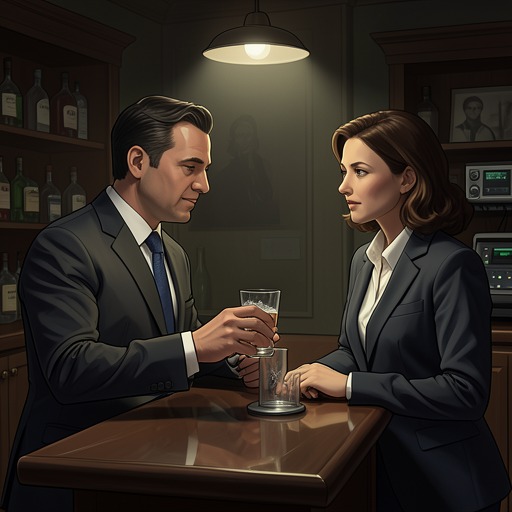
On the third morning of trial, Nico admits that the prosecution has lost Carolyn’s bar glass. He says Molto initially forgot about it and that the office is now searching for it. At the prosecution table, Molto watches Nico confer with the defense, reluctant to leave his place. Rusty describes him as looking unwell: his skin has a yellow cast, and he is wearing the same suit as the previous day. The missing evidence is not treated as proof of deliberate concealment; Rusty notes that evidence is often misplaced. Still, the glass’s disappearance weakens the prosecution’s plan to build toward physical evidence after a difficult stretch of testimony, and Molto’s role in forgetting it intensifies the impression of an office under pressure.
The trial also exposes Molto’s willingness to push beyond proper courtroom boundaries. During Painless Kumagai’s testimony, Judge Lyttle observes that Molto has made a gesture he recognizes as a signal to the witness in connection with an answer. He says further proceedings concerning Molto will follow. Molto rises, crimson, and says he does not know what the judge means. The episode leaves the implication of attempted signaling on the record, although the supplied account does not describe the later proceedings or their outcome.
In a separate confrontation, Molto presses Dr. Robinson about whether Rusty ever told him that he had killed Carolyn. The question comes after the judge has found Molto in contempt and ordered him to proceed with his examination. Rusty understands the question as the prosecution’s last, high-risk attempt to obtain a confession through the psychiatrist. Judge Lyttle angrily stops him, asking how that question could be permissible if the other conversations at issue were privileged. Molto’s question does not produce a confession in the evidence presented; instead, it sharply displays the desperation of the prosecution’s effort and the limits imposed by privilege.
Investigative Ability and Later Career
Rusty’s final reconstruction complicates Molto’s courtroom portrait. In explaining how the frame-up could have failed, Rusty says that Molto was shadowing the investigation and picked up on evidence the person who planted it had not meant to leave behind. The account points to fibers from the carpet in Barbara’s home on her skirt, hairs from the scene, details in the semen specimen, a traced telephone call, and a third fingerprint on the glass. Rusty presents these as traces that Molto noticed, not as evidence that Molto knew who was responsible. His role in this reconstruction is therefore significant but bounded: he may have helped preserve the trail that exposed the frame-up’s weaknesses, even though his own conduct in court had damaged the prosecution’s credibility.
Molto’s tenure beside Nico ends after the trial-era conflict. During Nico’s campaign to retain his office, he fires Molto with about two weeks remaining before the recall election. The voters ultimately recall Nico by a margin of roughly two thousand votes, despite Nico’s active campaign. The evidence does not specify the reason for Molto’s dismissal, so the firing cannot be reduced to a particular courtroom incident or political calculation. It does mark the end of their alliance within the prosecutor’s office and completes a career arc shaped by trust, absence, intense loyalty, and public controversy.
Molto remains difficult to classify as either a merely incompetent prosecutor or a disinterested investigator. The lost glass, his handling of Martinez, the apparent signal to Kumagai, and the prohibited question to Dr. Robinson reveal a commitment capable of crossing procedural lines. Yet Rusty’s retrospective account credits Molto with noticing overlooked evidence that mattered. That tension is central to his narrative role: the same devotion that drives the case forward can distort judgment, while the official effort to convict Rusty may inadvertently uncover what the frame-up was designed to conceal.