Hunsford
Pride and PrejudiceHunsford, the parsonage of Mr. Collins, is a small, well-built, and convenient house situated in the parish of Hunsford, near Westerham in Kent. It stands within a short distance of Rosings Park, the grand estate of Lady Catherine de Bourgh, Mr. Collins's formidable patroness. The garden, which slopes down to the road, is large and well laid out, and Mr. Collins takes personal pride in its cultivation, a pleasure his wife, Charlotte, encourages for the sake of having him occupied out of doors. The house itself, though humble in comparison to its noble neighbor, is fitted up with a neatness and consistency that Elizabeth Bennet credits entirely to Charlotte's good management. The drawing-room, which faces the lane, is deliberately kept as the common sitting room, a choice Elizabeth soon understands as a strategy to keep Mr. Collins, who prefers his own book-room at the front of the house, from dominating their time together. From this drawing-room, the ladies can see little of the lane, and rely on Mr. Collins for news of passing carriages, especially the frequent drives of Miss de Bourgh in her phaeton.
Life at the Parsonage and the Shadow of Rosings
The daily rhythm at Hunsford is defined by the constant, looming presence of Rosings. Mr. Collins walks to the great house almost every day, and his wife feels it necessary to accompany him frequently, a sacrifice of time Elizabeth can only understand as a bid for future preferment. Lady Catherine herself makes occasional calls, during which she examines the household's employments, criticizes the furniture arrangement, and finds fault with the size of Mrs. Collins's joints of meat. The Collinses dine at Rosings about twice a week, and these entertainments are formal, repetitive affairs where Lady Catherine dominates the conversation, delivering her opinions in a decisive, authoritative tone. Elizabeth finds the situation both absurd and instructive, observing how Charlotte manages her husband with a composed air and how she bears his tediousness with a cheerfulness that seems to Elizabeth a form of quiet heroism. The parsonage becomes a stage for the performance of a marriage of convenience, and Elizabeth's visit there deepens her understanding of the compromises that practical necessity can exact.
The Scene of Darcy's First Proposal and Elizabeth's Reckoning
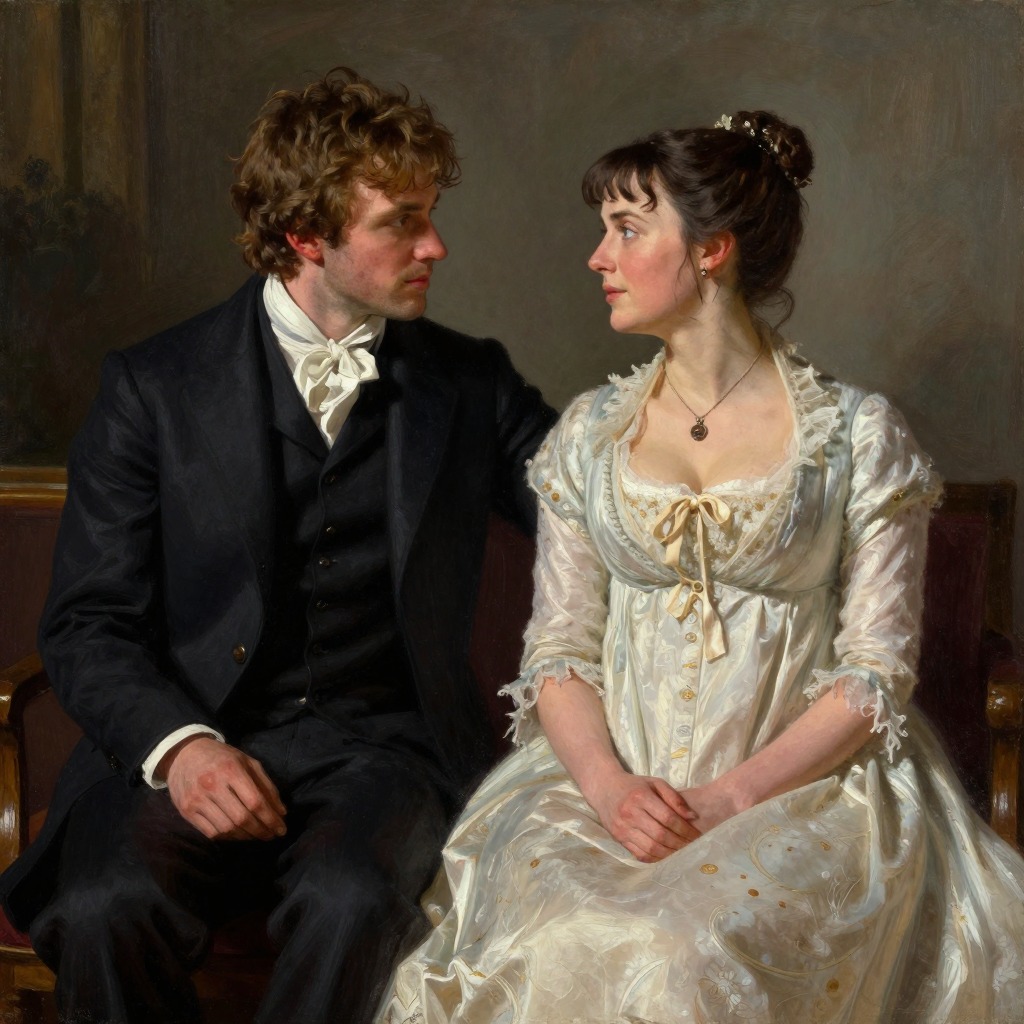
Hunsford is the site of the novel's most dramatic turning point. It is in the parsonage's sitting-room, while Charlotte and Maria are out, that Fitzwilliam Darcy, having struggled in vain against his feelings, makes his first, unguarded proposal to Elizabeth. He speaks of his love but also dwells on her inferiority and the family obstacles he has overcome, a speech that Elizabeth meets with a furious refusal, accusing him of ruining Jane's happiness and of cruelty toward George Wickham. The next morning, Darcy intercepts Elizabeth in the grove bordering the park and hands her a letter that will fundamentally alter her understanding of both men. She reads it while walking along the lane, and the letter's revelations—about Wickham's true character, about Darcy's role in separating Bingley from Jane, and about the improprieties of her own family—force her into a painful, humiliating self-examination. She spends the remainder of her stay at Hunsford in solitary walks, studying every sentence of the letter and grappling with the realization that she has been blind, partial, and prejudiced.
A Place of Confinement and Revelation
Hunsford functions as a space of both social confinement and psychological revelation. The parsonage is a small, circumscribed world where Elizabeth is constantly subject to Mr. Collins's pompous speeches and Lady Catherine's intrusive scrutiny. Yet it is precisely this confinement that forces the crucial encounters and introspections that propel the plot. The quiet, sheltered path along the edge of the park becomes Elizabeth's refuge, a place where she can think without interruption. It is here that she meets Darcy unexpectedly on multiple occasions, and it is from this path that she is summoned by the sound of the doorbell to receive his letter. The parsonage, with its neat rooms and its view of the great house, becomes the crucible in which Elizabeth's pride is broken and her prejudices are exposed, setting the stage for her eventual growth and the possibility of a genuine union with Darcy.