Dr. Lokken
Project Hail MaryDr. Lokken is the Norwegian scientist who designed the centrifuge-based artificial gravity system for the Hail Mary, a modification that proved essential to the mission's scientific viability. Her intervention transformed the ship from a risky engineering gamble into a platform capable of using proven laboratory instruments, and her forced recruitment into Project Hail Mary exemplifies Eva Stratt's uncompromising approach to securing expertise.
Identity and Introduction
Dr. Lokken is introduced as a dour-looking woman with a Norwegian accent who has been pressuring governments to arrange a meeting with Stratt. She arrives in Geneva carrying a list of the lab equipment slated for the Hail Mary and immediately identifies a critical design flaw: most of the equipment will not function in zero gravity. Her opening words to Stratt are pointed: "I'm here against my will." When she recognizes Ryland Grace as the author of "An Analysis of Water-Based Assumptions and Recalibration of Expectations for Evolutionary Models," she calls his paper "childish" and "a slap in the face to the entire scientific community," establishing her as someone who does not temper her professional judgments.
The Centrifuge Proposal
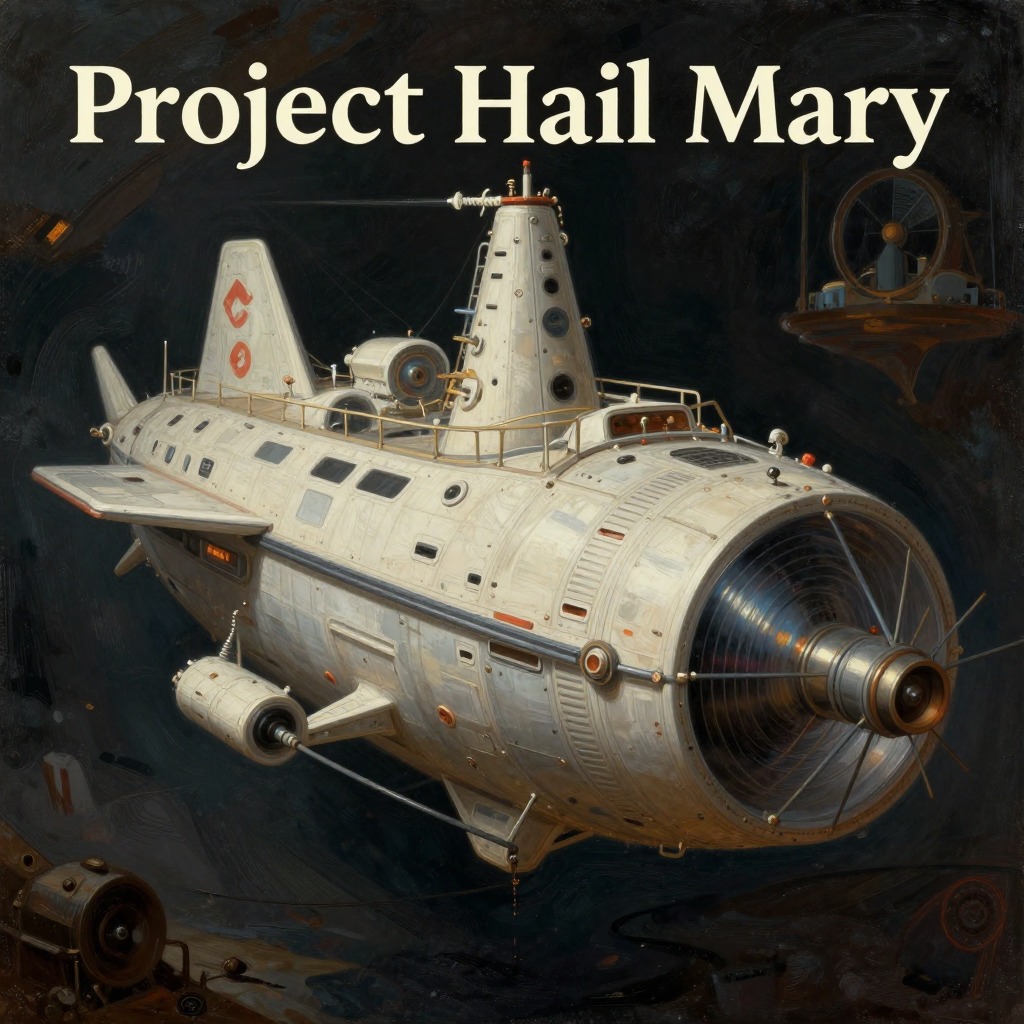
Lokken's central argument is that the Hail Mary's laboratory is its most important component and that making zero-g-rated versions of complex instruments like electron microscopes and gas chromatographs would require a century of research and development. She proposes instead that the ship be built as a centrifuge, using the spent fuel tanks as a counterweight. Her design calls for cutting the ship in half between the crew compartment and the fuel tanks, then connecting the two halves with Zylon cabling that can spool out to a hundred meters of separation, creating one g of gravity. She has already calculated the mass ratio: with the fuel gone by the time the ship reaches Tau Ceti, the rear section will weigh three times as much as the front, making the centrifuge viable. Stratt initially rejects the idea, citing her preference for simplicity and minimal moving parts, but Lokken counters that the centrifuge actually reduces risk by allowing the use of equipment with millions of man-hours of commercial testing behind it. Grace supports Lokken's proposal, noting that the ship must already withstand four years of constant acceleration at one and a half g's, and that sensitive lab equipment is finicky even in ideal conditions.
Recruitment and Role
Despite having come only to point out a flaw, Lokken is drafted into the project on the spot. Stratt tells her to pack a bag and meet her at the airport, and when Lokken protests that she works for ESA and cannot simply leave, Stratt replies that she will call her boss and have her assigned. "I never said you volunteered," Stratt says. "It's not voluntary at all." Lokken stares at the door, flabbergasted, then back at Grace, who tells her, "You get used to it." Her relationship with Grace remains strained throughout the project; they avoid each other when possible, and Grace admits that their relationship has matured from "annoyed with each other" to "very annoyed with each other." Nevertheless, Lokken's design proves sound: when Grace activates the centrifuge sequence in the Tau Ceti system, the ship splits in two, the crew compartment rotates 180 degrees, and the cables spool out to create a steady one g of gravity in the lab, exactly as she planned.
Thematic Significance
Lokken embodies the tension between theoretical elegance and practical reliability that runs through the entire Hail Mary project. Her insistence on using proven technology rather than untested innovation aligns with Stratt's own philosophy, even as their personalities clash. She also represents the global scientific community's forced conscription into a desperate effort: a reluctant expert who arrives to criticize and ends up designing one of the ship's most critical systems. Her centrifuge, which Grace later calls "the magic of centrifuge math," ultimately saves his life when the ship begins to spin out of control after the fuel-tank rupture at Adrian, allowing him to reduce the g-forces by extending the cables.