University of British Columbia
Project Hail MaryThe University of British Columbia (UBC) played a decisive role in Project Hail Mary by designing and constructing the beetle probes, the small autonomous spacecraft that would carry humanity's last hope—scientific data and biological samples—from the Tau Ceti system back to Earth. Without UBC's engineering, the mission's findings could never have reached home, making the university an indispensable partner in the effort to save Earth from the Astrophage crisis.
Origins and Design
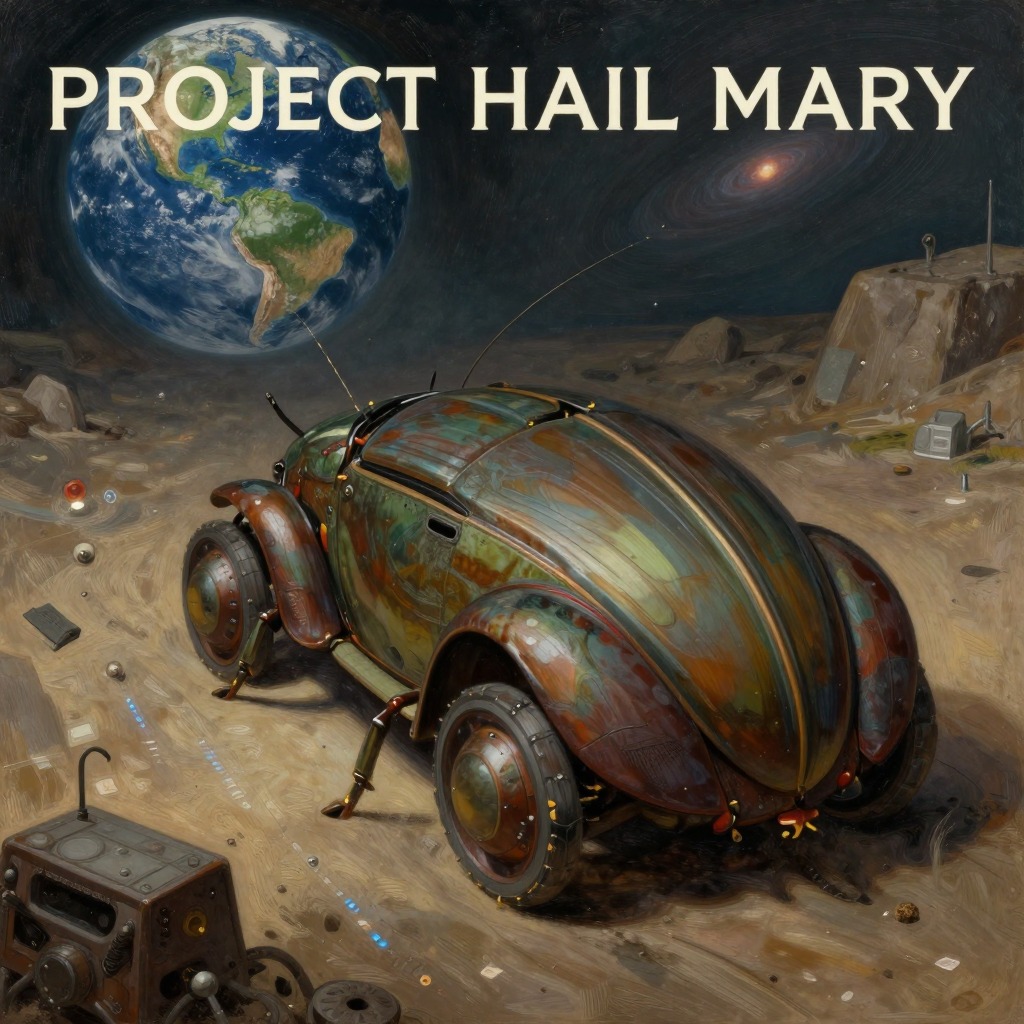
The beetle project was spearheaded by Steve Hatch, an engineer from the University of British Columbia who brought a prototype to the aircraft carrier "Stratt's Vat" for testing. Hatch described the beetle as a "little self-contained spacecraft that will automatically navigate itself back to Earth from Tau Ceti." The design relied on a spin drive adapted from Russian research, with navigation accomplished through ordinary visible-light star tracking: the beetle identifies constellations to determine its orientation. A small DC generator, powered by Astrophage, provides electricity. The beetle's bulk consists of fuel storage, requiring about 125 kilograms of Astrophage to travel twelve light-years. The probe carries a redundant RAID array with more memory storage than anyone would ever need, ensuring that all scientific findings could be preserved even if some systems failed.
Performance and Capabilities
Unlike the Hail Mary itself, which was limited by the fragile human crew, the beetles were built with military-grade cruise-missile electronics capable of withstanding hundreds of g's of force. This allowed them to accelerate at five hundred g's until reaching a cruising speed of 0.93 times the speed of light. While the journey back to Earth would take over twelve years from Earth's perspective, the beetles themselves would experience only about twenty months due to relativistic time dilation. Hatch explained that the beetle does not need to navigate with extreme precision; it carries a receiver that constantly listens for a signal from Earth. Once it detects that signal, it broadcasts its location and awaits instructions from the Deep Space Network. The probe only needs to arrive anywhere within the orbit of Saturn or so to be within radio range.
Naming and Redundancy
Hatch named the four beetles after the Beatles—John, Paul, George, and Ringo—reflecting his deep appreciation for the band. He also built a test beetle named Pete, after Pete Best, the Beatles' drummer before Ringo. The mission required four beetles for redundancy: only one needed to survive the journey for the mission to succeed. Hatch's enthusiasm for the project was boundless; he described Astrophage as "the coolest thing ever" and envisioned a future where Astrophage-powered batteries would last a household a hundred thousand years, and cars would never need charging. When Grace pointed out that Astrophage was causing an extinction-level event, Hatch remained optimistic, insisting that humans were clever and would pull through.
Legacy and Final Use
After the Taumoeba contamination destroyed the Hail Mary's fuel, Grace modified three of the beetles—John, Paul, and Ringo—to serve as makeshift engines, using them to maneuver the ship and eventually to rescue Rocky. The fourth beetle, George, was kept in reserve, unmodified and ready to fulfill its original mission. Grace ultimately launched all four beetles toward Earth, each carrying a mini-farm containing Taumoeba-82.5 sealed in Eridian steel, along with a USB stick full of scientific data. The beetles' successful return to Earth, confirmed years later when Sol returned to full brightness, proved that UBC's design had performed flawlessly, carrying the solution that saved humanity.