Venus
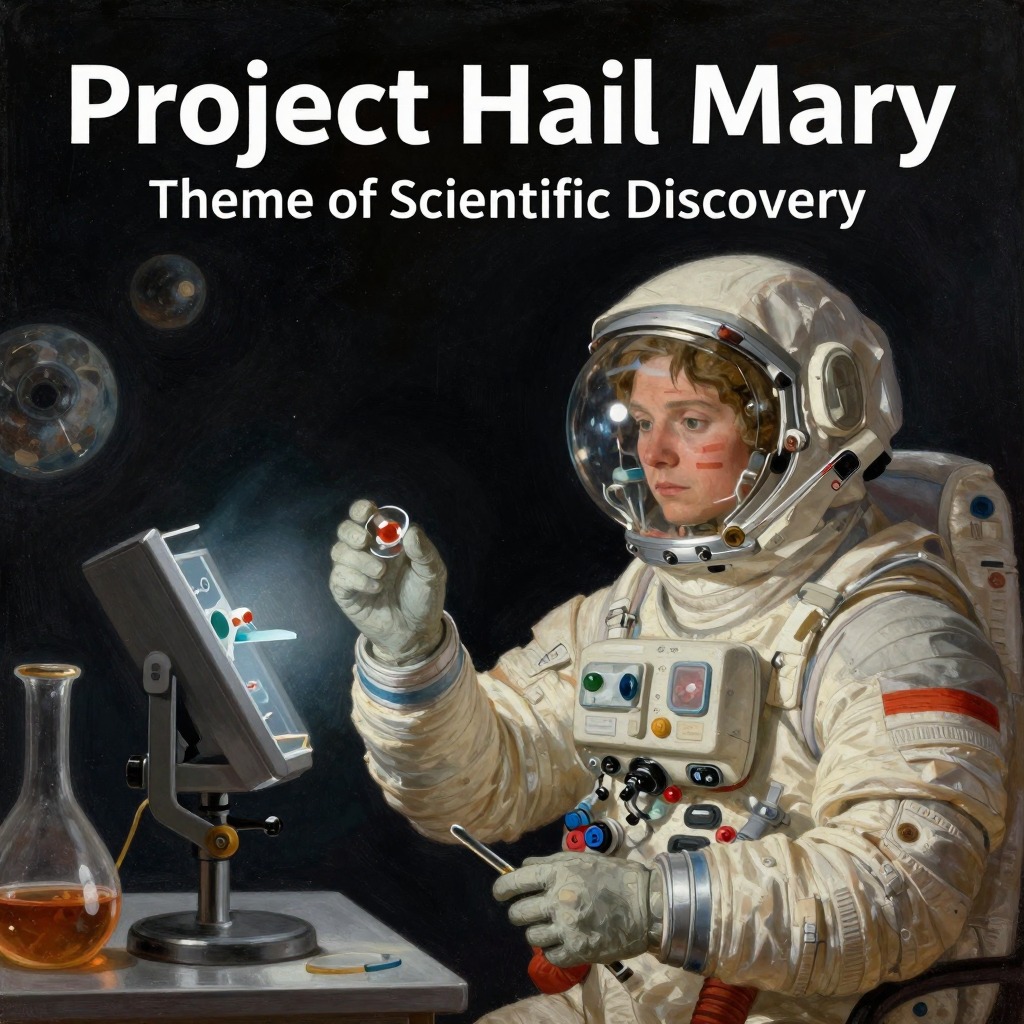
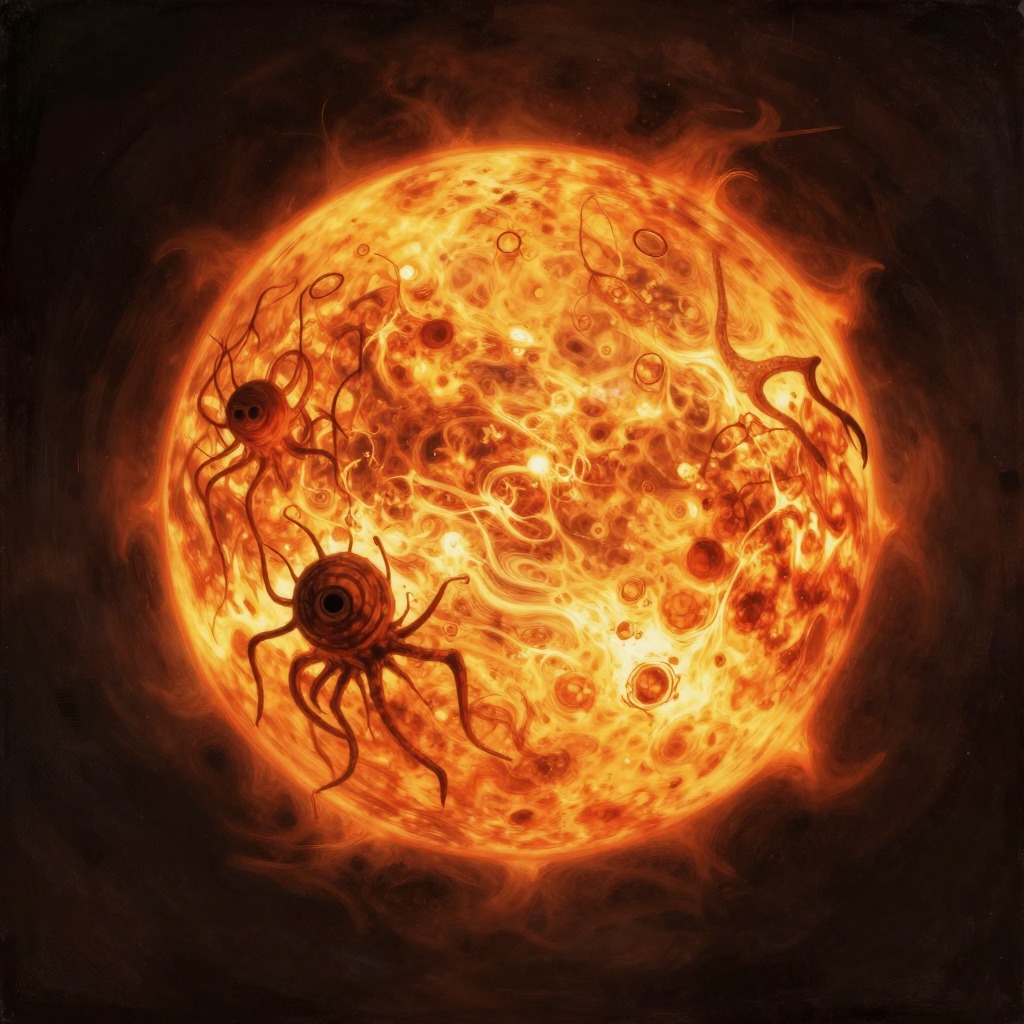
Project Hail MaryVenus is the second planet from the Sun and the pivotal breeding ground for Astrophage, the alien microbe that threatens all life on Earth. Its uniquely dense, carbon-dioxide-rich atmosphere draws Astrophage from the Sun in a vast migration known as the Petrova line, making Venus the key to both the problem and its solution. The planet's role shifts from a mysterious source of infrared emissions to a strategic target for the engineered Taumoeba predator that will ultimately consume the Astrophage and restore the Sun's brightness.
Astrophage Migration and the Petrova Line
The Petrova line, first detected by Dr. Irina Petrova, is a faint infrared arc that rises from the Sun's North Pole for 37 million kilometers, then angles sharply toward Venus, widening into a funnel as wide as the planet itself at its apex. Ryland Grace discovers that this line is composed of Astrophage cells migrating to Venus to breed. The Astrophage use infrared light as propulsion, traveling at up to 0.92 times the speed of light, and are drawn to Venus by the spectral signature of carbon dioxide at 4.26 and 18.31 microns. Venus's atmosphere, 90 times Earth's pressure and almost entirely carbon dioxide, provides the essential resource for reproduction. Grace's experiments confirm that when Astrophage detect the carbon dioxide spectral signature, they launch toward it, and exposure to that light triggers cell division. The migration pattern is a simple stimulus-response: gather energy from the Sun, follow magnetic field lines away from the solar pole, detect Venus's carbon dioxide signature, travel to the upper atmosphere, breed, and return to the Sun.
Venus as a Breeding Ground
Venus's upper atmosphere, at an altitude where the pressure is 0.02 atmospheres and the temperature is approximately minus 100 degrees Celsius, is the precise zone where Astrophage breed. Grace calculates that the breeding altitude on Venus is 91.2 kilometers from the surface, with a width of less than 200 meters. The planet's immense carbon dioxide supply makes it the ideal nursery for the Astrophage population, which doubles every eight days under optimal conditions. The exponential growth of Astrophage on Venus directly correlates with the exponential dimming of the Sun, as the microbes consume solar energy and store it through mass conversion. Grace realizes that the entire Petrova problem is driven by this migration-breeding cycle: Astrophage harvest energy from the Sun, travel to Venus to reproduce using carbon dioxide, and the parent and daughter cells return to the Sun to repeat the process, steadily draining the Sun's output.
The Taumoeba Solution and Venus's Salvation
After discovering that the planet Adrian in the Tau Ceti system hosts a natural predator of Astrophage—the Taumoeba—Grace and Rocky engineer a nitrogen-resistant strain, Taumoeba-82.5, capable of surviving in Venus's atmosphere. The key challenge is that natural Taumoeba die instantly in the presence of nitrogen, which constitutes 3.5 percent of Venus's upper atmosphere. Through generations of selective breeding, Grace develops a strain that can tolerate this nitrogen concentration at the 0.02-atmosphere pressure of the breeding zone. He tests the strain in a simulated Venus atmosphere—96.5 percent carbon dioxide and 3.5 percent nitrogen at minus 100 degrees Celsius—and confirms that the Taumoeba thrive, consuming Astrophage on contact. Grace launches four beetles toward Earth, each carrying a sealed mini-farm of Taumoeba-82.5, ensuring that Earth scientists can deploy the predator to Venus. The plan is to seed Venus with Taumoeba, which will consume the Astrophage population, breaking the migration-breeding cycle and allowing the Sun to return to full brightness. Years later, Rocky brings Grace the news that Sol has returned to full luminance, confirming that the Taumoeba successfully eradicated the Astrophage on Venus and saved Earth.
Narrative and Thematic Significance
Venus functions as the linchpin of the entire Astrophage crisis, transforming from a mysterious astronomical anomaly into a strategic target for humanity's salvation. The planet's role is purely functional—it is the breeding ground, the source of carbon dioxide, and the site where the engineered predator must be deployed. Grace's journey from discovering the Petrova line to understanding the migration cycle to engineering the Taumoeba solution is a narrative arc that hinges entirely on Venus. The planet itself is never visited; it remains a distant, hostile world whose atmosphere is lethal to humans but essential to the alien life-form. Venus's significance is entirely relational: it exists in the story as the destination of Astrophage migration, the object of the Petrova line, and the target of the Taumoeba deployment. The planet's material properties—its thick carbon dioxide atmosphere, extreme pressure, and temperature—are the active agents that drive the plot, not merely a backdrop. Venus's atmosphere is the thing that attracts Astrophage, enables their reproduction, and ultimately becomes the environment where the engineered predator must survive. The planet's agency is entirely chemical and physical, yet it determines the fate of two worlds.