Art as an Endless Failure
Promise at DawnArt as an Endless Failure is the narrator’s account of artistic creation as a ceaseless pursuit of an absolute that cannot be attained. The artist seeks a masterpiece capable of fulfilling the desire for perfection, yet each attempt ends not in final mastery but in the need to begin again. Art matters precisely because it cannot settle the longing that drives it: the failure is perpetual, but so is the impulse to try.
The Artist’s Unfinished Pursuit
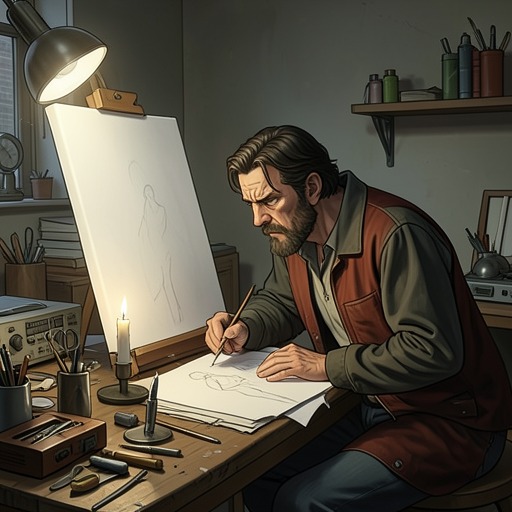
The narrator recognizes this compulsion while watching a film about Picasso. The painter’s brush moves rapidly across the canvas, and the sight recalls a pastry cook in Vilna whose work had once seemed to embody artistic inspiration. The comparison draws together two very different kinds of making: both figures appear absorbed in the attempt to create, and neither can escape the limits of achievement. However great the work or the talent, no new triumph can prevent the artist’s eventual defeat.
That defeat does not mean that artistic effort is insincere or worthless. The narrator describes the artist as repeatedly trying to possess the world anew, driven by a dream of perfection, total fulfillment, and mastery that would remain complete. Yet the promised satisfaction cannot last. Art reaches toward the absolute without securing it, so accomplishment and defeat are not opposites separated by a final result; they belong to the same cycle. The artist works, achieves something, and finds that the desire has not been exhausted.
The narrator’s image for this cycle is a flying trapeze. The artist is launched across a void, straining to grasp, attain, give, and arrive while the body approaches its breaking point. Even in danger and exhaustion, there remains the demand to preserve style—to make the effort appear easy and graceful. After landing, the performer may believe the passage has been completed successfully, but the trapeze is lowered again. The next page is blank, and the artist throws forward once more toward a height that recedes as it is approached.
Childhood Encounter with the Absolute
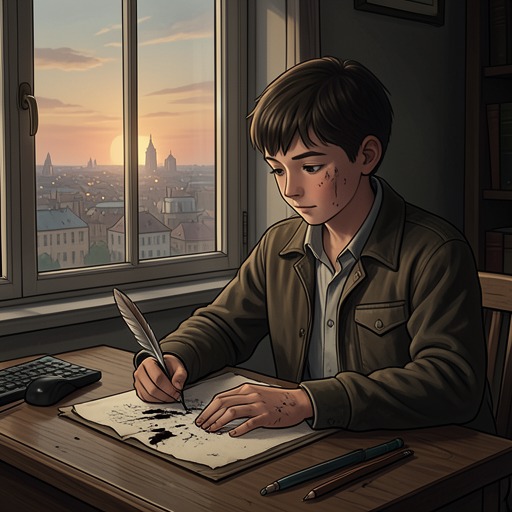
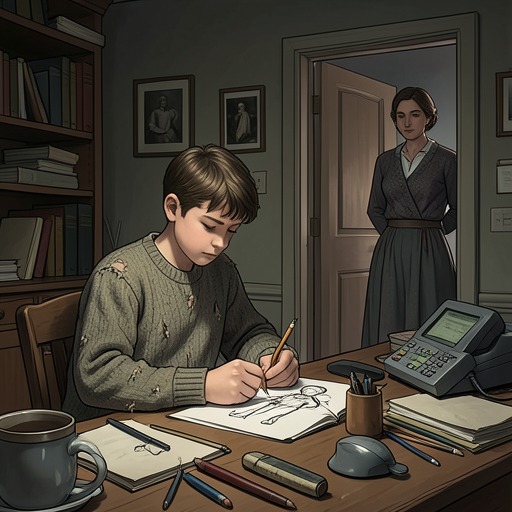
The narrator connects this lifelong pursuit to an experience at age nine. Among nettles, he held a magic bottle and tried to answer a mysterious longing through imagination. Even as a child, he felt that his time was limited, yet no imagined answer seemed sufficient for the love he wished to give his mother or for the masterpieces of accomplishment he hoped to offer her. The demand was not merely to make something; it was to make something worthy of what he loved.
The longing becomes physical in the scene. His lips tremble, his face tightens with vexation and anger, and he begins to howl in fear, astonishment, and rage. The narrator interprets the moment retrospectively as his birth as an artist: the absolute reveals itself not as something he can possess, but as an absence that exerts a force upon him. Roughly three decades later, he would name that pull the roots of heaven in a novel bearing that title. The later name gives form to the childhood experience without claiming to resolve it.
The episode also establishes the paradox at the center of the concept. Art is called a supreme failure because it tries to make a satisfactory answer from what can only remain a beseeching question. The artist’s imagination keeps proposing possibilities, but none can match the totality of the desire. The failure is therefore not simply a judgment on one work or one artist: it is built into the distance between the perfection sought and anything that can be made.
From Howling to Writing
The childhood scene does not end with a solution. The narrator buries the talisman in the woodshed and marks its hiding place with a top hat, intending to find it again. Yet disenchantment takes hold, and he never searches for it. The abandoned object gives the episode a concrete, quiet ending: the longing remains, but its first imagined instrument is put away.
In adulthood, the narrator says that he has grown accustomed to the idea and writes books instead of howling. Writing is not presented as a cure or as proof that the absolute has been reached. It is the form the unresolved craving takes after childhood. The howl and the book differ in expression, but both arise from the same encounter with an absence for which no adequate answer can be found.
The Recurring Mystery of Art
The narrator continues to regard the artist’s compulsion as a mystery. Even after seeing beauty and greatness and making repeated efforts of his own on the flying trapeze, he cannot explain why the pursuit of a masterpiece persists. The comparison to the pastry cook returns as a measure of how long this question has accompanied him: decades after leaning over the cook’s inspired labor, he still cannot account for the desire that drives an artist toward an unattainable completion.
This unresolved ending is essential to the idea of art as an endless failure. The text does not dismiss artistic striving because it falls short, nor does it pretend that perseverance finally defeats the limits of making. Instead, it holds the two facts together: the artist cannot secure permanent fulfillment, and cannot simply resign himself to that knowledge. The blank page, the renewed leap, and the book written in place of a howl all mark the same durable motion toward what remains beyond reach.