Bordeaux
Promise at DawnBordeaux is the wartime setting where the narrator’s confidence in Philippe Pétain was exploited and where, as France fell, the prospect of departure became entangled with confusion, loss, and helplessness. The city’s streets and airfield frame a reversal: the narrator believed he was defending the Marshal against an internal threat, while the political defeat he could not yet recognize had already taken hold.
Patrols and a false account
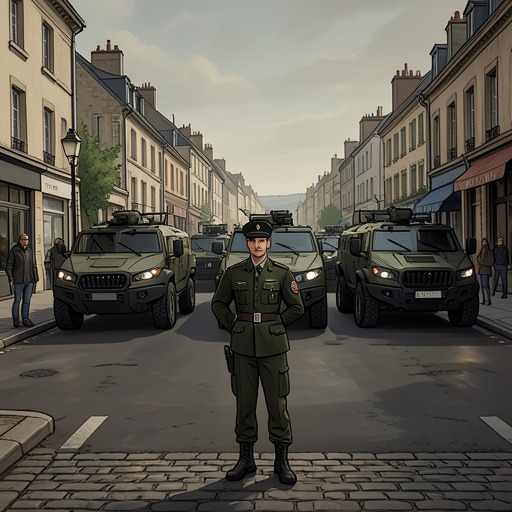
During the political uncertainty in Bordeaux, cadets were briefed that their patrols protected Philippe Pétain, who was supposedly determined to keep fighting Germany and prevent a Communist fifth column from seizing power and reaching an accommodation with Hitler. Other cadets, including Christian Fouchet, received the same account and stood guard in the streets with machine guns. The narrator later describes the briefing as a deception, while judging that it may have originated with well-meaning colonels at Mérignac rather than with orders from the highest authorities.
Unaware of the deception, he flew low-altitude patrols over Bordeaux with his machine guns loaded. He was prepared to drop bombs and fire on a suspected crowd if the base sent the signal. His readiness arose from faith in Pétain, whom he regarded as embodying military virtue; only in retrospect could he see the irony that the supposed fifth column was not an openly marching force, but a political influence that weakened resolve and judgment. Bordeaux thus becomes the ground over which he acted on a false understanding of the crisis.
Bordeaux-Mérignac in the collapse
On June 15, 16, and 17, 1940, Bordeaux-Mérignac Airfield filled with aircraft arriving from across the sky. The narrator recalls machines of many shapes and sizes, from aircraft dating to the First World War to designs that had barely left the drawing board. They crowded the ground and brought passengers who seemed to have taken whatever transport they could find. The airfield appears not as an orderly route out, but as a place overwhelmed by the disorder of France’s defeat.
The intended departure
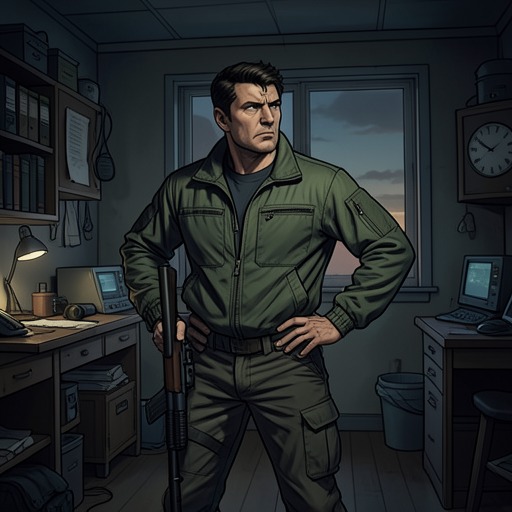
On the day France fell, the narrator sat with his back against a hangar wall and watched a Den-55 warm up for a planned journey to England. Three fellow sergeants sat with him. Their loaded revolvers expressed their anger and frustration, but, as the narrator’s retrospective account makes clear, they had not yet fought. The weapons served as a visible sign of feelings that could not alter their position: they were far from the front and felt powerless, confused, and useless.
The narrator’s thoughts joined the small personal loss of silk pajamas left behind in his room in Bordeaux to the much greater losses he faced—the fall of France and the likelihood that he would never see his mother again. The scene fixes the city at a threshold between a collapsing home and an intended escape; the evidence presents the Den-55 as the aircraft meant to take the group to England, without recounting the journey’s outcome.