Early maternal love and lifelong emotional deprivation
Promise at DawnEarly maternal love and lifelong emotional deprivation describes the narrator’s account of a formative contradiction: his mother’s intense devotion made him feel uniquely cherished, yet, as he later understood it, also left him longing throughout life for a love no later relationship could equal. The consequence was not simply nostalgia for childhood. It was a lasting pattern of expectation, comparison, and disappointment, which the narrator connects to both his intimate life and his attempt to discover dignity and justice in a seemingly absurd world.
The First Experience of Being Loved
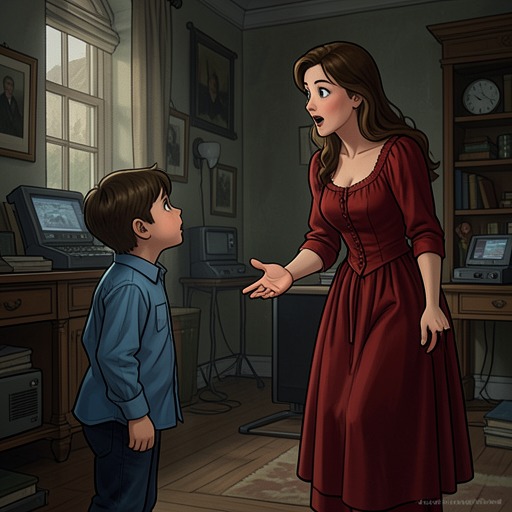
In the recollection involving Mariette, the narrator’s mother’s devotion is not confined to private affection. She continually describes the exceptional future awaiting her son, presenting him as someone destined for triumph. Mariette, who at first seems unable to respond to his attachment, is affected by this portrait and by the force of the mother’s love. Her eventual change of heart gives the narrator, while still young, another experience of being cherished. The episode matters in his later account not because it establishes that he was uniquely lovable, but because it introduces the powerful expectation that such love could be found again.
The narrator only comes to understand the cost of this early experience much later, after his fortieth winter. He describes childhood affection as having created the habit of being loved: a conviction that love is due, will remain available, and can be summoned again when it disappears. In that retrospective formulation, the deprivation does not cancel the reality of the original love. Rather, its very fullness becomes the measure against which later attachments are judged. What was first a source of security turns into a standard that adult life cannot satisfy.
Adult Longing and Repetition
The narrator presents this pattern as persistent across later relationships. When another woman offers tenderness and closeness, he says, he tries to believe in the renewed promise; nevertheless, he remains conscious of the difference between present affection and the love he first knew. He describes later experiences as partial in comparison, not because they are necessarily false, but because none can restore the original sense of being wholly cherished. The past therefore enters new intimacy as an invisible comparison, shaping what the narrator can receive from it.
This longing repeatedly returns him in imagination to his mother’s grave. The image makes grief more than a memory of loss: it expresses the narrator’s sense that the earliest source of love has become inaccessible, even as his need for it continues. He portrays himself as moving from one hoped-for source of fulfillment to another without finding lasting relief. At Big Sur, the ocean becomes the remaining companion capable of understanding his heart. That turn toward the sea gives the account a stark endpoint: human affection continues to be sought, but the narrator’s deepest recognition of his own loneliness is voiced beside a nonhuman presence.
The Mother’s Love and Its Cost
The narrator does not argue that mothers should love their children less. His conclusion is instead that a mother should have someone else to love as well. He speculates that, if his mother had had a husband or lover, he might not have spent his life longing beside so many possible sources of affection. This is presented as a personal explanation for his emotional history, not as a universal law about families. The qualification preserves the double nature of the bond: the mother’s love is remembered as a gift, while its overwhelming concentration on her son is also associated with the deprivation that followed.
That double view prevents the account from reducing the mother either to a cause of injury or to an uncomplicated ideal. Her devotion sustains the child’s confidence in a triumphant future, and the memory of it remains powerful enough to shape his expectations long afterward. At the same time, the adult narrator regards the promise implicit in early love as one life cannot keep. His sense of loss thus arises from the contrast between what was once experienced and what he believes cannot be experienced in the same way again.
From Private Longing to a Search for Justice
Elsewhere in his retrospective account, the narrator insists that his love for his mother was recognizable and ordinary in its basic human character: he did not love her more or less than other people love their mothers. He nevertheless distinguishes the ambition that grew from their bond. His youthful effort to fulfill what she expected of him and lay the world at her feet was, he says, largely impersonal. It was driven less by the wish to produce happiness in his mother than by a desire to discover a humane and triumphant logic in life.
He ultimately casts that effort as a determination to bring dignity and justice to a universe concealed behind absurdity and chaos. The childhood bond therefore has two related consequences in his telling. It leaves him with an enduring emotional hunger, but it also helps explain the scale of the hopes he attaches to action and achievement. The narrator’s adult understanding does not resolve the tension: the love that formed his earliest certainty remains the source of a lifelong comparison, while his search for justice reaches beyond the private need to be loved.