French Armistice of 1940
Promise at DawnThe French Armistice of 1940 is presented through the narrator’s failed effort to keep fighting and his mother’s refusal to treat defeat as final. The armistice reaches him not as an abstract political settlement but as a succession of orders, reversals, and departures: an attempted flight toward North Africa, the grounding of aircraft, and the discovery that the authorities there have accepted the surrender. Against this retreat, his mother’s premature call for continued resistance becomes both a family demand and a measure of the courage he believes the moment requires.
Background and the attempt to continue the war
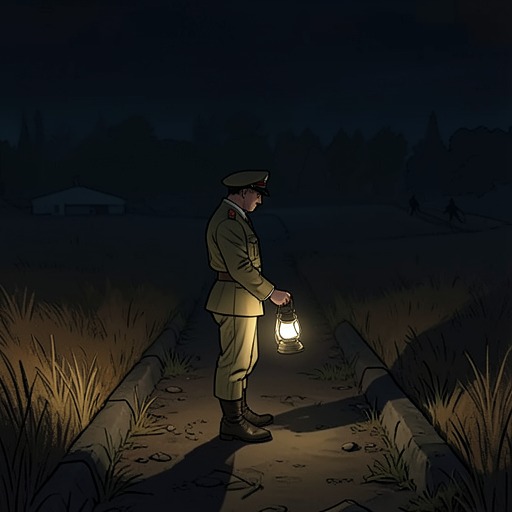
At Bordeaux-Mérignac Airfield, the squadron received orders to proceed to Meknès, suggesting to its members that North Africa would remain in the war. The narrator and his companions left at five in the afternoon and reached Salanque, on the Mediterranean coast, that evening. There they learned that every aircraft had been prohibited from taking off: a new authority controlled air movements toward Africa, and earlier instructions had been cancelled. The reversal made the possibility of continued resistance uncertain before the armistice’s acceptance in North Africa was confirmed.
The narrator describes his mother as someone who would rather make him swim the Mediterranean than accept surrender. Her determination weighs on his decisions, but the immediate choice is also practical and dangerous. With a sympathetic squadron pilot, he set course for Algeria at dawn without waiting for further orders. Their Potez had Petrel engines and no supplementary tanks; the narrator understood that its propellers might stop roughly forty minutes’ flying time short of the African coast, leaving them to ditch. They took off despite that risk. Warrant Officer Delavault accompanied them, bringing two tires to use as lifebuoys if necessary.
The crossing ended at Maison-Blanche airfield in Algiers, where favorable wind left the aircraft with ten minutes of fuel. The arrival offered only a brief reprieve. The next morning the pilots proceeded to Meknès, where the flying school had temporarily established its headquarters, and learned that the North African authorities had accepted the armistice. Because some crews had tried to reach Gibraltar, aircraft were now grounded. The move toward a continuing war had become a blocked route: the narrator had crossed the sea only to encounter the same surrender under a different command.
The armistice and his mother’s counter-call
The narrator’s mother responded to the news with fury. She brandished her cane, urged him to act, and called on the sons of France to rally to the flag. He could not persuade her to be patient or to trust that events might change. Her indignation seemed to him to animate his own body and keep him awake, while he averted his eyes from her incomprehension at the acceptance of defeat. The scene makes the armistice a personal conflict as well as a military one: he is caught between his mother’s demand for action and the orders that have closed off the available means of continuing the fight.
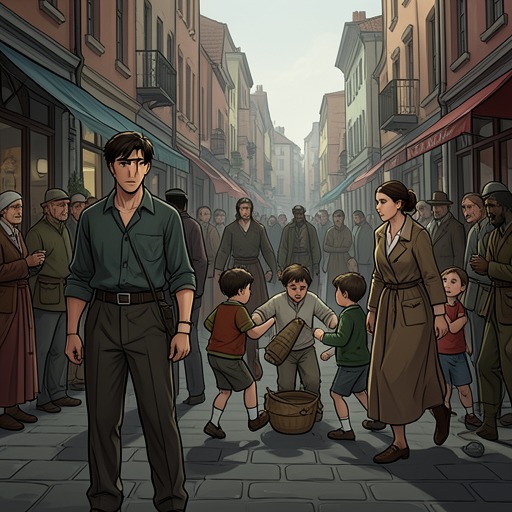
He places her public appeal before the better-known broadcast by Charles de Gaulle. Charles de Gaulle made his call from London on June 18, 1940; his mother, the narrator insists, had already made hers on June 15 or 16 at the Buffa Market, from Mr. Pantaleoni’s vegetable stand. The narrator was not there. He says that twenty people later described the scene to him: his mother stood on a chair among the vegetables, raised her cane, and urged those present to reject the armistice and continue the war from England and North Africa alongside her son. To support her picture of his importance, she showed the crowd a page from a weekly magazine containing one of his short stories, presenting him as a famous writer and diplomat already striking the enemy.
The episode binds public resistance to her extravagant hopes for her son. The narrator does not celebrate the story as a simple triumph: he recalls that some in the market may have laughed, and turns the blame inward, lamenting that he had not become the person his mother wanted to present. In Meknès, while wandering through the Medina, he felt her presence with particular force. Her call followed him even when he was physically separated from her, and his exhaustion left him longing for the care and guidance he associated with her. The mother’s appeal thus precedes the official broadcast in the memoir’s chronology, but it also reveals the intimate pressure under which the narrator experiences the political defeat.
Gibraltar and the widening sense of defeat
Some French crews attempted to reach Gibraltar after the armistice. The narrator and others traveled there in the hold of a ship, sustained by hopes of joining the fight. They arrived as the British fleet returned from sinking French naval units at Mers-el-Kébir. The news struck at the hope that had carried them away from France: the force they had expected to join had dealt a severe blow to the French fleet. The narrator presents the episode as a further reversal, not as a change in the decision to resist, but as proof that the prospects and loyalties of wartime action could collide in ways his earlier confidence had not anticipated.
His response to the news is expressed through an absurd, mythic image: he imagines Totoche, the god of Stupidity, standing in the harbor and laughing, wearing an English admiral’s cap. His first thoughts turn to his mother in Nice, whom he pictures setting out with her cane to break the windows of the British Consulate and summon passers-by to share her indignation. The imagined scene carries the market protest into a new setting. Even after the armistice and the blow at Mers-el-Kébir, his mother remains the figure through whom he imagines a refusal to accept events passively.
Political meaning and narrative significance
The narrator says he bears no resentment toward the men responsible for the defeat and armistice, and that he understands those who chose not to follow Charles de Gaulle. His understanding does not amount to approval. He argues that prudence and submission can appear reasonable to people who have made resignation part of their view of human life; in his account, such reasoning can welcome a tyrant’s victory as though it were simply the natural order. He measures that logic against the works and acts it would have prevented, from artistic creation to resistance and the defense of the vulnerable. The point is not that the cautious had no reasons, but that having reason on their side should itself have made them wary of what their reasoning authorized.
The armistice therefore marks a divide between accepting defeat as inevitable and risking action without assurance of success. The narrator’s attempted flight, his mother’s call at the market, and the crews’ effort to reach Gibraltar supply concrete forms of refusal; the successive grounding orders and the news from Mers-el-Kébir show how little control that refusal could guarantee. The episode’s irony lies in the contrast between the mother’s unshaken certainty and the repeated collapse of the plans around her. Her faith cannot reopen the airfields or undo the armistice, but it gives the narrator a standard against which resignation remains morally troubling.