Hôtel-Pension Mermonts
Promise at DawnHôtel-Pension Mermonts was the hotel in Nice that Romain Gary’s mother helped create, managed, and made the center of their shared life. More than a business, it financed his education, brought him into daily contact with travelers, and stood at the threshold of his departures and returns. Its changing fortunes chart the mother’s practical labor and vast expectations for her son; its final emptiness makes the place a measure of what he had lost.
From property sale to family enterprise
Just about the time Romain Gary was preparing for university, his mother secured the sale of a seven-story building on what had been Boulevard Carlonne and was now Boulevard Grosso. She had spent months searching for a buyer because the proceeds would pay for her son’s first year at the University of Aix-en-Provence. The buyer arrived unexpectedly: a former patroness of her fashion house in Vilna came to the house with her new husband, who bought the building. Impressed by the mother’s energy and enterprise, he decided to convert it into a hotel and restaurant and appointed her manageress.
The Hôtel-Pension Mermonts opened after its façade had been freshly painted, with Romain Gary writing the prospectus. His mother had no prior expertise in hotelkeeping, but, according to his account, she became a professional within weeks. The establishment had thirty-six bedrooms, two floors of suites, and a restaurant. She ran it with two housemaids, a waiter, a chef, and a dishwasher. The business began successfully, turning the sale of a building into an ongoing livelihood and a base from which mother and son could plan his future.
Work, guests, and the daily running of the hotel
At sixteen, Romain Gary took on a range of duties: reception, guiding tours, serving as maître d’hôtel, and making a favorable impression on guests. The work exposed him to more social contact than he had previously experienced. The clientele came from many countries, with English visitors especially numerous. Many arrived in groups sent by travel agencies; Romain Gary describes them as generally modest in their demands and appreciative of personal attention. Most were women. The hotel thus placed him in the midst of early mass tourism, while providing his mother with the daily responsibilities around which she organized her life.
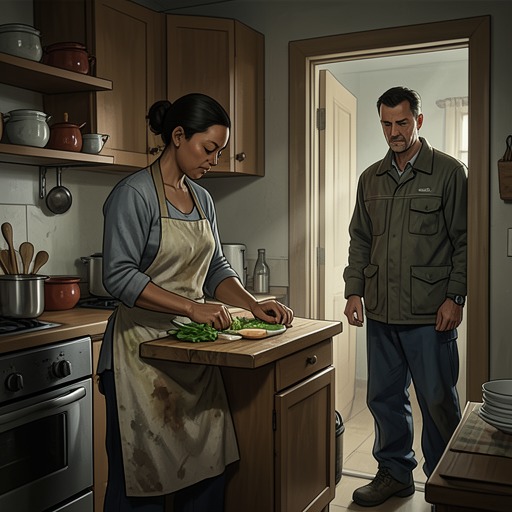
His mother’s working day began early. She went to the Buffa Market to buy provisions, returned with fruit and flowers, and then oversaw the hotel’s kitchens and business. She planned menus, dealt with tradespeople, supervised breakfast served in the bedrooms, heard guests’ requests, arranged picnic baskets for excursions, inspected the cellar, and kept the accounts. Romain Gary says she required him to eat at least a kilogram of fruit daily; he later associated this insistence with his chronic colitis. The market was not simply a source of supplies: it was a familiar part of her routine, and Romain Gary recalled returning there in later years and finding its activity a link to the world of his childhood.
The hotel’s prosperity depended on her constant effort, even as that effort concealed a serious health problem. One day, after repeatedly climbing the stairs between restaurant and kitchen, she collapsed. A doctor identified the episode as hypoglycemia caused by an excessive insulin injection. Romain Gary then learned that she had diabetes and had been injecting insulin each morning for years without telling him. The revelation transformed his view of the work he had watched her perform: her daily management of the hotel had continued alongside an illness that she kept private.
A household sustained by the hotel
The hotel’s income supported Romain Gary’s education beyond his first year. By the time it was thriving, his mother was earning seven hundred francs a month, and the two decided that he should continue his studies in Paris. Her hopes for his future were tied to the contacts she believed he could make, and she treated his advancement as the purpose that gave meaning to her struggles. At the same time, her diabetes was worsening. Increasing insulin doses brought more frequent attacks of hypoglycemia, and on several occasions she fell unconscious in the street after leaving the market. She pinned a notice to her cloak asking anyone who found her unconscious to give her the packet of sugar in her bag. Romain Gary once offered to stop studying and find paid work; his mother wept, and he did not raise the proposal again.
The hotel also helped sustain him while he was away at the University of Aix-en-Provence. His room in Aix cost sixty francs a month. His mother earned five hundred francs at that point, from which she paid for insulin and doctors, cigarettes, and other expenses before sending the remainder to him. She also arranged for food from the hotel’s storeroom to travel to him on the bus from Nice. His attic roof gradually held an assortment of provisions, including onions, eggs, cheese, ham, meat, and specialties supplied by traders from the Buffa Market. The resulting larder drew fellow students and other acquaintances to his room, helping him make friends. In this way, the hotel’s supplies supported his independence away from home while keeping him connected to his mother’s household.
Guests also brought the hotel into Romain Gary’s story of people whose outward manner concealed a more vulnerable self. Mr. Zaremba arrived in white tropical clothes with a panama hat and expensive-looking suitcases, asked to stay for a few days, and remained for a year. Romain Gary later understood the older guest’s elegant manners as coexisting with a childlike longing for attention. The hotel was therefore not only a workplace and source of money: it was a place where mother and son encountered people whose appearances and private needs did not neatly coincide.
Returns, departures, and the hotel as a stage
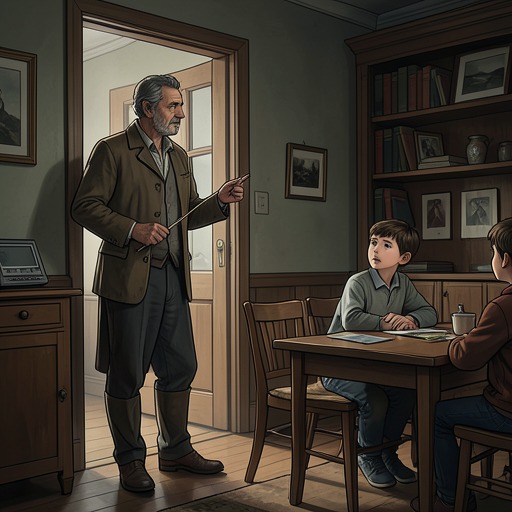
The Hôtel-Pension Mermonts repeatedly framed the family’s partings and reunions. When Romain Gary left Nice in October 1933 to study law at the University of Aix-en-Provence, his mother stood watching as the bus departed, holding the violets he had given her. Years later, after returning from Sweden in 1938, he took a taxi toward the hotel and saw its little garden, which no longer exists. His mother greeted him with tears and led him to their usual table in the empty restaurant, where she revealed her plan that he go to Berlin and assassinate Adolf Hitler. The episode shows how readily her ambitions for her son took shape in the hotel’s familiar rooms, where she presented her most extravagant hopes as a practical plan.
The hotel also became the setting for a carefully staged reunion after Romain Gary failed to receive an officer’s commission. His mother had raised a tricolor over its freshly painted façade to celebrate what she believed was her son’s promotion to second lieutenant in the French Air Force. Seeing her expectation, he concealed the truth with a story intended to spare her disappointment and preserve her image of France as a place of justice and beauty. The flag above the hotel made her hope visible before he had even entered; the lobby and their usual restaurant corner gave him a place to manage the painful gap between that hope and what had happened.
The business continued while she awaited the day he would return in an officer’s uniform. She continued to oversee the hotel, to care for its standards and guests, and to speak of his future as though its promised triumph were near. During his wartime service, her letters reached him with news of her health and pride in his supposed exploits. The hotel remained the point of reference for the mother who imagined his achievements and for the son who understood how much her expectations shaped his sense of duty.
Absence and the hotel’s lasting significance
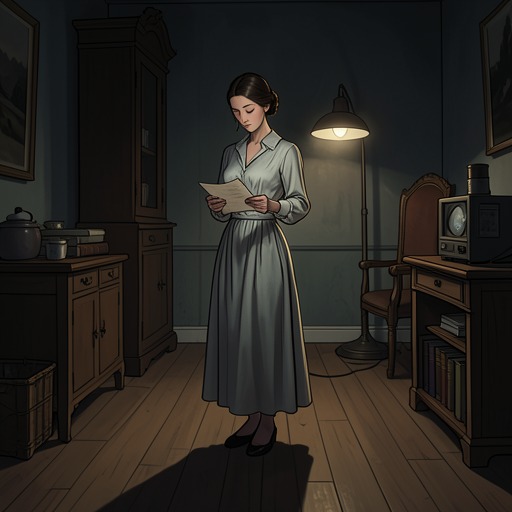
After the liberation, Romain Gary returned to Nice and went to the Hôtel-Pension Mermonts. He climbed to the seventh floor and found his mother’s small room empty. At the hotel, people could remember only a Russian woman who had once run the place; no one was there to greet him. His mother had died three years and six months earlier, a few weeks after he left for England. The hotel that had once made their shared life visible could now offer only the fact of her absence.
Before her death, she had arranged for nearly two hundred and fifty undated letters to be sent to a friend in Switzerland, who would forward them to her son at intervals. Romain Gary understood this arrangement as the continuation of a plan he had glimpsed in her sly expressions during his last visit to her at Saint-Antoine Clinic. He had kept receiving her encouragement without knowing that she was dead. The hotel’s role in the narrative consequently extends beyond its period of operation as a family home and business: it anchors the memory of her labor, the ambitions she attached to her son, and the separation she had secretly prepared to soften. Its empty room and the letters sent after her death converge in the image of a bond that continued to support him even when the person who had built that life there was gone.