His Mother Pretends to Be Paul Poiret
Promise at DawnHis Mother Pretends to Be Paul Poiret is the episode in which Romain Gary’s mother transforms an improving hat business into a couture spectacle by announcing that the Paris designer Paul Poiret will appear at its opening—and arranging for an actor to impersonate him. The scheme is both a commercial fraud and an improvised miracle: it gives Maison Nouvelle the prestige its customers want, while dramatizing the mother’s conviction that imagination might compel a more generous fate.
A Business Ready for Its Grand Opening
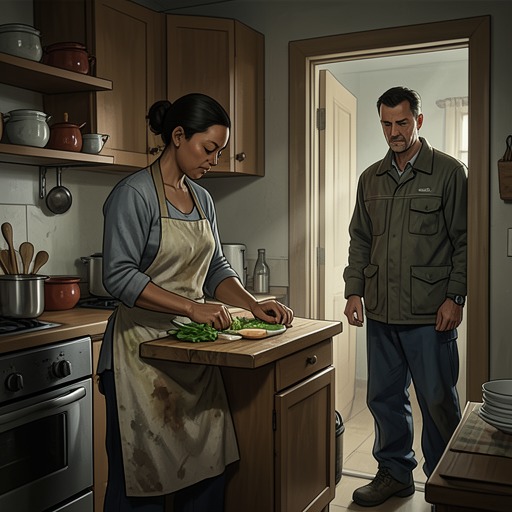
As winter retreated from Vilna, the family’s prospects improved. Their hats, advertised as made in Paris, were selling well enough that two girls worked in Aniela’s room to meet demand. Customers who had once required the mother to go door to door now came to the showroom. Its gilded sign proclaimed Maison Nouvelle, Grand Salon de Haute Couture de Paris, and a newspaper advertisement claimed a special arrangement with Paul Poiret that gave the business exclusive representation for both hats and dresses.
Success, however, did not satisfy the mother’s appetite for a decisive breakthrough. She wanted a masterstroke that would convert modest progress into an unmistakable triumph. The narrator watches her on the showroom’s little pink sofa, a cigarette in hand, her expression combining cunning with naïveté. He is so absorbed by the sight of her inventing a plan that he forgets the poppy-seed cake he is holding. The scene makes the plot’s suspense intimate: before the customers know anything, the child recognizes the familiar look that signals his mother is about to risk everything on an idea.
The risk was substantial. The narrator observes that even in provincial Vilna, where publicity photographs were almost unknown, the plan might have failed and sent the family back to the roads with their bundles. Yet his mother publicized the opening as an appearance by Paul Poiret in person, setting a specific hour for the event at the family’s address, 16 Grand Pohulanka. The promise itself became part of the product: Maison Nouvelle was no longer merely selling fashionable goods but staging access to Parisian authority.
Alex Gubernatis Takes the Part
The real Poiret did not come. Instead, the mother summoned Alex Gubernatis, a former acquaintance from her theatrical life in Russia. He had become a wig maker in Warsaw after his hopes as an actor and singer had dwindled. The mother sent him a railway ticket; eight days later, he arrived in the showroom to play the famous fashion designer.
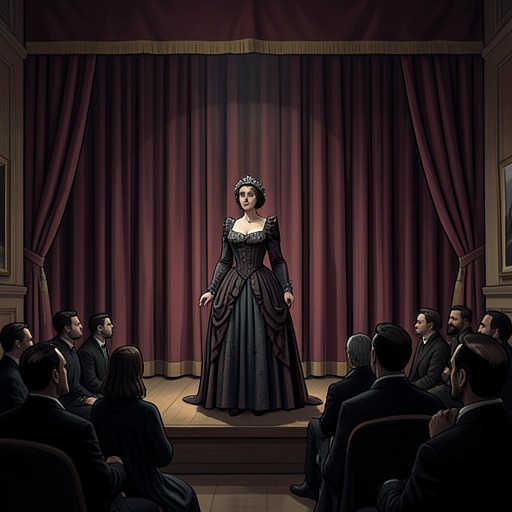
At four o’clock, with the flat packed with excited customers, the mother opened the doors and presented Gubernatis as Poiret. The impersonation depended on costume, posture, and performance more than resemblance or professional knowledge. Gubernatis wore a remarkable Scottish plaid, tight checked trousers, and a French lavallière tie. Seated in an armchair with sparkling wine, he spoke in a thin falsetto about the splendors of Parisian high life, invoked theatrical names long out of fashion, and passed his fingers through his wig. The narrator, dressed in a black velvet suit, watched the supposed designer with admiring attention.
The performance began to unravel when Gubernatis, intoxicated by his audience’s admiration and eager for more, called for silence and recited the second act of L’Aiglon. He then slipped from the role of celebrated couturier into his old burlesque repertoire, singing a refrain that the narrator says remained in his memory. The disruption punctured the refined fiction the opening was meant to sustain: the guest who had been offered as proof of Maison Nouvelle’s Paris connection could no longer keep his theatrical past out of view.
His mother responded by taking him into Aniela’s room and leaving him stretched on the bed behind double-locked doors. Still humming and snapping his fingers, Gubernatis was confined there while the opening proceeded around the interruption. That evening he returned to Warsaw with his plaid and his battered artistic pride, protesting that his gifts had been met with ingratitude. The episode’s comedy rests on the mismatch between the grand identity the business required and the vulnerable, out-of-work performer who had been recruited to embody it.
The Deception and the Dream Behind It
The narrator explicitly treats the scheme as more than a publicity stunt. He imagines that, before the opening, his mother had pictured the real Paul Poiret arriving before her customers and praising her taste, talent, and artistic inspiration. But her imagination had a counterweight: a practical, astute side that knew miracles were rare. Rather than simply abandon the vision, she created a substitute miracle herself, using Gubernatis to make the absent designer appear, for one afternoon, to have answered her hopes.
This account gives the impersonation its particular emotional tension. The mother is not represented as naïvely mistaking the actor for a genuine solution; she knows enough to make a calculated arrangement, but remains attached to the possibility that reality might exceed it. Her slightly guilty smile belongs to both sides of that character: she understands the fraud and also wants to believe in the vindication it imitates. The narrator’s image of forcing Fate’s hand turns the deception into an act of defiance, while his joking observation that Fate is guiltier and more in need of forgiveness keeps the moral judgment from becoming simple condemnation.
As far as the narrator knew, the deception was never exposed. Maison Nouvelle sailed into commercial success: within months, Vilna’s most prosperous customers were buying clothes from the family, money came in, and the flat was redecorated with thick, soft carpets. The immediate consequence was therefore not disgrace but material improvement. The makeshift performance had supplied the public opening the business needed, and its unreality did not prevent its practical effects from becoming real.
The Child as Part of the Show
The business’s new prosperity also altered the narrator’s place in the showroom. His mother insisted that he be present during fittings, and he later interprets this as possibly connected to an unconscious impulse or a dream of revenge. He suggests, without dwelling on the matter, that she was trying to raise him to resemble someone she had loved and whose hunting instinct had made her its victim. The recollection is deliberately cautious: it identifies a painful possibility but does not fully explain it.
In practice, the boy became another display. Dressed in silk and velvet, he was shown to favored customers and led to the window so that they could admire his blue eyes. The women’s enthusiasm could affect the price of the latest Paris model: those who showed more than ordinary delight were usually given a substantial reduction. The mother’s business thus used not only the imagined prestige of Paris but also her son’s appearance as part of its salesmanship.
Romain Gary performs the role dutifully because, as he recounts it, pleasing his mother is already his ambition. He learns to raise his eyes toward the light before being asked and adds tricks of his own, including wiggling his ears, which he has recently learned from his playmates. Once seated in a Louis XVI chair, he watches the fittings with a child’s growing curiosity about the women’s bodies and adornments. The comedy of the young performer echoes Gubernatis’s act, but the parallel is not identical: the actor is hired to impersonate a famous man, while the child is made into a spectacle through his actual presence and appearance.
The episode therefore links the mother’s invention to the daily operation of the successful salon. Her theatrical gamble secures the appearance of Parisian authority; after it works, the showroom continues to turn performance into commerce, displaying the child alongside the clothes. In the narrator’s retrospective telling, the opening is at once a comic confidence trick, a genuine business turning point, and a revealing instance of how his mother made dreams act upon material circumstances.