Human brotherhood
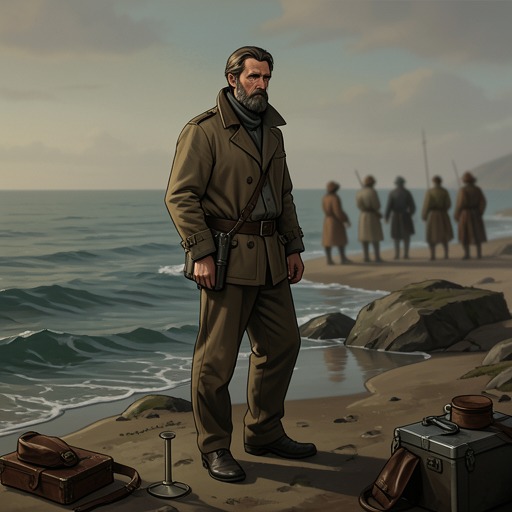
Promise at DawnHuman brotherhood is the narrator’s hard-won recognition that belonging cannot rest on national superiority or private attachment alone. His mother’s idealized France first gives him a powerful sense of collective identity; discrimination and war unsettle that ideal, and his later reflections widen solidarity into a refusal to treat other people—or suffering creatures—as strangers or enemies.
A Belonging First Imagined
The narrator’s earliest idea of France comes through his mother’s stories, told in the Lithuanian forest as if the country belonged to the world of fairy tales. Images of Jeanne d’Arc, the Bastille, and French literature make national identity intimate and almost sacred: France is reflected in his mother’s happiness and becomes inseparable from her love. This inherited vision supplies a first form of belonging, but one built on idealization rather than knowledge of the country’s contradictions.
That intimate patriotism later joins a public cause. After the fall of France, the narrator hears Charles de Gaulle’s call to arms and rallies to it without hesitation. The voice recalls his mother’s own declarations of faith in France, so national allegiance arrives not as an abstraction but as an extension of a formative relationship. The scene also reveals how a private story of belonging can move a person toward collective action.
War and the Limits of National Idealism
The narrator recalls that he had paid little attention to events in Europe and found it difficult to hate anyone for long. His mother had surrounded him with certainty about France and its military leaders, a kind of mental Maginot Line that kept defeat and doubt at a distance. That protection helps explain his initial confidence, but it also leaves him unprepared to understand the threat posed by Adolf Hitler and the Nazis.
His account of war remains in tension with that early confidence. He acknowledges having killed men under the accepted conventions of wartime service, yet says that killing brought him neither enthusiasm nor satisfaction. He regards death as regrettable and finds no cause sufficient to make the taking of another person’s life inspiring. This reluctance gives brotherhood an ethical weight: combat may impose violence, but it does not erase the humanity of those against whom it is directed.
Exclusion and a Changed Idea of France
That national belonging is not automatically granted becomes explicit when the narrator is told why he was failed at the flying school. He had been born in Russia, and his naturalization was too recent; the rule described to him restricted a flying officer’s commission to men with French parents or more than ten years of naturalization. Although the rule had previously been condemned as discriminatory, it was being applied again. The narrator’s insistence that he was French meets pity rather than recognition, exposing the distance between emotional allegiance and institutional acceptance.
The rejection has an unexpected consequence: the narrator feels truly French. The change does not come from discovering that France is flawless, but from discovering that the French are no superior race apart. They can be foolish and unjust, like anyone else; France contains faces both noble and repellent, and he must choose which examples to follow rather than trust a flag to make the choice for him. Assimilation thus becomes a recognition of shared imperfection. Brotherhood begins where national difference stops serving as proof of superiority.
From Comradeship to Human Solidarity
The Cross of the Liberation gives the narrator a public honor, but his reflection on its green and black ribbon centers the dead and the comradeship of a small number of recipients. He estimates that no more than about six hundred, living or dead, may have received it. Rather than presenting the decoration as a personal triumph, he values it as a sign of fidelity shared with fallen companions; his pride, he says, belongs with the dead. The award’s meaning is therefore collective, even as it recognizes an individual.
On the return to Nice after liberation, the narrator again places shared human companionship above private reunion or personal achievement. Friends understand that what matters is the comrades’ shoulder-to-shoulder struggle in pursuit of justice and reason. His medals, military rank, writing, and prospect of a diplomatic career accompany the homecoming, but they do not define its deepest significance. He sees the return as proof that sacrifice and love have not been wasted, while locating its meaning in the human bonds formed through common effort.
By the end, the narrator judges his former attachment to individual victories as a mistake. Loving one person, even his mother, cannot be the limit of love. As his sense of the isolated self recedes, men, peoples, and the dead become allies; he can no longer take sides in their quarrels and recognizes himself in living creatures who are mistreated. The result is not a simple rejection of France or of personal loyalty, but an enlargement of allegiance beyond borders and factions. Human brotherhood becomes an alert, unsentimental solidarity: a refusal to make another person’s suffering acceptable merely because that person belongs to the opposing side.