Humor as an Affirmation of Human Dignity
Promise at DawnHumor in Romain Gary’s memoir is both a private refuge and a way of resisting the indignities imposed on people. First discovered as a defense against a hostile world, it becomes a lasting artistic practice: self-mockery allows him to strike at the broader human condition, while laughter affirms that suffering does not have the final word.
Humiliation and the origin of a defense
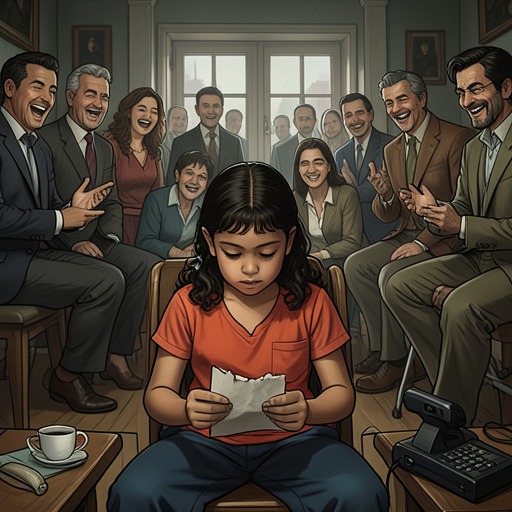
In Vilna, suspicion fell on Gary’s mother, a Russian refugee whose visits and mysterious boxes attracted the attention of neighbors and the Polish police. She was denounced as a receiver of stolen goods. Though she confounded the accusation, her shame and indignation erupted into a public confrontation. After crying among her hats, she took her young son into the building’s stairwell and went from door to door, summoning the tenants to face her.
With Gary beside her, she announced that he would become an Ambassador of France, a Chevalier of the Legion of Honor, and a celebrated dramatist. She ended her prediction with the particular proof of worldly success that came to mind: he would have his suits made in London. The neighbors answered with laughter and insults. Gary remembers the episode not as a passing embarrassment but as a wound whose force shaped him: he later writes that the laughter on that stairway became part of who he was. His mother, by contrast, stood straight and proud, holding him with both arms and showing no sign of humiliation.
The child was acutely vulnerable to ridicule; the adult narrator recalls the scene’s insults and mocking faces with painful clarity. He also describes a gradual change in his response. He learned to endure public embarrassment without treating ridicule as proof of personal diminishment. The memoir’s later confirmation that he became a Consul General of France and an officer of the Legion of Honor, and that he did have his suits made in London, gives his mother’s extravagant prophecy an ironic afterlife. The prediction was not simply a shield against the neighbors: parts of it came true, while the laughter that greeted it remained central to Gary’s understanding of himself.
From refuge to a lifelong practice
Gary connects humor to a wider retreat from hostile reality. After a succession of misadventures, he increasingly sought the privacy of his room and devoted himself to writing. Through invented characters, he could enter an imagined world in which meaning, justice, and compassion existed. Humor emerged within this imaginative work as a means of taking the sting out of reality at the moment it threatened to strike. He describes it as protection and companionship, a source of strength that helped him endure adversity.
That defense was not limited to joking about other people. Gary was willing to turn humor against himself, but he rejected the interpretation that self-directed mockery necessarily meant self-hatred or a desire for pain. The apparent target, he argues, is not an isolated individual so much as the shared human predicament. By making the narrated self the object of laughter, he could expose constraints that reach beyond any one person. The memoir names humor as “an affirmation of dignity” and as a declaration of human superiority to whatever befalls people.
Public ridicule and the performance of belonging
The stairwell episode is not the only scene in which laughter tests Gary’s composure. As a boy, he imagined his future in France and answered schoolmates who baited him with elaborate descriptions of French schooling. When they asked whether he would sing La Marseillaise, he stepped forward, put a hand to his heart, raised a clenched fist, and sang with burning enthusiasm. He saw the boys grinning and knew they were laughing at him, yet their mockery did not dislodge his belief in the country he imagined waiting for him. The scene shows a kind of self-possession akin to his later account of humor: other people’s laughter is audible, but it does not get to dictate the meaning of his performance.
That composure had limits. Years later, an explanation of his failure at the Air Force school exposed an institutional barrier: because he was Russian-born and had been naturalized only three years earlier, he was considered ineligible under a rule requiring French parentage or more than ten years since naturalization for a flying officer’s commission. The rule had been criticized as discriminatory, but, his informant said, was being applied again. Gary could only answer that he was French, or something to that effect; the man called him a stupid ass. The episode does not turn into a humorous triumph. Instead, it clarifies the social pressures surrounding ridicule and belonging: personal conviction and public performance could not by themselves remove an official restriction.
The target beyond the self
Gary’s account gives humor a deliberately broad object. The narrated “I” is a disguise or point of access; beneath it lies a struggle with the biological, moral, spiritual, and metaphysical constraints imposed on human beings. Laughter and derision reach toward the shared condition beneath individual identities. In this sense, self-mockery is not withdrawal into private amusement but an attempt to confront a common predicament. Gary also acknowledges its social cost: extending humor as a brotherly gesture to people enclosed in self-satisfaction can deepen solitude rather than produce fellowship.
His concern with justice runs alongside this account. As he began to take an interest in social problems, he wrote toward a world in which women would not be condemned to carry their children on their backs. Social justice, in his view, was only a first step toward people becoming masters of their fate. The visible marks of age and fatigue on his mother’s face sharpened his anger at injustice and his desire to make the world more honorable. His writing late into the night joins the imaginative refuge of humor to a larger demand: not merely that individuals learn to withstand humiliation, but that the conditions producing needless suffering be changed.