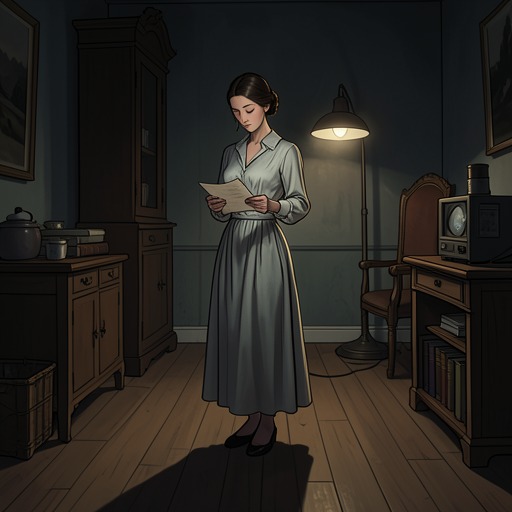
Ilona
Promise at DawnIlona is a young Hungarian woman whose brief relationship with Romain Gary becomes one of the enduring losses in his life. They fall in love at Hôtel-Pension Mermonts and plan to marry, but the war separates them after she returns to Budapest to visit her family. Gary never sees her again; in retrospect, he calls the separation another defeat, while his mother continues to imagine Ilona’s return and their marriage as part of the future she wants for her son.
Identity and Relationship
Some months before the outbreak of war, Ilona is staying at Hôtel-Pension Mermonts when Gary falls in love with her. He identifies her as Hungarian and offers only a few physical details: black hair and large gray eyes. The brevity of the description leaves the relationship, rather than a fuller portrait of Ilona’s character, at the center of her place in the memoir. The two plan to marry, making their separation the rupture of an intended shared future, not simply the end of a passing attachment.
Separation and Belated Remembrance
Ilona goes back to Budapest to see her family. The war then separates the couple, and Gary never sees her again. He presents the outcome plainly as another defeat, but the plainness conceals how difficult the memory remains to approach. In recounting his life, he acknowledges that he deliberately left the episode out until then. Twenty years after the separation, even writing a few lines about it requires a physical illness to provide what he describes as a kind of anesthetic: confined to bed in a Mexican hotel by an inflammation of the ear, he finds himself able to touch the more painful wound of the lost relationship.
Ilona in the Mother’s Hopes
Ilona remains present in Gary’s later life through the questions and expectations of his mother. During her final illness, while Gary sits beside her at the Saint-Antoine Clinic, she asks whether he has news of Ilona. He has none. His mother tells him that he needs a woman by his side, connecting the absent Ilona to her concern for his future companionship. At their parting, she urges him to marry when Ilona comes back, calls her lovely, and says she is the kind of girl he needs. Her hope persists despite the separation that Gary has already described as permanent.
In another maternal vision of that future, his mother insists that Ilona’s father would need to provide a generous dowry. She imagines presenting the prospective husband as a writer, diplomat, and hero, and asking what the other family would give in return. Gary responds with tears running down his cheeks as he agrees to become what his mother wishes: an ambassador, a great poet, a second Guynemer. Ilona’s marriage to him is thus woven into the mother’s expansive ambitions, even though Ilona herself is absent from these plans and the memoir gives no account of her response.
Narrative Significance
Ilona’s story is shaped by both absence and delay. She enters the memoir as the beloved whom Gary loses to circumstances, then returns in later scenes as a name his mother invokes when imagining that he will not remain alone. The contrast is sharp: the mother speaks of Ilona’s return and marriage as a future to prepare for, while Gary’s account establishes that the war ended their relationship and he never saw her again. His eventual decision to write about the episode makes the omission itself part of her significance: Ilona is not only a lost love but a painful memory that the narrator can approach only belatedly.