Maison Nouvelle
Promise at DawnMaison Nouvelle was the fashion house directed by Romain Gary’s mother in Vilna, where it had earned a reputation as the town’s leading salon. Its public image of prosperity concealed a business already strained by debt, and Romain Gary’s serious illness proved the final blow. In retrospect, the house represented both his mother’s professional skill and the exhausting performance required to keep a fragile enterprise afloat.
Identity and Work
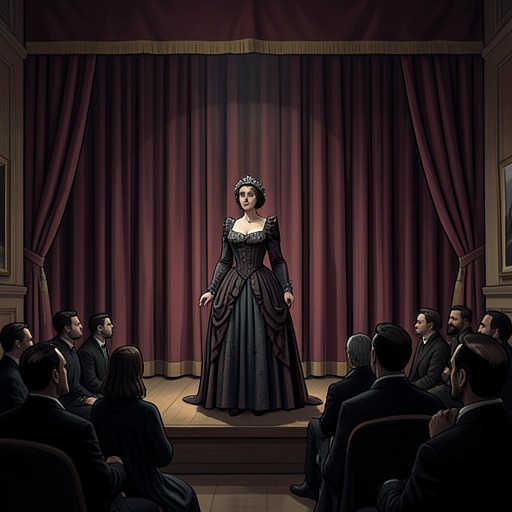
Maison Nouvelle also bore the grand designation Grand Salon de Haute Couture de Paris. Its standing rested not only on its garments but on the impression that its director chose and graciously accepted her clientele, rather than depending on their custom. Customers competed for her personal attention and trusted her to produce dresses for balls, first nights, and gala performances.
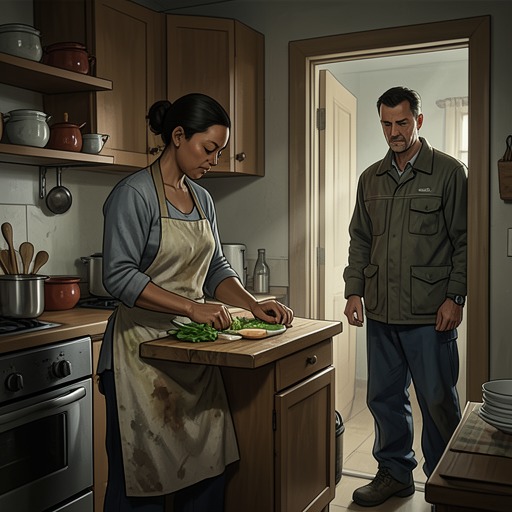
The salon’s reputation required continuous work behind that air of assurance. Romain Gary’s mother kept up with changing fashions, devised new designs, and endured lengthy fittings while concealing how much the business depended on each customer’s decision to buy. Even a customer’s hesitation could carry consequences beyond a single order: with the house’s finances so precarious, the outcome of a fitting could affect its ability to continue.
Prestige and Financial Strain
The salon’s public prestige had outgrown its balance sheet, while the family’s standard of living exceeded its means. Its finances depended on successive drafts and mounting borrowing. To meet interest on money already borrowed, Romain Gary’s mother signed more promissory notes, even as she struggled to maintain the appearance of prosperity that helped attract and retain clients.
That appearance was a practical defense. She understood that even a hint of financial difficulty could make customers withdraw, press for lower prices, or take their business elsewhere, accelerating the decline she was trying to prevent. Her manner helped preserve the salon’s authority: clients were made to feel that her attention was a privilege and that the business did not need them. In private, however, she bore the pressure of creditors while continuing to design, fit, and serve customers without revealing the firm’s dependence on their orders.
Illness and Bankruptcy
Romain Gary’s illness lasted two or three months. His mother neglected the business while devoting herself to his care and summoning kidney specialists to his bedside; their treatment added heavily to the family’s debts. After his recovery, she briefly went to Nice intending to sell the Vilna establishment and open a fashion house there. Six weeks later, when mother and son were back in Vilna, Maison Nouvelle could neither be sold nor kept running.
The illness and the family’s two-month absence, during which Aniela had been left in charge, dealt the final blow. Romain Gary’s mother made a desperate effort to keep the sinking business afloat, but within weeks bankruptcy was declared, to the satisfaction of the house’s competitors. The furniture was seized, including dresses, armchairs, sewing machines, and dressmakers’ forms. His mother had concealed her collection of Russian imperial silverware from creditors and bailiffs; she had refused to sell it because she regarded it as a reserve for the family’s future in France and for her son’s education.
Afterlife in Memory
The bankruptcy ruled out an immediate move to Nice: too little money remained, and his mother would not sell the silver. With only a few hundred zlotys saved from the collapse, they chose to go first to Warsaw. The business was finished, but its director remained a vivid presence in Romain Gary’s memory. Later, when he visited the premises of the great Paris couturiers, he said that he went not to look at the women there but to think of the directrice of Maison Nouvelle.
That recollection gives the failed enterprise an afterlife distinct from its commercial one. Maison Nouvelle had depended on an image of effortless success, yet Romain Gary remembered the labor and strain behind it: the designs, the fittings, the guarded smile, and his mother’s persistence in returning to work. The salon’s collapse marked a financial and geographical setback for the family, while its director’s example remained inseparable from his account of her.