Move from Poland to France
Promise at DawnThe move from Poland to France is both a long-nurtured family ambition and a passage into uncertainty. In Romain Gary’s retrospective account, the journey becomes a turning point when his mother makes their hoped-for future conditional on his willingness to defend her, and then begins establishing them in France. Their arrival in Nice brings a first intimate encounter with the sea, but also the discovery that the silver intended to finance their new life may not provide the security they expected.
An imagined destination put to the test
Before the move, France already occupied a powerful place in Romain’s imagination. At school in Poland, he described French education as more demanding and sport as more important, pictured a uniform with gilt buttons and a sky-blue cap, and said that pupils sang the national anthem every morning. When his classmates asked him to sing it, he performed with earnest conviction. Their mockery did not initially shake him: he understood that they were laughing, yet felt protected by his belief in the country he hoped to join.
That confidence faltered when a group of older boys suggested that France would not welcome his mother because of a disparaging rumor about her past. The narrator rejects the allegation as false. He remembers his mother as a proud and exceptionally beautiful woman who had performed in Moscow theatres, even if she was not the celebrated dramatic artist she sometimes imagined herself to be. Faced with the insult, the twelve-year-old was overwhelmed and turned away from his tormentors. In retrospect, he marks the incident as the one occasion when he did so.
A demand tied to the move
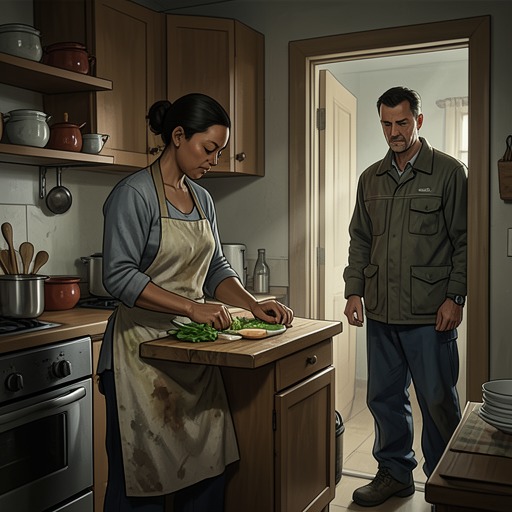
When Romain told his mother what had happened, he expected her familiar comfort. Instead, she became silent and distant. She prepared his supper and made his bed without offering reassurance, then remained awake through the night in an armchair, smoking and facing the window. The child experienced her withdrawal as abandonment. The adult narrator can only imagine what she was considering: whether her sacrifices and hopes for her son would matter, and whether he might eventually treat her as another man had treated her.
In the morning she still prepared his usual three eggs and chocolate and watched him eat. A brief softness in her expression gave way again to severity as he gathered his schoolbooks. She addressed him by his full name rather than by the affectionate diminutive he was accustomed to hearing, signaling a change in the terms of their conversation. She told him that if someone insulted his mother again, she expected him to return having stood up to the offender. Her demand was not simply a response to the schoolyard incident: she connected his willingness to defend her with whether their departure for France was worth undertaking at all.
When he continued to protest, she slapped him. She then told him that he had to defend her, because physical blows were not what hurt her most, and that he must be prepared to risk his life if necessary. Romain initially pretended not to understand, but he says that he did understand, and that his mother recognized this. The episode shifts the meaning of the move: France is no longer only the country of his schoolboy fantasies but also the destination of a family undertaking bound to his mother’s expectation of loyalty.
Afterward, she went directly to the French Consulate and began arranging for them to reside in France. An application prepared with the help of M. Dieuleveut-Caulec described her son’s intention to settle there, study, and grow into a man. The narrator remarks that the formal wording may have exceeded what she had consciously considered, but the action itself was decisive: the future they had discussed was being pursued through official arrangements.
Arrival in Nice and a fragile plan
Romain’s first remembered impression of France is not a landmark or official, but the porter at the Nice railway station. He recalls the man’s blue smock, peaked cap, and leather straps, as well as his healthy appearance, which the narrator associates with sunshine, sea air, and good wine. On later returns to the south, the porter’s familiar uniform continued to call up this childhood arrival. The family entrusted him with a box containing what they believed was the material basis of their future: the Imperial Russian silver service, whose sale was supposed to secure their prosperity for years.
The family settled in a boardinghouse on the rue de la Buffa. After scarcely pausing to smoke her first French cigarette, a Gauloise Bleue, Romain’s mother selected several especially fine pieces from the box, placed them in a small suitcase, and set out through Nice to find a buyer. Romain hurried to the beach, eager to renew his acquaintance with the sea. In the account, the sea’s welcome offers an immediate feeling of recognition, set against the practical uncertainty facing the two newcomers.
His mother returned without a sale. The dealers had offered far less than she believed the silver was worth, and she blamed them, dismissing their shops and questioning whether their owners were truly French. She insisted that the silver remained valuable, that they had enough money for several weeks, and that a suitable buyer would eventually secure their future. Romain said nothing, but already believed that no one would buy it and that they would soon be penniless in a foreign country. The contrast between her confidence and his apprehension makes the family’s arrival a beginning without financial assurance, rather than the instant fulfillment of a dream.
Home, foreignness, and retrospective meaning
The move produces a striking reversal in Romain’s sense of belonging. Before arriving, France had been the answer to the mockery and limitations he encountered in Poland; after arriving, the possibility of poverty makes him think of France for the first time as a foreign country. Yet he concludes that this very response shows how completely they felt at home there. The feeling does not arise from material security: the silver remains unsold, and their resources seem limited. It comes instead from the attachment that had preceded arrival and from the family’s decision to build its future in France.
The episode therefore holds promise and vulnerability together. His mother’s actions turn a destination into a commitment: she seeks residence for her son, demands that he stand up for her, and takes the family’s presumed financial resource into the city to sell. Romain’s memories place those declarations beside the porter, the boardinghouse, the disappointing offers, and his return to the sea. France is at once an imagined homeland, a place where their plans may fail, and the country in which the mother and son have chosen to make a life.