Nina’s diabetes
Promise at DawnNina Borisovskaia’s diabetes is a chronic illness that she manages while sustaining the family through demanding work at the Hôtel-Pension Mermonts. For years she conceals the condition from Romain Gary, even as insulin injections and recurring hypoglycemic attacks make her increasingly vulnerable. When he finally learns the truth, her illness intensifies his fear of losing her and his sense that he must repay her sacrifices by making her hopes for his future real.
Discovery and Concealment
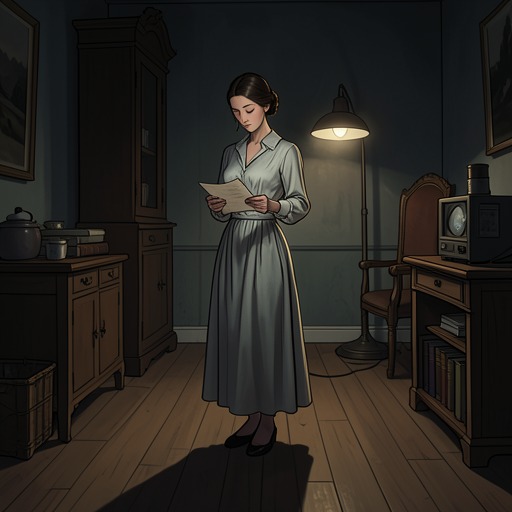
Nina’s illness becomes known to Romain through a collapse at the hotel. After repeatedly climbing the steep stairs between the restaurant and the kitchens, she sinks into a chair, turns gray, and begins to tremble. A doctor arrives quickly and identifies hypoglycemia caused by an excessively strong insulin injection. The episode reveals what she had kept from her son: she has diabetes and injects herself each morning before beginning the day’s work.
The disclosure changes how Romain understands the effort behind her routines. He has seen her carry fruit and flowers home, plan meals, supervise breakfast, manage visitors and tradespeople, and attend to the hotel’s accounts. Now that activity is shadowed by a condition she has managed privately, without making her illness a reason to stop working. The severity of the attack also fixes itself in his memory: the sight of her gray face and the hand pressed to her chest becomes an enduring source of fear.
A Risk Managed in Public
The disease worsens as the hotel prospers. Nina’s increasing insulin doses bring more frequent attacks of hypoglycemic coma, including episodes in the street after she has gone to the market. The danger is practical and immediate: unless a collapse is recognized and treated, she may not recover consciousness. Rather than stay indoors, she devises a precaution that lets her continue going out alone. She pins a notice to her cloak explaining that she is diabetic and directing anyone who finds her unconscious to give her the packet of sugar in her bag.
That small notice makes a private medical risk legible to strangers. It gives passersby a simple way to help, and allows Nina to keep up the daily errands on which the hotel depends. But the arrangement does not make Romain feel secure. Seeing her walk away with her stick can provoke in him a wave of anxiety and helplessness, sharpened by his belief that she might die before he has achieved what she expects of him.
Another severe episode occurs at the market, where Nina loses consciousness and is laid on the counter of M. Pantaleoni’s vegetable stall. She recovers after sugared water is poured down her throat. By then doctors have been trying different diets, but the sugar in her blood continues to rise dangerously. The scene shows both the limits of the measures available to her and the public setting in which her private illness can suddenly become an emergency.
Work, Dependence, and the Son’s Future
Nina’s diabetes develops alongside an unusually heavy working life. The Hôtel-Pension Mermonts brings in seven hundred francs a month, and she maintains the business while coping with the increasing risks of her condition. She injects insulin twice a day, even as she issues orders to the staff and tries to preserve the hotel’s standards. Her work includes attending to visitors from across the Channel, whose preferences she tries to accommodate by learning a little English. The illness does not remove her from these responsibilities; the narrative instead places medical management inside the working day she continues to direct.
This persistence complicates Romain’s position. At nineteen, he considers leaving his studies to find work and bring in money. Nina gives no answer at first, then looks reproachful and begins to cry; he does not raise the proposal again. He believes he is living on her labor and health, and sees the years still required to complete his studies and military service as time she may not have. He therefore treats the future she has planned for him—notably his return with a second lieutenant’s stripe—as a responsibility he has no right to set aside.
The pressure reaches his writing as well. He tries to produce a masterpiece quickly enough to reward Nina for her sacrifices and to make her life seem vindicated. While he writes, she continues to handle the hotel’s daily work, including the market, the staff, the accounts, and the needs of guests. When he brings her passages from his manuscript, her attention and approval reassure him. Her diabetes is not presented as the cause of his ambition, but it makes the deadline he imagines feel urgent: he wants to succeed while she is still alive to see it.
Illness and the Mother-Son Bond
Romain’s recollections connect Nina’s diabetes to a broader pattern in which each fears failing the other. During his own near-fatal kidney illness, he worries that he will leave her without support and disappoint the expectations she has placed on him. Nina, in turn, refuses an operation proposed for his kidney, despite the insistence of a specialist summoned from Berlin. Her decision belongs to Romain’s separate illness, not to her diabetes, but it reflects the force with which she intervenes when his body and future are at stake.
Her diabetes therefore marks more than a medical vulnerability. It reveals how much of Nina’s care for her son is sustained alongside her own concealed needs, and how readily Romain turns that care into an obligation to achieve. The recurring attacks give his imagined race against time a concrete basis, while the notice, the sugar packet, and the injections show the practical measures by which she continues to live and work. In his account, neither her determination nor his promise can eliminate the danger; their bond is shaped by the effort to carry on in its presence.