Parc Impérial
Promise at DawnParc Impérial is the tennis club where an ordinary membership fee becomes the occasion for one of the most revealing episodes in Romain Gary’s account of his childhood. Unable to afford entry, he is brought there by his mother, who appeals first to the club officials and then to Gustav V. The scene ends with the King paying the subscription after the boy’s disastrous attempt to play; Gary, however, never returns. The club is remembered less as a sporting venue than as a stage on which his mother’s confidence, his family’s poverty, and his own shame collide.
Setting and Access
The club is presented as part of the Riviera’s tennis world, a place where membership opened access to courts that the family could not afford. Gary had been given a racquet by the parents of a friend, but owning one did not solve the financial barrier: the subscription remained beyond the family’s means. The distinction is important to the episode. He is not kept off the court for lack of a racquet, nor initially because anyone has assessed his skill; the obstacle is the cost of entry.
The club’s social setting is made visible through its officials, its audience, and the King’s presence. When the club president and secretary are summoned, Gustav V is nearby, taking tea on the lawn beneath a white parasol. He wears white flannel trousers, a blue-and-black blazer, and a straw boater tilted over one ear. A frequent Riviera visitor whose distinctive hat appeared in local newspapers, he is both a recognizable public figure and a participant in the club’s everyday scene. The lawn, courts, and assembled spectators give the dispute a public audience rather than making it a private negotiation over fees.
A Mother’s Appeal
Seeing that money had barred her son from the courts, Gary’s mother declares that the matter will not rest. She puts out her cigarette in a saucer, takes her cloak and cane, and orders him to bring his racquet and follow her at once. At the club, the secretary responds to her carrying voice, and the president, Garibaldi, arrives as well. She argues that her son might become a champion of France and defend its flag, yet is being denied the chance to practise over a trivial matter of money. Gary notes the irony that his mother presents him as a Frenchman even though he has not yet been naturalized.
The officials’ attempt to quiet her by mentioning that Gustav V is close at hand changes the scene. Her indignation turns into an appeal to the King. She makes a deep curtsy, points her stick toward the president and secretary, and asks for justice and protection for her son. In the account she gives, the family fortune has been seized by the Bolsheviks, leaving them unable to pay the subscription. Her address turns the club’s financial rule into a question of fairness, national belonging, and a mother’s duty to secure her child’s future.
Gary describes the performance as following the tradition of popular Russian legends. Its scale is comic, but its emotional stakes for him are immediate. His mother’s confidence is absolute: she speaks of extraordinary talent in a boy who has held a tennis racquet only three or four times. For her, practical considerations do not outweigh what she believes he can become. For him, the same confidence means that retreat is no longer possible.
The Court and the Public Test
Gustav V does not simply settle the question of admission. He asks his coach to hit a few balls with the boy and see how he does. Gary understands that the club’s scrutiny has now moved from his family’s means to his supposed ability. He goes onto the court frightened and ashamed, but the sight of his mother’s faith in him makes him swallow both feelings and face the test.
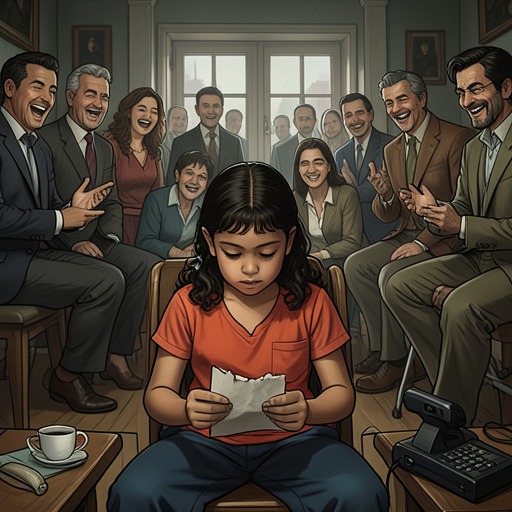
The result is an abrupt reversal of her extravagant prediction. Under the King’s gaze, Gary jumps, dives, runs, falls, and gets up again, but manages to touch the ball only once, and then with the wooden part of his racquet. The spectators’ amusement makes his failure social as well as athletic. He recalls an earlier lesson in Warsaw, when his mother had slapped him and demanded that next time he be brought home on a stretcher. That memory helps explain why he does not turn back: for her sake, he is prepared to be the clown as well as the hero.
When the coach ends the trial, his mother helps him put on his pullover and wipes his face and neck with her handkerchief. Rather than treating him as a disgrace, she welcomes him. She then faces the spectators in silence, with a faint smile; the mockers appear discomfited, and the women in the audience turn their attention to their lemonade. The episode’s balance shifts again: the boy has failed the sporting test, but his mother’s refusal to be ashamed of him unsettles the audience’s judgment.
Resolution and Meaning
Gustav V resolves the immediate question by telling Garibaldi that the boy has shown courage and determination and that he will pay the subscription. The King’s intervention grants Gary access without requiring his mother to withdraw her appeal or pretend that the family can afford the fee. It also recognizes a quality different from the tennis talent she had claimed: the boy’s willingness to go onto the court despite fear and near-certain embarrassment.
Gary’s response to the favor lasts longer than his access to the club. He says that he has loved Sweden ever since, but never again set foot in Parc Impérial. The outcome is therefore neither a triumphant sporting beginning nor a lasting membership story. The club remains fixed in memory as the place where maternal belief carried him into public ridicule, where royal courtesy answered an appeal that the ordinary terms of membership could not accommodate, and where he learned that loyalty to his mother could mean accepting humiliation as readily as acclaim.