Polish Armed Forces
Promise at DawnThe Polish Armed Forces enter Romain Gary’s memoir not through an account of their command or organization, but through the people he meets while serving as an interpreter and later trying to reach England. French suspicion casts Polish soldiers as defeated and potentially disloyal; in a later episode, Polish troops and officers help Gary and two fellow trainees slip aboard the cargo boat Oakrest. Together, these scenes present the forces as both targets of wartime prejudice and a source of immediate, practical assistance.
Identity and Representation
Gary describes Polish forces in France as unpopular after Poland’s defeat by Germany in a matter of weeks. Among his French companions, contempt for the Polish troops was openly expressed. A wider atmosphere of suspicion sharpened that hostility: during a period of spy mania, even a Polish soldier lighting a cigarette could prompt accusations of communicating with the enemy. The memoir records this prejudice as part of the atmosphere surrounding the forces, rather than as evidence about their conduct or military structure.
Training and Contact in France
Because Gary spoke Polish fluently, he served as an interpreter on training flights intended to familiarize Polish personnel with French equipment. He stood between the French and Polish pilots, translating the French instructor’s comments and orders. The arrangement brought the two contingents together in a setting where trust was already strained. On a landing approach, the instructor judged that the Polish pilot was coming in too fast and too long, and urgently ordered Gary to relay a correction. Gary says he translated the instruction at once; the aircraft nevertheless crashed. The Polish pilot, badly hurt, tried to apologize to the French pilot, while Gary began to interpret. The episode makes the interpreter a literal intermediary between the forces, while its disastrous outcome exposes how precarious their joint training could be.
Assistance aboard the Oakrest
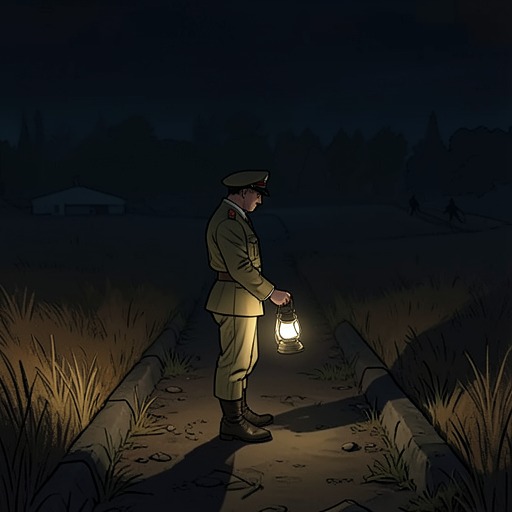
Later, in Casablanca, Gary and two other trainees, Forsans and Daligot, were searching for a way to get to England. The harbor gates were guarded, and the last British ship carrying Polish troops seemed to have left. Their prospects changed when a Polish corporal came ashore from the Oakrest, which was due to sail at midnight with a contingent of Polish troops from North Africa. He had come to buy delicacies for the voyage. The men embraced him, and he gave Forsans a Polish tunic and Daligot a Polish cap.
Gary used his command of Polish to pass off the group as a special liaison mission. Two Polish officers on duty at the gangplank helped them aboard after he explained their situation. The three trainees spent the night at sea in a coal bunker. In this episode, the Polish personnel are not merely part of the departing contingent: the corporal’s clothing and the officers’ cooperation make their escape possible.
Narrative Significance
The memoir gives no broad account of the Polish Armed Forces’ internal organization or aims; its portrait is limited to these encounters. That limitation gives the episodes their force. In France, Polish soldiers are viewed through the resentful assumption that defeat makes them suspect. At Casablanca, Polish uniforms, language, and the presence of officers become the means by which men seeking to continue the war pass a guarded harbor. The contrast shifts the forces’ narrative role from object of French suspicion to indispensable allies in Gary’s flight.