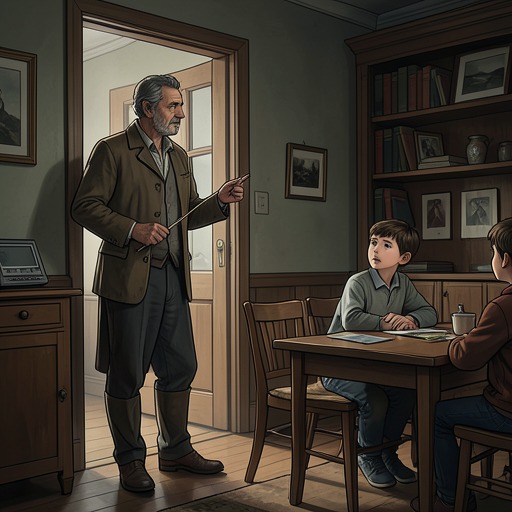
Romain Gary and Josef Zaremba’s Relationship
Promise at DawnThe relationship between Romain Gary and Josef Zaremba becomes a brief attempt to make a family out of three different forms of longing. Zaremba, a lonely painter who has never known a mother’s affection, hopes to enter the intimate bond between Romain and Nina Borisovskaia; Romain, nearly eighteen and without a father, gradually casts the painter as a possible father and ally. Their mutual courtship turns gifts and small acts of care into signs of belonging, but Nina refuses Zaremba’s proposal. The relationship ends not in a quarrel but in the quiet return of everything they had come to share, leaving Romain with a tie he still associates with the loss.
First Impressions and Shared Loneliness
Zaremba arrives at the Hôtel-Pension Mermonts dressed in white tropical clothes, wearing a Panama hat and carrying expensive-looking, travel-labeled suitcases. He asks for a room for a few days and stays for a year. His distinguished appearance and polished manners conceal, in Romain’s later understanding, a childlike need for attention: the outwardly assured man remains inwardly lonely and eager to be noticed. Romain first regards him through the confidence and cynicism of adolescence, but retrospectively recognizes in Zaremba a likeness to his own adult self.
The painter’s loneliness has a history. His parents died young, and he visits their graves from time to time; he was raised by a bachelor uncle. Romain and Zaremba speak frankly about personal matters. Zaremba describes his life as nearing its end and says he would be content to occupy only a secondary place in a woman’s affections. He is not demanding a grand romance: he wants someone to care for him a little. His candor makes their difference in age less important than their shared vulnerability, although at first Romain listens as a young man who believes the older man’s problem can be solved by a practical arrangement.
A Proposed Exchange of Affection
Romain initially imagines the material possibilities of Zaremba’s relative wealth: a small car, travel, and the painter’s fine possessions. Yet the hope he identifies as more important is respite. Nina’s love is so intense that it can feel crushing, even as Romain remains determined to fulfill her dreams. He longs for someone to share the responsibility of loving and caring for her, so that he might go out into the world and return with his achievements laid at her feet. Zaremba seems to offer both companionship and a possible reprieve without requiring Romain to renounce his devotion to his mother.
Romain soon notices that Nina has become suspicious of the developing intimacy. He also recognizes that Zaremba’s attachment to her is not simply a man’s desire for a woman. The painter sees in Nina’s uninhibited maternal affection something he himself has missed, and hopes there may be room for him within it. When she brings Romain fruit, cakes, or tea in the hotel garden and embraces him, Zaremba watches with visible hurt. Leaning on an elegant walking stick with an ivory and silver head, he remains a quiet outsider to the scene. He does not interrupt or rebuke Nina; his appeal is expressed in his watchfulness and restraint.
That restraint breaks when Zaremba sits at Romain’s garden table without invitation, takes an apple from the tray, and eats while looking defiantly at Nina. The gesture is a small, wordless bid to claim a place in their domestic intimacy. Nina’s cold response makes the limits of that claim unmistakable: after a few more attempts to chew, Zaremba puts down the apple and leaves, hunched and defeated. Romain admits that his younger self enjoyed the triangle and sometimes answered the painter’s longing with an ironic, superior look. Nina, though she never discusses the situation openly, appears aware of it; the tension even creates a new complicity between mother and son, strengthening their awareness of their own bond.
The Father-and-Son Roles
Zaremba argues that growing up as an only son and the sole object of a mother’s love can be dangerous. Nina answers abruptly that she does not intend to adopt another child. The exchange exposes the mismatch within the proposed family: Zaremba speaks as an orphan asking for affection, while Nina hears a request to redirect the love she already gives her son. He insists that he is not arguing against maternal love. Having never experienced it, he understands what its absence has cost him, and believes that sharing it could help Romain become stronger and more self-reliant.
Their positions are not simply those of a calculating adolescent and a generous older benefactor. After Zaremba’s first attempt to approach Nina through the subject of her love, he decides that the better way to court her is through Romain. He gives the boy a crocodile-skin wallet containing fifteen American dollars, then a camera and a wristwatch. A Waterman fountain pen follows, along with books that enlarge Romain’s small library; cinema tickets are readily available. Romain accepts these things while presenting his conduct as tactical: he wants to put Zaremba in the right frame of mind and assess his character. He talks with friends about a new family house in Florida and raises the possibility of a sailboat for their shared use.
The retrospective account complicates that self-portrait. Romain acknowledges that he was not yet eighteen, had never had a father, and was beginning to see Zaremba as one, even as Zaremba may have imagined himself as a son. The gifts are therefore both leverage in a marriage campaign and the material expression of a father-son role that Romain is helping to construct. Zaremba’s kindness is not merely a means to Nina: he attends to Romain’s wants, and Romain likes him. The relationship gives each man a possible answer to an absence, though each imagines a different place in the family.
Proposal, Refusal, and Parting
Zaremba eventually asks Romain whether Nina will marry him. Although Romain has been maneuvering toward precisely this question for months, the request leaves him suddenly unprepared. He answers carefully, invoking other offers rather than assuring the painter that the outcome is settled. When Zaremba asks him to find the proper words on his behalf, he leaves the room and leaves Romain holding the weight of the decision. Romain understands that this may be their last chance, but also knows that persuading Nina will not be easy.
He prepares to speak to her after her return from the market, when she is usually in her best mood. He dresses carefully, borrows Zaremba’s blue silk tie embroidered with silver horsemen, buys expensive red roses called Velvet Dawn, and waits anxiously in the lobby. His motives are mixed: he does hope for some relief from the burden of responsibility, but he also wants Nina to have someone who will treat her with decency and kindness. He recognizes that Zaremba is looking for a mother as much as a wife. Romain even discounts the painter’s artistic standing, reasoning that the family needs a gentleman and that its great artist can be himself.
In trying to reassure Nina that Zaremba respects her, Romain makes what he calls his final, fatal mistake: he underestimates her youth of heart and her womanhood. Nina tells him that, although she knows she is old and has lost things that will not return, she still loves a man from her past. He had not been a gentleman, but he had been a man, and she remains a woman with memories. She has one son and will not adopt another. Romain understands that she has recognized his hope of escape. Her refusal closes off the proposed arrangement, leaving loneliness rather than relief for all three.
Romain cannot find words that would reject Zaremba without hurting him. He gathers the possessions that had passed between them—the tie, camera, silk shirts, pajamas, fountain pen, and other cherished things—and returns them. Zaremba sits pale and motionless, suddenly seeming very old; he asks nothing as Romain places the objects on the bed. Their silence registers the end more fully than an argument could. Zaremba leaves by an early train the next morning without saying goodbye. He leaves the blue tie, carefully wrapped in white paper, and the maid gives it to Romain when he returns from school. Romain keeps it, though he seldom wears it because he feels it makes him look older than his age. The object that first helped him stage the appeal to Nina survives as a reminder of the father figure and family they could not become.
Retrospective Meaning
The relationship’s emotional force lies in the difference between what the two men seek and the affection they genuinely develop. Zaremba wants access to maternal love and, through it, a place within a family; Romain wants help carrying the demands of Nina’s devotion, but also comes to welcome the painter as a father. Their bond is at once strategic and sincere. Romain’s youthful calculation does not cancel his care, just as Zaremba’s hope of marrying Nina does not reduce his tenderness toward her son.
The ending also revises Romain’s early confidence. He initially watches Zaremba’s yearning from a position of ironic advantage, even enjoying his exclusion from Nina’s displays of love. Later, he understands the orphaned child inside the elegant adult and sees a likeness between that unmet need and his own. The returned gifts mark a failed arrangement, but the tie remains: a material remnant of intimacy, embarrassment, rejection, and recognition. In retrospect, Zaremba is not only a would-be stepfather whom Nina refuses; he is one of the first figures through whom Romain can perceive the lasting vulnerability hidden inside adulthood.