Salon-de-Provence
Promise at DawnSalon-de-Provence is the military setting of a sharp reversal in Romain Gary’s early service: he entered training with the standing of a future officer, but was held back and returned as a lance corporal. The place frames both his conflict with the army’s system of advancement and the resourceful routine he made for himself there before war was declared.
Training and the Lost Commission
When Romain Gary was called up, he enjoyed at Salon-de-Provence the privileged position of a prospective officer. Four months later, after being kept there for six weeks, he faced a very different prospect. Although his marks would have justified a commission, according to Lieutenant Jacquard, his professional soldier and Saint-Cyr-trained brigade commander, Gary had not even become a sergeant or a corporal: he had scraped through as a lance corporal. He had never received a reprimand, and the missed opening stages of his training had not been his fault. The reason for his setback remained unclear to him. The announcement left him struggling to maintain his composure in front of his companions. They gathered around to shake his hand, some silent and others indignant, while he tried to keep up the detached manner he had chosen to present. His thoughts returned to his mother, waving a tricolor flag from the platform at Nice. Salon-de-Provence thus became the site where an institutional decision reached beyond rank: it threatened the future he had imagined and the confidence his mother had placed in him.
Return as a Lance Corporal
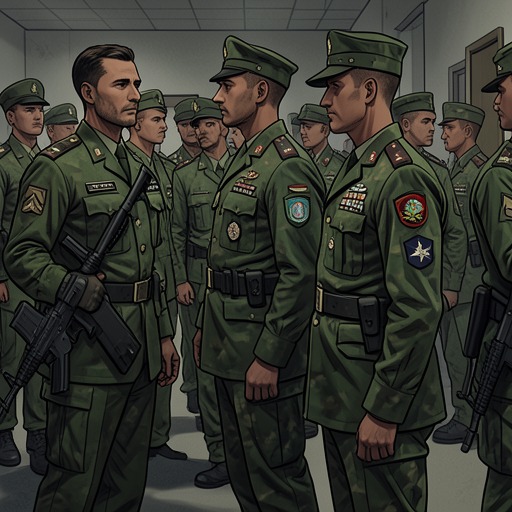
Gary came back to the post not as the future officer he had been treated as before, but as an ordinary lance corporal among the noncommissioned officers and privates who had once stood below him. He describes the weeks that followed as a period of insults, fatigue, practical jokes, jeers, and irony. His duties included permanent inspection of the latrines. The army’s treatment made the change in status tangible in the daily routine, but Gary says those vexations also distracted him from the deeper defeat of returning to his mother without the officer’s stripe she had expected. Outside the camp, the surrounding countryside offered a contrast to military indignity. Gary found the Provençal landscape strangely funereal: stones among cypresses suggested to him the ruins of the sky. He made friends among civilians and visited Les Baux, where the great cliff recalled medieval troubadours and courts of love. From above, he spent hours looking across the expanse of olive trees. These excursions did not undo his professional setback, but they gave his life beyond the camp a different scale and texture.
Work, Practice, and the Coming War
At Salon-de-Provence, Gary continued to prepare himself for aviation despite his reduced rank. He practiced pistol shooting and, with the complicity of Sergeants Christ and Blaise, secretly accumulated about fifty hours of flying time. His navigator’s diploma was eventually noticed, and he was appointed an air-gunnery instructor. When war came, he was occupied with that work, his machine guns pointed toward the sky. The sequence shows him adapting to the opportunities available at the post without abandoning his ambition to fly. On the day war was declared, his mother arrived at Salon-de-Provence in the old Renault taxi, bringing hams, jam, preserved fruit, cigarettes, and other provisions. The food, she told him, was for his officers. Gary imagined the awkwardness of a lance corporal presenting his superiors with sausages, ham, cognac, and cakes on his mother’s behalf, and kept his misgivings to himself. Her visit turned the post into the setting for another effort to influence his fate: where the army had failed to give him the rank she believed he deserved, she tried to plead his case through gifts. Her arrival was also a farewell, bringing the private bond between mother and son directly into the military world that had disappointed them both.