Seals
Promise at DawnSeals are recurring animals in Promise at Dawn, most closely associated with the narrator’s long, reflective stays on the shore at Big Sur. They are not merely scenery: their visible behavior gives shape to his longing for company, while their silence preserves the distance between human interpretation and the nonhuman world. A seal’s arrival can briefly seem like an answer to loneliness, but the ocean’s meaning remains unresolved.
Presence on the Big Sur Shore
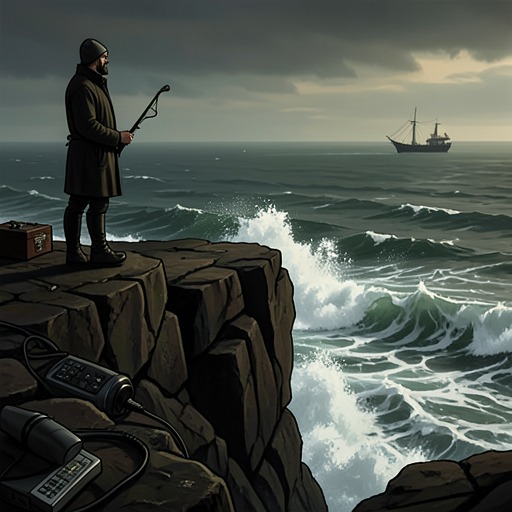
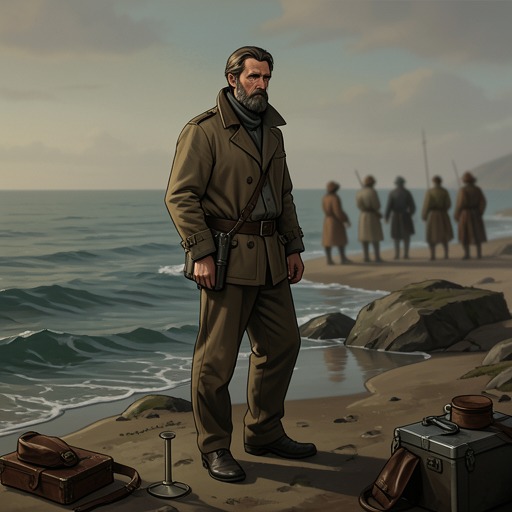
The book introduces seals within a broad coastal tableau. At forty-four, the narrator lies on an empty, cool beach as mist blurs the landscape and memories rise into view. On one rock are thousands of birds; on another, a family of seals. The father repeatedly emerges from the waves with a fish in his mouth, presented as a devoted parent. This is a concrete scene of animal life, independent of the narrator’s history, even as its image of care resonates with the book’s attention to parental love.
The narrator watches the seals alongside gulls, cormorants, and pelicans. He imagines the birds settling on him and covering him with their feathers, a fantasy of universal tenderness that persists into adulthood. The seals, by contrast, approach in a particular and memorable encounter: one lets the surf carry him close to the narrator’s feet, rises on his flippers, and stares at him for a while before returning to the sea. The narrator smiles; the animal continues to look at him seriously, almost sadly, as though it knows something. The comparison is explicitly tentative. The seal’s gaze is observable, but the knowledge the narrator senses in it remains his interpretation.
Companionship and Bereavement
The seals recur within the narrator’s account of wartime loss and its aftermath. Looking back from Big Sur, he describes how repeated deaths among his comrades made emptiness feel densely populated: the absence beside him is filled by the remembered presence of those who are gone. He says that he seeks out empty stretches of sky, ocean, and beach, places spacious enough for the dead. Animals become part of his effort to endure that absence. He tries to fill the void with dogs, birds, elephants, and books; when a seal throws himself from a rock and swims toward shore, the narrator’s craving for friendship takes the form of a childish hope. He smiles and stretches out an imploring hand.
That response does not make the seal a substitute for a human companion in any literal sense. The scene turns on the gap between the narrator’s wish and what the animal can be shown to do: it swims toward shore, while the hoped-for fellowship belongs to the narrator’s reading of the movement. The seal matters precisely because the encounter is small and incomplete. It offers a moment of approach without resolving bereavement or establishing that the animal understands the human appeal.
Elsewhere, the barking of a seal punctuates the narrator’s image of himself lying at the ocean’s edge after a fall. In his retrospective account, he had tried to shape life according to an ideal of beauty and happiness, only to discover that life could resist the form he imposed on it. The shore, wet sand, and animal cries frame that recognition. The seal’s sound belongs to the place itself; it does not explain or repair the narrator’s disappointment.
The Sea, Hope, and the Limits of Interpretation
Near the close, seals again occupy the rocks above the Big Sur beach, among cormorants, gulls, and pelicans. A whale sometimes passes far offshore, and a vulture begins circling overhead. The scene holds together animal presence and the narrator’s awareness of his own approaching end without turning the seals into a supernatural sign. He lies motionless, listening to the ocean and trying to understand what it is saying.
At times, he feels that the surf is close to delivering a message or a key to meaning. At other times, he gives up listening and simply breathes. The seals belong to this unresolved attention: their barking reaches him from the rocks, and their presence accompanies a hope that understanding might arrive, even as the book offers no confirmed message from them or from the sea. In the final shore scene, the narrator imagines one seal swimming quietly toward him and giving him a friendly nudge against his cheek or shoulder. The nudge is imagined, not reported as an event. Its force lies in the distinction: the animal remains free and separate, while the narrator’s final wish is for contact.
Seals therefore connect the book’s coastal setting to its sustained account of solitude, mourning, and the desire for tenderness. They are shown feeding, approaching, staring, and barking, not only as emblems assigned a single meaning. Yet the narrator also reads their movements through his own need for companionship. Their presence lets the narrative hold both realities at once: a living world that continues beyond human grief, and a human being who reaches toward it for comfort without claiming to possess its meaning.