The Failed Attempt to Steal a Simoun Aircraft at Meknès
Promise at DawnThe failed attempt to steal a Simoun aircraft at Meknès marks Romain Gary’s transition from planning to open defiance of the armistice. Unable to obtain false papers for an escape to England, he tried to take an aircraft by force; when the attempt collapsed under the eyes of the airfield police, he fled on foot and left the camp by bus. The theft failed, but the episode became, in his telling, the moment he committed himself to resistance.
Causes and Stakes
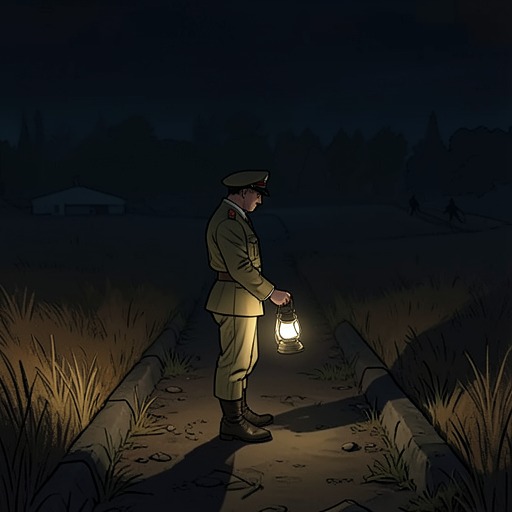
Gary and his companions had failed to persuade the British Consul to provide false papers. He therefore resolved to seize an aircraft at Meknès and fly to Gibraltar, even if force proved necessary. His immediate problem was finding a usable machine: some had reportedly been deliberately disabled on the orders of the leaders, so he lingered on the airfield, watching the engineers and trying to judge whether one might help him.
The plan was dangerous as well as uncertain. Gary had trained on the Morane and the Potez-540, but had never advanced beyond them; he was not sure he could get a Simoun into the air, much less keep it there. As he waited, he thought of his mother’s dependence on insulin and wondered whether he could arrange for the Red Cross in London to send her a regular supply through Switzerland. The escape was thus bound up with both his own decision to resist and his concern for her survival in occupied France.
The Attempt and Its Collapse
When a Simoun landed and stopped a few yards away, Gary read the coincidence as an opportunity he could not let pass. He climbed into the cockpit and sat at the controls, believing that nobody had seen him. In fact, gendarmes of the special air police had been stationed in the hangars to prevent airborne desertions. Two recent escapees had already landed safely at the Gibraltar race course in a Morane-230 and a Gotland, and the authorities were watching for further attempts.
Two gendarmes ran toward the aircraft; one was drawing his revolver. With them only thirty yards away, Gary still could not make the propeller turn. He jumped out after one last effort and ran across the field. A dozen or so airmen watched him pass but did not try to stop him. In the panic and defiant mood of the moment, he had drawn his own revolver as he leapt from the cockpit. He later recognized that carrying it while fleeing would have worsened his position at a court-martial, and feared what might have happened if he had been captured: he believed he would not have allowed himself to be taken alive, and knew he was a good shot.
Escape from the Airfield
Despite whistles behind him, Gary hid the revolver, slowed down, and walked calmly past the guard at the gate. Once outside the camp, he reached the main road; after walking about fifty yards, he stopped a bus by standing in its path. He boarded and sat beside two veiled women and a white-robed bootblack. The escape from the field was improvised rather than secured by a plan, but he had evaded the pursuing gendarmes and left the military compound.
The bus ride altered the meaning of the failure for him. He felt that he had finally broken with the armistice: the failed theft had made him, in his own delighted self-image, a rebel and a desperado, with no prospect of turning back. He imagined his mother watching him with admiration and silently sharing his satisfaction. In that mood he even lit a cigar, although smoking was forbidden on the bus, and briefly felt capable of meeting all that she expected of him.
Aftermath and Narrative Significance
The bravado did not erase the episode’s uncertainty. Gary had no idea what he would do next, and when he caught sight of his threatening appearance in the driver’s mirror, he frightened himself enough to drop the cigar. He had left his leather jacket in his quarters and felt lonely without it. The cigar, too, was already burning down in the dry African air; the comic image of his dwindling smoke turns his triumphant escape into a fragile, temporary companionship with himself.
The episode’s decisive outcome is therefore not the acquisition of an aircraft or arrival at Gibraltar: neither happens here. Its consequence is a change in Gary’s own sense of commitment. He has moved from seeking a covert route out to acting openly against the armistice, and from the airfield’s armed pursuit to an ordinary bus among civilian passengers. The juxtaposition of armed flight, theatrical self-confidence, and sudden loneliness gives the failed escape its force: the act is unsuccessful, but his break with passivity feels irreversible.