The Holocaust
Promise at DawnThe Holocaust is the historical catastrophe against which Promise at Dawn sets several intimate losses: the murder of Mr. Piekielny, the death of Romain Gary’s father during the persecution of Jews, and the destruction of the father’s family. The memoir links these fates to the narrator’s obligations of memory, while showing how knowledge of a death can arrive long after the death itself.
Historical violence and personal loss
The book names Mr. Piekielny as one of the millions of European Jews killed in a Nazi crematorium. His death transforms the childhood acquaintance into a representative of a vast, deliberate destruction, but the narrative does not leave him anonymous: Romain Gary remembers the promise to speak of the small man and makes that promise part of his adult life.
The narrator’s father had left shortly after Romain Gary’s birth. As a child, he knew that his father had another wife and children, and had met him several times, but the subject was rarely discussed at home. During the war, the father, his wife, and their two children were persecuted as Jews. For years, Romain Gary understood that his father had died in a German gas chamber with his family; the circumstances he later learned were different.
A death understood belatedly
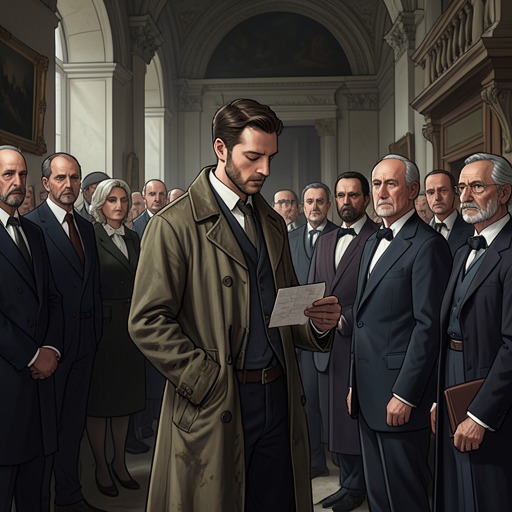
In 1958, after traveling from Bolivia to Paris to receive the Prix Goncourt for The Roots of Heaven, Romain Gary received a letter from someone who had witnessed his father’s final moments. The correspondent explained that the father had died of a heart attack a few yards from the entrance to the execution site, before he could enter the gas chamber. The letter corrected the account Romain Gary had carried, but did not undo the persecution or restore the family.
The discovery came decades after the father had died and at a moment when Romain Gary was publicly honored. He recalls holding the letter without feeling anything, then standing for a long time on the staircase of the publishing house. The contrast between the ceremony of achievement and the sudden, private knowledge of his father’s death makes the news feel less like a resolution than an interruption: a past that had been only partly known becomes present again, without offering comfort.
Memory as an answer to erasure
Romain Gary’s promise to remember Mr. Piekielny takes a public form. He says that in later encounters with prominent figures and audiences, including at the United Nations and the French Embassy in London, he continued to mention the man who had lived at Number 16, Grand Pohulanka in Vilna. The remembrance cannot reverse the killing; its force lies in restoring a name and a particular life to a history measured in millions.
The account also keeps its limits visible. The narrator’s understanding of his father’s death changes when new testimony reaches him, while the fate of the father’s wife and children remains part of the broader family loss rather than a separately narrated scene. The memoir records what the letter establishes and does not turn the absent details into certainty.
The frame of recollection
The book’s opening places the forty-four-year-old narrator alone on the beach at Big Sur, among birds and seals, still longing for universal tenderness. The Holocaust material is therefore held within a memoir that moves between remembered childhood, wartime experience, and an adult narrator’s present. Its return to the personal does not diminish the scale of the catastrophe: it shows how that scale is carried in individual names, family silences, and news received too late.